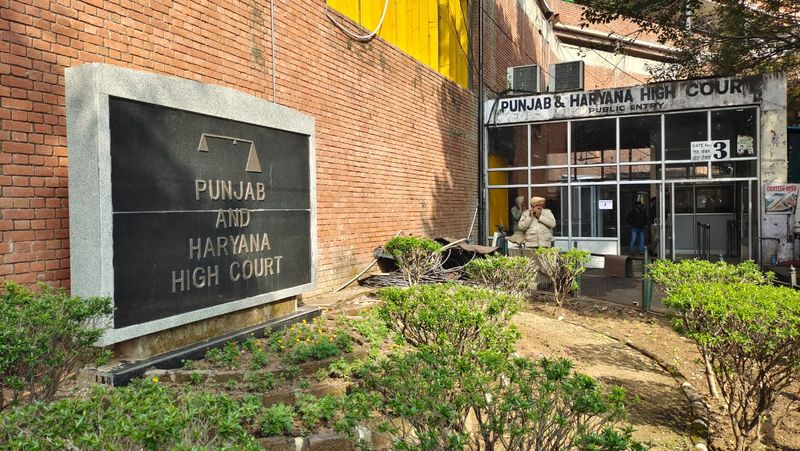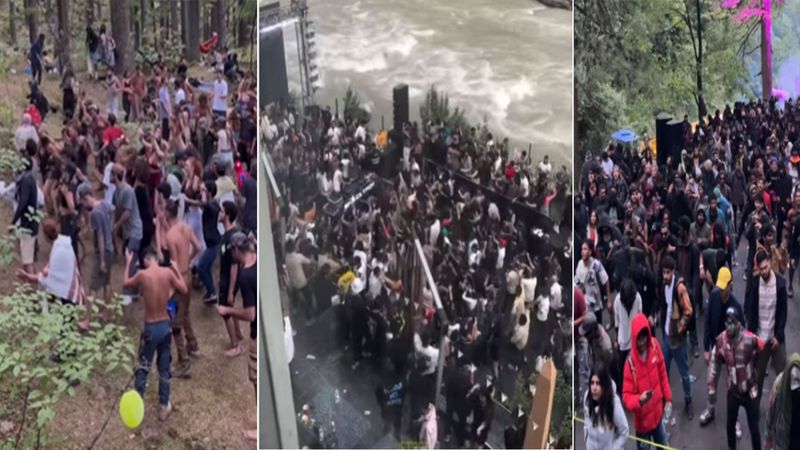

The lush valleys of Manali, Kasol and the Parvati Valley have long been marketed as some of India’s most sought-after tourist destinations.But alongside the tourism boom, concerns over illegal rave parties, narcotics trafficking, environmental damage and rising crime have increasingly come under public and judicial scrutiny.Rave parties themselves are not a recognised category under law. Any large gathering involving music, liquor, commercial activity or overnight events requires permissions from local authorities, police and other departments.Over the years, police have repeatedly busted parties in Kasol, Manali and nearby areas for being organised without permission. Several raids have been conducted in forests, riverside locations and remote villages where organisers allegedly sought to avoid regulatory scrutiny.In 2025, the Himachal Pradesh High Court took serious note of allegations that rave parties were being organised in the name of tourism in Kasol, Manali, Jibhi and other destinations, seeking detailed reports from the state government.Who organises such events?Police investigations in past cases have identified a mix of local organisers, tourism operators and event promoters. In several raids, organisers were booked for holding events without permissions.The High Court has specifically asked the state government to identify organisers, examine financial transactions and determine whether influential individuals are facilitating such events.How are parties being held in forest areas?Many raids over the years have been conducted in remote forested locations around Kasol, Chalal, Tosh and nearby villages where access is difficult and enforcement challenging. Police officials have previously stated that organisers often shift locations at the last moment to evade detection.The High Court has repeatedly questioned how district authorities and police allowed such activities to continue despite widespread public knowledge of them.Is the drug trade linked to the party culture?Law-enforcement agencies have long expressed concern over links between narcotics trafficking and illegal party culture.Kullu district is defamed for “Malana cream”, a high-potency cannabis resin that has become synonymous with the region. Police investigations have previously revealed instances where cannabis was allegedly exchanged for synthetic drugs, including heroin. Authorities have also stated that rave parties were sometimes organised through social media networks.However, it would be inaccurate to suggest that every music festival or tourist gathering is linked to narcotics. Investigations are conducted on a case-by-case basis.What is the government doing?The Himachal Pradesh Government has launched anti-drug campaigns, established helplines and strengthened enforcement under the NDPS Act.The High Court has recently sought detailed information on:Drug-related FIRs and arrests.Action against organisers.Sources of funding for alleged rave events.Confiscation of properties linked to drug trafficking.Measures taken to curb narcotics tourism.Police data presented before the court showed thousands of NDPS cases being registered across the state, with Kullu, Mandi and Shimla among the districts reporting significant drug-related activity.What do local residents and panchayats say?Many residents of Kasol, Tosh, Chalal and surrounding villages depend heavily on tourism for income. However, concerns over noise pollution, waste generation, drug abuse and cultural change have increasingly been raised by local groups.Environmental organisations and citizen groups have approached courts alleging that unchecked tourism and illegal parties are damaging the ecological and social fabric of the region.At the same time, local businesses caution against painting all tourists with the same brush, arguing that the vast majority of visitors come for trekking, nature and cultural experiences.The foreign connectionKasol has become particularly popular among young Israeli travellers, many of whom visit after completing military service. The presence of Hebrew signboards, Israeli cafes and guesthouses has given the area a distinctive character.However, claims regarding the existence of an “Israeli mafia” or “Russian mafia” operating in the region remain largely based on reports, local perceptions and allegations over the years. Law-enforcement agencies have periodically investigated foreign nationals for visa violations and drug-related offences, but there is no official confirmation of organised foreign mafia networks controlling tourism in the valley.Is government apathy behind rising crime?Critics argue that weak enforcement, illegal construction, unregulated tourism and inadequate policing have contributed to law-and-order challenges in some tourist destinations.The High Court’s repeated interventions on rave parties, illegal establishments and drug trafficking suggest that concerns over enforcement are not new.Yet experts also point out that the tourism economy supports thousands of livelihoods and that the challenge is not tourism itself, but regulating its rapid expansion in environmentally fragile and geographically difficult areas.Tourism at what cost?The larger debate confronting Himachal is whether the state can continue attracting millions of visitors annually while preserving its environment, culture and public safety.As cases involving illegal parties, drug trafficking, traffic congestion, reckless driving and tourist misconduct continue to surface, pressure is mounting on authorities to move from reactive crackdowns to a long-term tourism management strategy.