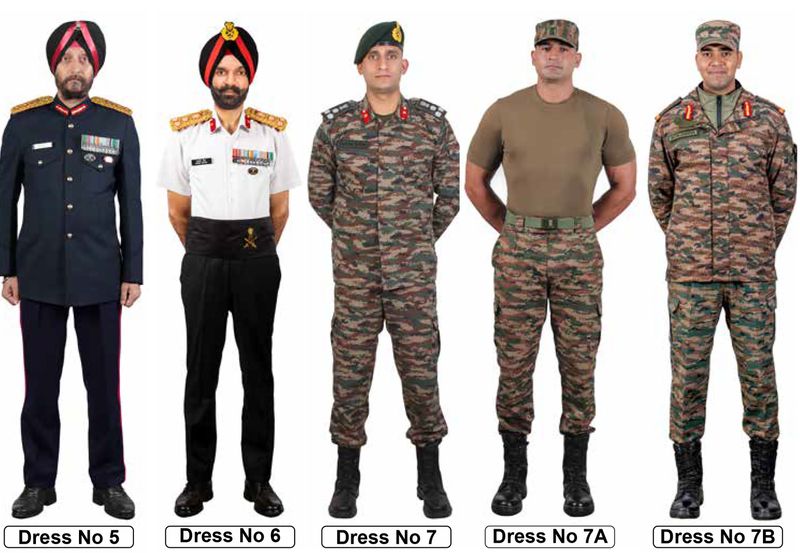

The Army’s new manual for uniforms to be worn by its personnel brings in a practical change to align the clothing to match Indian weather conditions and does away with the “residual” colonial-era practices.Army personnel are needed to wear different uniforms for separate activities, including ceremonial functions, combat, mess, hot climates and high altitudes.A 185-page booklet, ‘Army Uniforms 2026’, released earlier this month reflects a step towards aligning regulations with the contemporary Indian ethos through the progressive removal of residual colonial-era practices and non-essential accoutrements and the discontinuation of archaic terminology such as “Royal”.The document removes ambiguity and provides flexibility, especially in winter clothing. Also, for civilian formal occasions, officers now have the option of wearing a half jacket – a ‘bandi’ jacket. The coat or the blazer has not been removed from the list; the bandi jacket is an additional option that can be used with a full-sleeved shirt and matching formal trousers and shoes.It does away with the mandatory carrying of swords by parade reviewing officers and the use of pouch belts, worn across the shoulder with certain mess dresses. Swords may be carried only by parade commanders, contingent commanders and designated personnel during major ceremonial events such as Republic Day, Independence Day and Army Day parades and for the guard of honour.The Army has also introduced a new winter working dress featuring a battle jacket, which will gradually replace the existing jersey-based winter uniform by June 2029. The battle jacket has been reintroduced as standard winter outerwear for all ranks, with a three-year transition period for implementation. This jacket has a provision to add or remove layers depending upon the weather.The booklet bars radical hairstyles, unauthorised beards, visible electronic gadgets, tattoos, body piercings and cosmetic make-up while in uniform. It also prohibits the wearing of uniforms at political, religious or protest gatherings; weddings; private parties; and paid media appearances without authorisation.The uniform shall not be worn when visiting restaurants, hotels or other public places in a personal capacity. It also can’t be worn in case of staying in a hotel on temporary duty or while travelling in public transport during leave.There are norms for contact lenses too. The booklet says contact lenses may be used in place of spectacles. However, the colour of contact lenses must be natural and almost similar to the wearer’s eye colour.Earlier this year, the Army undertook an initiative to discontinue colonial names and renamed 246 roads, buildings and facilities across its establishments. According to Army officials, the exercise covered 124 roads, 77 colonies, 27 buildings and other military facilities and 18 miscellaneous facilities, including parks, training areas, sports grounds, gates and helipads.In Delhi Cantonment, Kirby Place (officers’ accommodation) has been renamed Kenuguruse Vihar, while Mall Road has been renamed Arun Khetrapal Marg. At the Indian Military Academy in Dehradun, Colins Block and Kingsway Block have been renamed Nubra Block and Kargil Block, respectively.In Kolkata, Fort William has been renamed Vijay Durg.