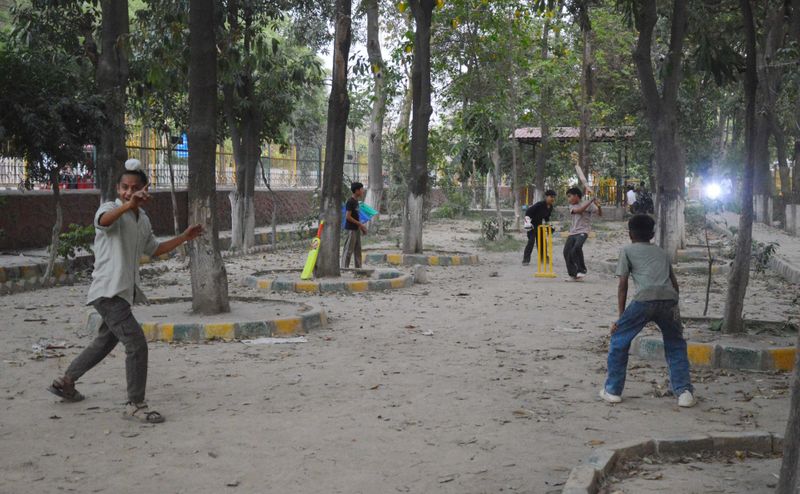

Ludhiana, known for its rapid urban expansion and bustling residential colonies, is quietly grappling with a growing concern — the alarming shortage of dedicated playgrounds for children. As concrete structures replace open spaces, young residents are finding it increasingly difficult to access safe and suitable areas for sports and recreation.Across many localities, children are left with limited options. With no proper playgrounds in their vicinity, they often turn to public parks or streets to play. However, even these spaces are not always welcoming. Several children shared that they are frequently stopped by residents from playing in parks.“We just want a place to play cricket or football after school, but we are often told to leave because it disturbs others or might damage plants,” said Manvir, a 14-year-old resident of a city colony. “We don’t have any playground nearby, so where else can we go?”Another student Jatin echoed similar concerns, saying that,” Our parents don’t allow us to play on roads because of traffic, and we are not allowed in parks for playing. Most of the time, we end up staying at home.”“We are ready to work hard and practice daily, but without a ground, how can we improve?” said Sukhwinder, a teenage basketball enthusiast. If grounds are there, but we can’t use them, it feels unfair.”Sports experts believe this lack of infrastructure is directly impacting the physical and mental development of children. According to local coaches, regular access to playgrounds is essential not only for nurturing talent, but also for ensuring overall well-being.They stress that providing even basic facilities, such as open fields with safe playing conditions, can make a significant difference. Unlike expensive infrastructure, these grounds do not require heavy investment, but can have a lasting impact on grassroots sports development.“Playgrounds are not a luxury, they are a necessity,” said a city-based basketball coach. “At a young age, children need open spaces to run, play and develop coordination and teamwork. When these spaces are unavailable, it discourages participation in sports and limits grassroots development.”“Talent doesn’t depend on money, but opportunities often do,” said a senior coach, Amit. “When playgrounds are locked behind fee, we are essentially filtering out players who might have had the potential to represent the state or even the country.”Experts further pointed out that restricting children from parks reflected a larger issue of urban planning and community mindset. While concerns about maintenance of parks are valid, completely denying children access defeats the purpose of these public spaces.“Parks should be inclusive,” said Sandeep Kumar, a physical education expert. “There has to be a balance. Designated play hours or specific zones within parks can be created, so that both residents and children can co-exist without conflict,” he said.Parents too have expressed concern over the shrinking opportunities for outdoor play. Many feel that the lack of safe spaces is pushing children towards sedentary lifestyles dominated by mobile phones and screens.Pritpal Singh, a parent of a budding footballer, shared his concern. “My son is passionate about sports and wants to pursue it seriously. But the nearest proper ground is in a private school, and they charge monthly fee. We simply cannot afford it regularly,” he rued.The shortage of accessible playgrounds in Ludhiana is not just limiting recreational opportunities, it is steadily choking the city’s grassroots sporting talent. While a handful of schools in the city do have well-maintained playgrounds, access to these facilities often comes at a cost, placing them out of reach for many aspiring young athletes, added Singh.In several cases, school authorities allow non-students to use their grounds, but only after charging a fee. For families already managing tight household budgets, these additional expenses become a significant barrier. As a result, many talented boys and girls are unable to utilise these spaces to train, practice and refine their skills.Experts emphasized that schools, as key stakeholders in community development, should adopt a more inclusive approach. Opening playgrounds tolocal children at nominal or no cost, especially during non-school hours, could significantly boost sports participation. Urban planners and civic authorities are being urged to take immediate steps. Suggestions include developing multi-purpose playgrounds in every ward, making it mandatory for new residential projects to include play areas and reviving unused government land for sports facilities.The issue goes beyond recreation, it is about the healthy growth of an entire generation. Without timely intervention, Ludhiana risks raising children who have fewer opportunities to play, compete and thrive.“Public-private cooperation is the need of the hour,” Vikas Sharma, a physical education instructor noted. “Authorities can collaborate with schools to subsidise access or create shared-use policies that benefit the larger community.”In a city full of energy and potential, its children deserve spaces where they can simply be themselves. The lack of free and accessible playgrounds, combined with fee-based access to existing ones, threatens to leave many dreams unrealised.If Ludhiana aims to produce future champions and promote a healthy, active generation, it must first invest in the most basic requirements — space to play and ensure that every child, regardless of financial background, has a fair chance to step onto the field, opine some sports experts.