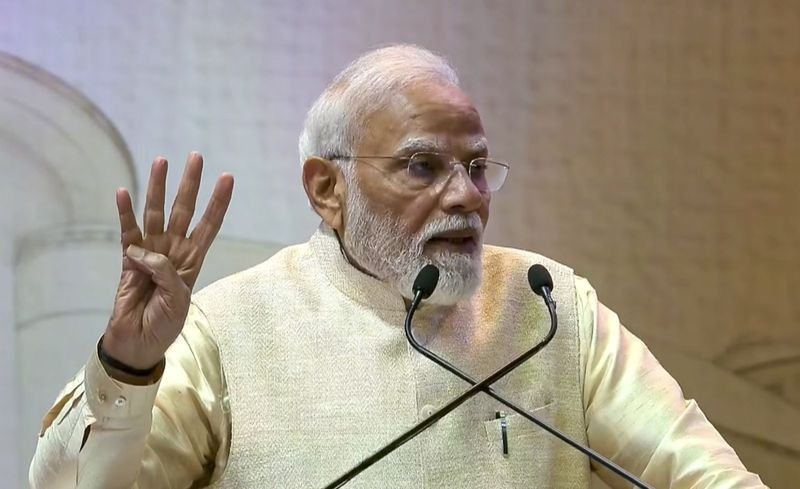

As the Union Public Service Commission (UPSC) marks 100 years, Prime Minister Narendra Modi on Thursday called for a rethink of how India selects its civil servants, saying recruitment must prepare officials for a country that will be more urban, more technology-driven and marked by higher public expectations by 2047.Speaking at the UPSC’s centenary event, Modi said the commission’s biggest asset was the trust it had built over a century. Governments, technology and syllabuses had changed, he said, but public faith in the institution remained.He linked that legacy to the changing purpose of public administration after Independence. While the system established in 1926 had been oriented towards the priorities of British rule, the focus after Independence shifted to the aspirations of a free India. He recalled Sardar Vallabhbhai Patel’s role in strengthening the institution as a pillar of nation-building.The Prime Minister said the next 20 to 25 years would be crucial and asked selection bodies to keep two tests at the centre of recruitment: “Nation First” and “Citizen First”.His emphasis was on changing the profile of those entering public service. Recruitment, he said, should not only establish what a candidate knows, but also why the person wants to enter civil services.He suggested that candidates could be encouraged to record, at the beginning of their training, why they had chosen public service. Such a note, he said, could later serve as a reminder of their original purpose as responsibilities and challenges grew.Modi also pointed to the widening gap between citizens’ expectations and traditional government timelines. In an age when AI can process thousands of documents within moments and governments have access to real-time data, citizens no longer want to wait weeks or months for services.He said recruitment processes therefore needed to identify officials capable of complex problem-solving and responding to emerging challenges, including AI, information warfare and climate justice.The Prime Minister also linked examination delays to questions of equity. Delays can impose additional costs on candidates through coaching fees, banking and transport expenses, he said, making “time certainty” an important principle for selection bodies.He noted that the UPSC had already reduced its examination cycle by about 100 days and described this not merely as an administrative reform but as an “equity reform”.Modi said the civil services of the future would have to reflect a work culture based on “Pro-people, Pro-active, Good Governance”, with public interest placed above administrative convenience.