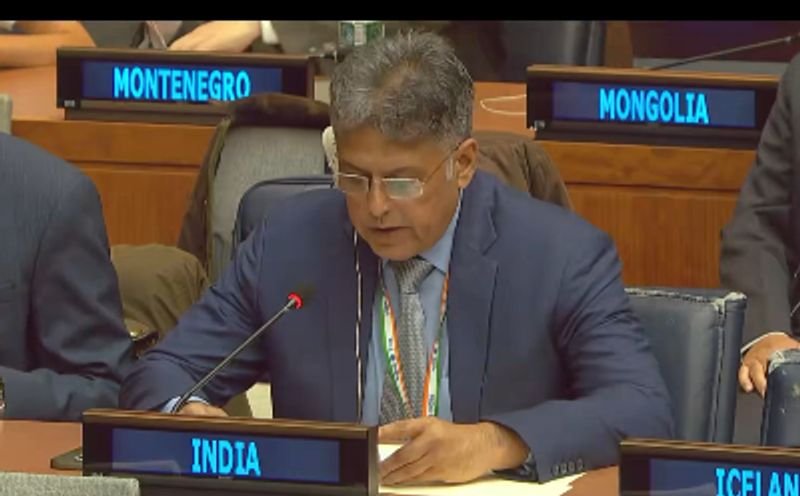

India has reiterated its no-first-use nuclear policy and called for human control over decisions to use nuclear weapons, flagging concerns over the use of artificial intelligence in nuclear command and control systems at the UN General Assembly’s First Committee.Congress MP Manish Tewari, delivering India’s statement on nuclear weapons and related issues at the committee, said the decision to use nuclear weapons should be taken by humans.“India acknowledges that the use of artificial intelligence in nuclear command and control raises real questions. We espouse the principle that the decision to use nuclear weapons should be taken by humans,” he said.Tewari reiterated India’s policy of credible minimum deterrence, no first use and non-use of nuclear weapons against non-nuclear weapon states. He said India was prepared to convert these commitments into multilateral legal arrangements.He underlined that India’s nuclear capabilities were shaped by its unique security environment and were not directed against any specific actor. India also remained committed to its voluntary unilateral moratorium on nuclear testing, he said.Reaffirming India’s longstanding position on disarmament, Tewari said nuclear disarmament must be universal, non-discriminatory and verifiable, pursued through a step-by-step process underpinned by an agreed multilateral framework.India had outlined this approach in a 2006 working paper submitted to the First Committee and again in 2007 at the Conference on Disarmament, he said, adding that the approach remained relevant.Tewari said legally binding assurances to non-nuclear weapon states against the use or threat of use of nuclear weapons would help address their security concerns and strengthen the global non-proliferation regime.He also highlighted two resolutions traditionally tabled by India under the disarmament agenda. The first, on reducing nuclear danger, has been introduced since 1998 and calls for de-alerting and de-targeting nuclear weapons to reduce the risk of unintentional or accidental use.The second, introduced in 1992, seeks negotiations on an international convention prohibiting the use or threat of use of nuclear weapons. Such a universal, legally binding agreement would help build the political will required for the complete elimination of nuclear weapons, he said.India looked forward to continued support and co-sponsorship from member states for both resolutions.On the Treaty on the Prohibition of Nuclear Weapons, Tewari said it did not create obligations for India. However, he stressed that New Delhi’s commitment to global nuclear disarmament and strengthening non-proliferation remained unchanged.India would also continue to support international efforts to prevent terrorists and non-state actors from accessing nuclear weapons, materials and technology, he said.