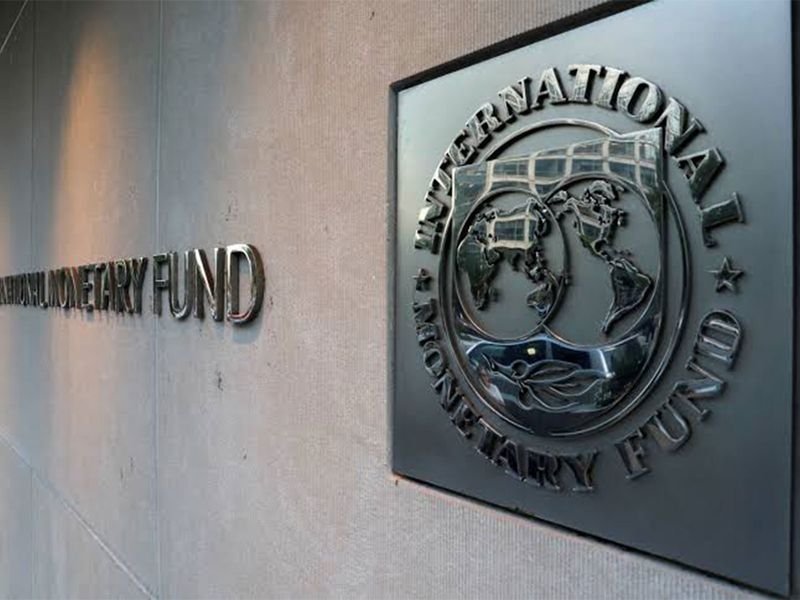

Washington, DC [US], October 8 (ANI): Trapped in a persistent economic quagmire of its own making, a mismanaged Pakistan has secured yet another bailout lifeline after the International Monetary Fund reached a staff-level agreement with Islamabad to unlock about USD 1.21 billion in additional financing, even as the lender warned that geopolitical tensions, high energy prices and trade disruptions continue to threaten the country’s economic recovery.The arrangement encompasses the fourth review of Pakistan’s 37-month Extended Fund Facility (EFF), alongside the third review of its 28-month Resilience and Sustainability Facility (RSF), as announced by the IMF on Wednesday.Formal endorsement from the IMF Executive Board remains a prerequisite before any financial disbursements can be authorised.Upon receiving final clearance, Islamabad will secure access to approximately USD 1 billion under the EFF provisions and an additional USD 210 million via the RSF, elevating total cumulative disbursements across both financial mechanisms to roughly USD 5.7 billion.An IMF delegation spearheaded by Iva Petrova conducted extensive consultations with Pakistani officials across Karachi and Islamabad from September 23 to October 7, as part of the nation’s routine annual economic evaluation and performance reviews.Pakistan’s fragile economy crawled to an estimated 3.6 per cent growth rate in FY26, severely hampered by exorbitant energy costs and persistent supply chain bottlenecks that sapped broader economic momentum.Real gross domestic product expansion registered at 4 per cent throughout the initial three quarters of the fiscal cycle.Inflationary pressures, following a sharp apex in May, retreated to approximately 10.3 per cent by September, whilst the current account managed a fragile equilibrium largely propped up by buoyant diaspora remittances.The nation’s foreign exchange reserves climbed to roughly USD 21.5 billion towards the conclusion of September.While the Washington-based lender noted that sovereign credit rating enhancements and tentative re-entry into international debt markets signalled superficial improvements in policy credibility, it cautioned that the recovery remains precariously exposed to external vulnerabilities.”Nevertheless, risks remain high, particularly from geopolitical tensions, volatile energy prices, tighter global financial conditions, and trade disruptions,” Petrova stated.The global financial institution sternly instructed Pakistani authorities to strictly preserve fiscal discipline and rigidly execute their FY27 budgetary framework, demanding an underlying primary surplus objective equivalent to 2 per cent of GDP.It further mandated aggressive overhauls in tax administration, pressing for risk-based audits, automated digital invoicing systems, and enhanced cross-verification using third-party databases to forcefully extract state revenues.Additionally, the Fund exerted pressure on Islamabad to overhaul public financial management, overhaul state procurement protocols, and streamline governmental cash operations to mitigate exorbitant borrowing expenditures and perilous debt rollover hazards.Concerning social expenditures, the lender acknowledged a nominal rise in health and education allocations from 2.2 per cent of GDP in FY24 to 2.5 per cent in FY26, with proposed targets slated to reach 2.8 per cent in FY27.While praising expanded targeted welfare disbursements, the IMF demanded the immediate termination of the country’s flawed fuel support scheme, citing its exorbitant fiscal burden and unmanageable scope.Furthermore, the multilateral body instructed the State Bank of Pakistan to sustain a vigorously restrictive monetary stance until inflation is durably anchored back within its official target corridor.Structural overhaul of the crippled energy sector remains an inescapable priority, requiring prompt tariff realignments, enhanced operational efficiencies, intensified competition within electricity distribution, and stringent measures to arrest the relentless accumulation of circular debt.The IMF’s Extended Fund Facility provides financial backing to distressed nations executing painful economic overhauls to rectify structural vulnerabilities and balance-of-payments crises, whereas the Resilience and Sustainability Facility offers extended financing horizons to tackle climate vulnerabilities and structural bottlenecks.Pakistan continues its desperate dependency on a recurring cycle of bailouts to stave off total economic collapse, steady its depleted foreign reserves, and manage systemic fiscal and power sector decay. (ANI)(This content is sourced from a syndicated feed and is published as received. The Tribune assumes no responsibility or liability for its accuracy, completeness, or content.)