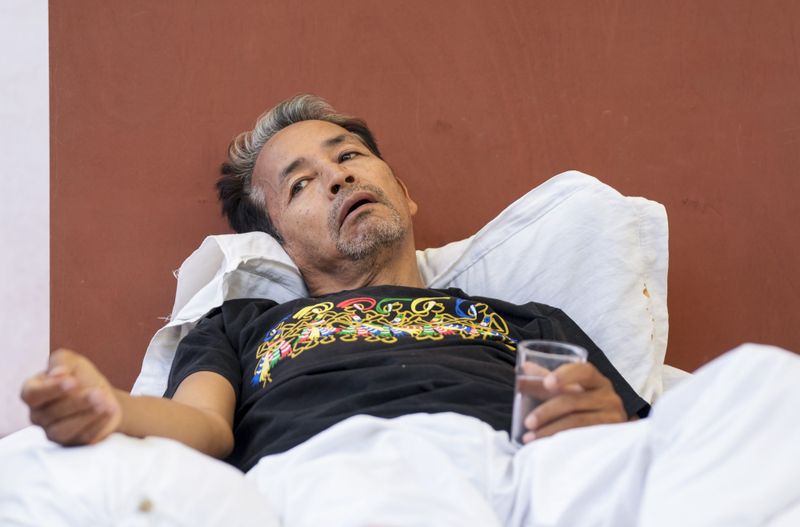

Since June 28, every morning at Delhi’s Jantar Mantar has begun much the same way. Dr Satish Lamba and his medical team monitor Sonam Wangchuk’s health round the clock, carefully tracking the effects of an indefinite hunger strike that has now stretched into its third week.Around the makeshift stage, supporters of the Cockroach Janta Party (CJP), often numbering in the hundreds, gather through the day. Their slogans intermittently pierce the silence, each reflecting a different emotion. At times they call for social awakening with “Inquilab Zindabad”. At others, they express anger at what they describe as India’s failing education system and the government’s inaction with cries of “Tanashahi nahi chalegi.” And then there are moments when the crowd unites behind Wangchuk himself: “Sonam Wangchuk tum sangharsh karo, hum tumhare saath hain.”Yet, as Wangchuk’s indefinite hunger strike entered its 20th day on Friday, the dominant mood at Jantar Mantar was no longer one of anticipation, but of waiting, the weight of seeing a broader national push that should echo with everyone at same level.Dr Satish Lamba, on Friday issued fresh warnings over his deteriorating health as the fast continued. CJP founder Abhijeet Dipke said, “He is on his deathbed, while the government is watching him die.”The passage of time itself has become the story.Twenty days is not merely a statistic. It means Wangchuk has now remained on hunger strike significantly longer than Anna Hazare’s landmark anti-corruption fast in 2011, which lasted 12 days after shifting from Jantar Mantar to Ramlila Maidan. Hazare eventually ended his fast after the Centre agreed to constitute a joint drafting committee for the Lokpal Bill.Yet, the similarities between the two protests largely end there.When Hazare began his fast, Jantar Mantar became the epicentre of a nationwide anti-corruption movement. Office-goers arrived after work, students skipped classes, celebrities visited, television channels carried near-continuous coverage and solidarity protests erupted across the country. What began as a fast soon evolved into a national political movement that would reshape India’s political landscape.At Wangchuk’s protest, the atmosphere is markedly different.For most of the agitation, the stage has largely been anchored by CJP members, including Abhijeet Dipke, Saurav Das, Vijeta Dhaiya, Ashutosh Ranka, Aafreen, Vaishnavi and Ratna. Wangchuk himself has spoken little to the media, while politicians, educators, activists and influencers who have visited the site have largely acknowledged what they describe as his sacrifice for the country’s youth.During the first week of the fast, hardly any prominent political leader appeared at the protest site. It was only in the second week that educators, social media influencers, farmer leaders and politicians, mostly in their individual capacities, began extending support.On Thursday, Congress leader and Rajya Sabha MP Pawan Khera visited the protest site. Since July 13, personalities from the film industry, including Zeenat Aman, Omi Vaidya, Sanya Malhotra and Anurag Kashyap, along with social media influencers such as Bhuvan Bam, Ashish Chanchlani and Ajey Nagar, popularly known as CarryMinati, have appealed to the government to engage with Wangchuk. The Delhi High Court has also expressed concern over his deteriorating health and urged dialogue.The biggest surge in attendance came when former Delhi Chief Minister Arvind Kejriwal, Samyukt Kisan Morcha leader Rakesh Tikait, Samajwadi Party MPs, including Dimple Yadav, and several other political leaders visited the protest. According to The Tribune’s coverage of the agitation, the gathering recorded its highest footfall during the past 27 days.Yet, despite these endorsements, the protest has not generated the sustained public mobilisation that defined the Anna Hazare movement.There are no overflowing grounds, no spontaneous demonstrations across multiple cities, and little indication that the protest has evolved into a nationwide campaign in the way Hazare’s did. The strongest wave of support appears to exist online rather than on the streets.Part of that difference lies in the issues themselves.Hazare’s campaign against corruption resonated across social, economic and political divides, particularly against the backdrop of a series of high-profile corruption scandals that had captured the national imagination.Wangchuk’s present agitation is centred on demands for a credible and accountable education and examination system. Through the Cockroach Janta Party, he has attempted to frame the protest as the beginning of a broader campaign seeking accountability from governments over recurring paper leaks, an issue the organisation has highlighted consistently since the first day of the agitation.The media landscape has changed as well.On an ordinary day, in the absence of prominent political leaders, influencers or celebrities, much of the coverage at the protest site comes from independent content creators and vloggers documenting the movement. The CJP has repeatedly alleged that the mainstream media has largely ignored the agitation.The contrast with 2011 is striking. Television news channels then devoted extensive live coverage to Hazare’s fast, helping transform it into a national spectacle. Fifteen years later, public attention is fragmented across television, digital platforms and social media, making it considerably harder for any single protest to dominate the national conversation for weeks.Even among those who visit Jantar Mantar, the organic support often appears directed more towards the cause than towards the organisation leading it.That changing public attention is perhaps most visible at Jantar Mantar itself.Supporters, content creators and political leaders continue to arrive every day, but the challenge is no longer merely sustaining the hunger strike. It is sustaining the nation’s attention.Wangchuk has sought to inject fresh urgency into the movement by calling for a march to Parliament on July 20, while reiterating that he would continue his fast until then.Whether that march succeeds in reviving national attention remains to be seen.For now, the image that lingers is stark. A protest that has already lasted longer than one of India’s most famous hunger strike of Anna Hazare, yet continues to wait for the kind of sustained public engagement that once transformed a fast into a national movement.As Wangchuk’s fast enters its third week, the question is no longer only how long he can continue, but whether India still pauses long enough to notice.