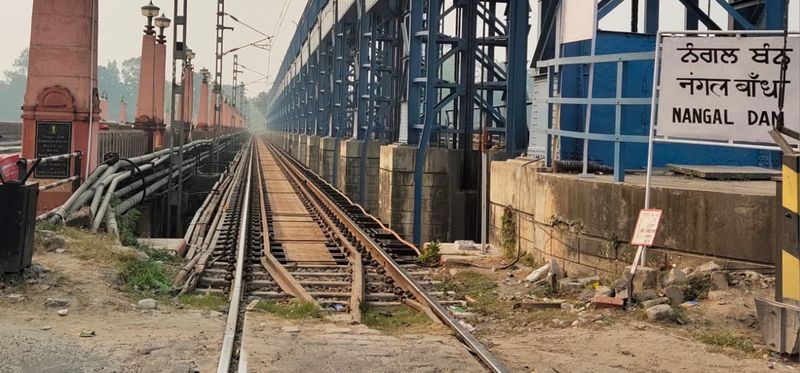

Increase in rail traffic over the Nangal Dam has emerged as a cause of concern for the Bhakra Beas Management Board (BBMB), which has urged the Northern Railways to shift the track from the old dam structure. The BBMB authorities have demanded the railway line be shifted away from the dam, citing potential risks to one of northern India’s most critical water management infrastructure projects.The Nangal-Una railway line passes directly over the Nangal Dam, with the railway bridge sharing piers with the dam structure. BBMB officials fear that the frequent movement of trains over the bridge generates vibrations that could gradually weaken the ageing structure and compromise its safety.Sources told The Tribune that the railway line was originally constructed only to facilitate the movement of coal, fertilisers and other freight to and from the National Fertilisers Limited (NFL) plant at Nangal. At that time, rail traffic over the dam was limited to one or two goods trains a week.However, over the last ten years, the line has evolved into an important passenger rail corridor linking Nangal Dam with Una and Amb Andaura in Himachal Pradesh. The recent expansion of rail services to Himachal has significantly increased train movement over the dam. At present, trains, including the Una-Delhi Vande Bharat, pass over the bridge about 17 times a day.The traffic is expected to rise further since the Union Ministry of Railways has approved the proposal to extend the Amb Andaura line to Talwara in Punjab’s Hoshiarpur district. According to sources, BBMB has written several letters to railway authorities over the years seeking relocation of the railway line from the dam structure.When contacted, CP Singh, Chief Engineer of the Bhakra Dam, confirmed that BBMB had formally taken up the matter with the Railways. “BBMB has written to the railway authorities requesting that the track be shifted from the bridge,” said Singh.According to sources, despite repeated requests, no concrete proposal has yet been prepared for constructing an alternative railway bridge over the Sutlej. Sources said the Railways had conducted surveys to identify a suitable location for a separate railway bridge but failed to finalise a feasible alignment.The Railways has accepted one of BBMB’s recommendations by imposing a speed restriction on trains crossing the dam. All trains, including the high-speed Vande Bharat, are required to slow down to 20 kilometres per hour while passing over the Nangal Dam bridge in order to minimise vibrations.Constructed in 1951, even before the completion of the Bhakra Dam, the Nangal Dam is a crucial component of the Bhakra canal system. The structure diverts Sutlej waters into the Nangal Hydel Channel and the Anandpur Sahib Hydel Channel, which feed a network of canals supplying irrigation and drinking water across Punjab, Haryana, Rajasthan and Delhi.Given the strategic importance of the dam, experts believe that preserving its structure should remain a priority. While the existing speed restrictions may reduce the impact of train induced vibrations, BBMB officials maintain that relocating the railway line remains the only permanent solution. Unless an alternative railway bridge is planned and executed, officials fear that the Nangal Dam will continue to bear the burden of growing rail traffic over a structure that was never designed for such intensive use.