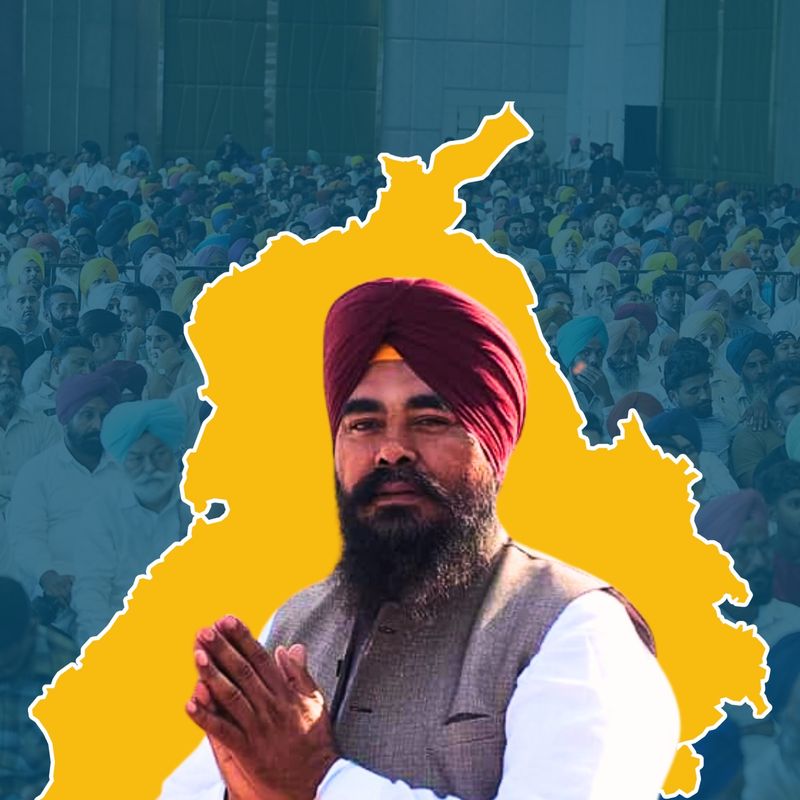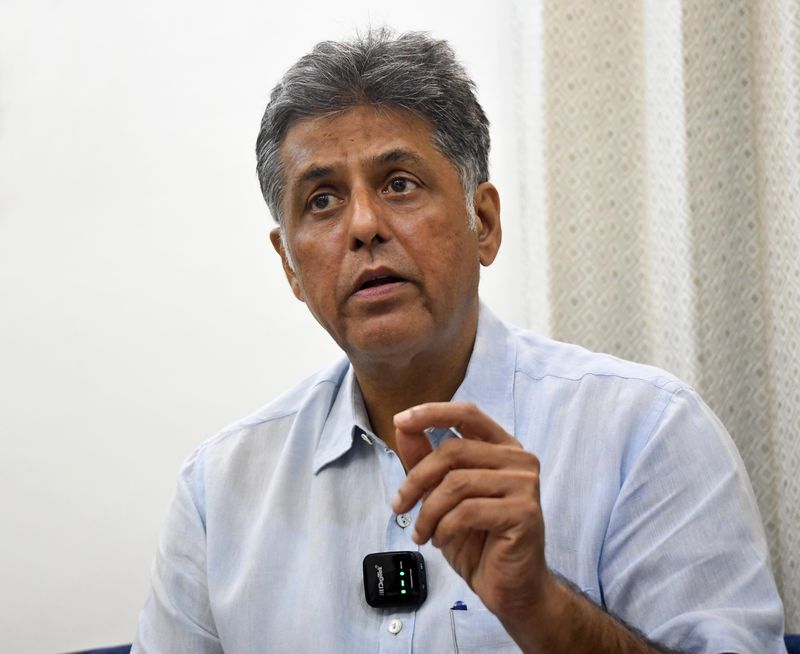

Chandigarh MP and former union minister Manish Tewari on Tuesday took aim at the Centre over spiralling fuel prices, invoking the Hindi proverb “Bhukhe pet bhajan na hoyi Gopala” to question why state-run oil marketing companies (OMCs) that posted a combined net profit of Rs 77,280 crore in FY 2025-26, a staggering 130 per cent jump over the previous year, were still raising petrol and diesel prices every few days.“While the OMCs are making hay, people are being crushed under a repressive pricing regime. Is this governance?” Tewari asked pointedly, directing his remarks at Petroleum Minister Hardeep Puri.His outburst came a day after petrol in Chandigarh crossed the Rs 100-per-litre mark for the first time in four years — rising by Rs 2.57 to Rs 101.54 per litre — in what was the fourth fuel price hike in just ten days. Diesel too climbed by Rs 2.53 to Rs 89.47 per litre. Since May 15, when the price freeze that had held for nearly four years was broken, petrol has become costlier by Rs 7.50 per litre and diesel by nearly the same margin.MP CITES 3F PROBLEMThe MP also framed the fuel crisis as part of a broader 3F problem — fuel, fertiliser and foreign exchange — which he said had been created by twelve years of economic mismanagement. India now imports 88 per cent of its crude oil needs. The rupee, at Rs 95.32 to the dollar, has depreciated sharply from Rs 58.50 on May 16, 2014 — making every barrel of imported oil significantly more expensive in rupee terms regardless of what global prices do.TRICITY PRICE WALLNowhere is the fuel hike felt more acutely — or more unequally — than across the three cities of the Tricity, where a quirk of taxation has created a striking price disparity.Because Chandigarh is a Union territory, it levies a lower Value Added Tax (VAT) on fuel than Punjab, which taxes Mohali, and Haryana, which taxes Panchkula. The result is that petrol in Mohali, at Rs 105.79 per litre, costs Rs 4.25 more than in Chandigarh and Rs 2.18 more than in Panchkula. Diesel in Panchkula, at Rs 96.24, is the most expensive among the three, with Mohali close behind at Rs 95.69 — compared to just Rs 89.47 in Chandigarh.The gap has made Chandigarh’s fuel stations a magnet for vehicle owners from Mohali and, to a lesser extent, Panchkula. On Monday, queues at pumps near the Chandigarh-Mohali border were visibly longer than usual, with vehicles bearing PB registration numbers accounting for a significant share. For a car with a 40-litre tank, filling up in Chandigarh instead of Mohali saves Rs 170 in a single visit. For a commercial vehicle or a taxi filling up daily, the annual saving runs into tens of thousands of rupees.Petrol pump dealers in Sectors 50, 51, 52, 43, 44, 37 and 38 — among the closest to the Mohali border — reported a noticeable increase in footfall from Punjab-registered vehicles since the hike cycle began on May 15.THIRD CENTURY IN CHANDIGARH’S HISTORYPetrol has crossed Rs 100 in Chandigarh only twice before — at Rs 105.94 on November 2, 2021, and Rs 104.74 on April 6, 2022. Monday’s Rs 101.54 marks the third time, and the first since the post-pandemic commodity crisis of 2021-22.THE RIPPLE ON THE STREETThe impact landed immediately on commuters, traders and daily wage earners.Gurpreet Singh, a cab driver operating on the Mohali-Chandigarh corridor, said the arithmetic was becoming unworkable. “The app sets the fare. We have no say. Fuel costs have gone up by over Rs 1,500 a month in ten days. At this rate, many drivers will simply stop operating.”Pushpa Devi, a domestic worker in Sector 38, said even the cost of her daily auto ride was going up. “The auto driver told me he is increasing the fare from next week. I have no other option but to pay.”Navneet Kaur, a postgraduate student at Panjab University commuting from Zirakpur, said her monthly fuel expenditure had crossed Rs 5,000. “I am now seriously considering switching to the bus, even though the timing is not reliable.”For the farming community, the diesel hike carries a longer shadow. Paddy season is weeks away.Amanpreet Singh, president of Chandigarh Petroleum Dealers Association, defended the hike cycle on structural grounds. “Oil marketing companies were suffering from heavy under-recovery for a long time. Companies were facing a loss of about Rs 20 per litre on petrol and nearly Rs 40 per litre on diesel. Therefore, it became mandatory for companies to increase prices. Due to the rise in crude oil and supply costs in the international market, pressure on the companies was continuously growing.”As a relentless heatwave bakes the Tricity with temperatures nudging 44 degrees Celsius, consumers nursing their thinning wallets at the pump are finding Manish Tewari’s ancient Hindi verse rather apt — and the Finance Minister’s acknowledgement of a 3F crisis rather cold comfort.