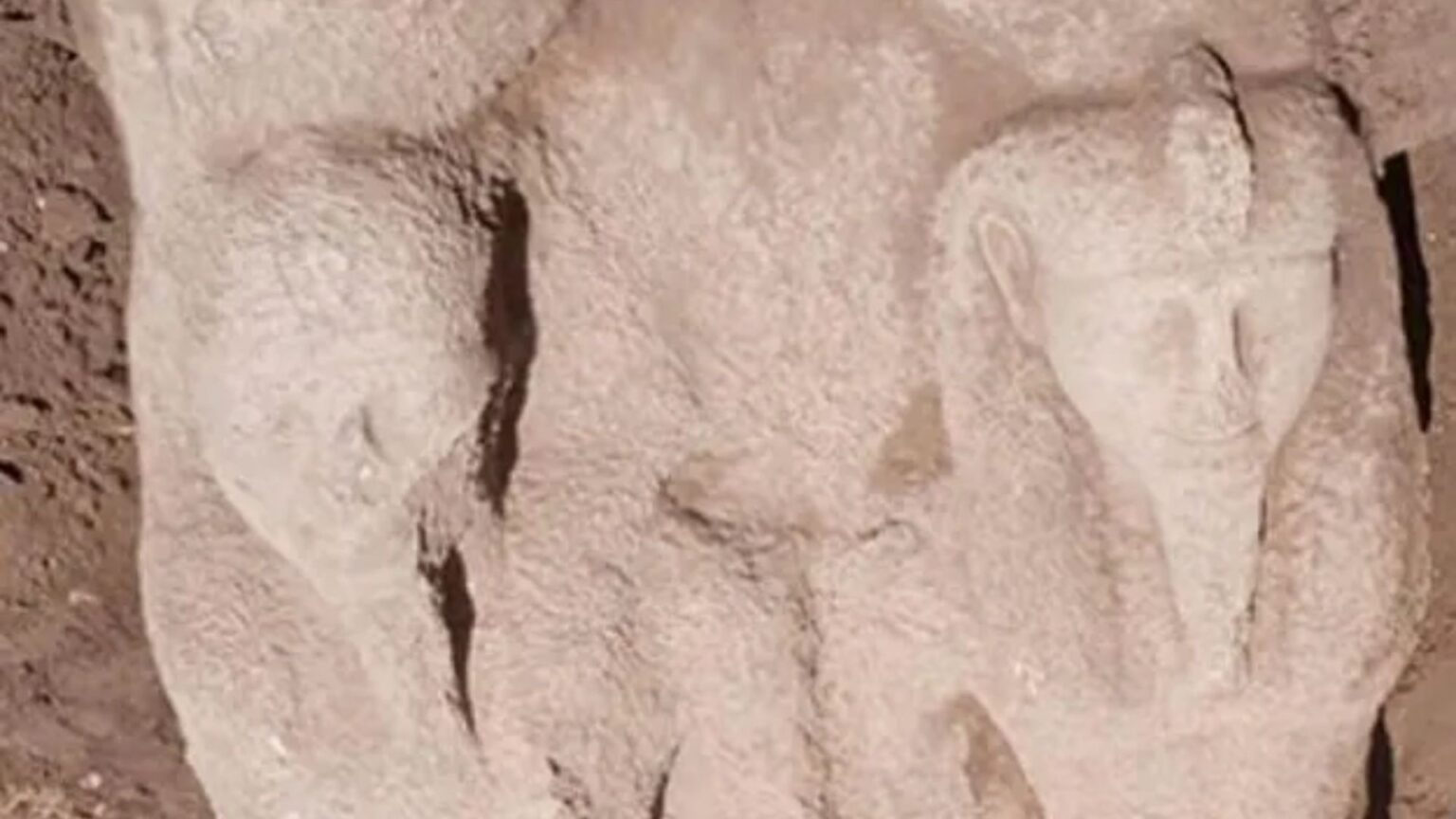


A STATUE of the “most powerful” pharaoh who battled with Moses has been found near the Red Sea.
The bombshell discovery uncovered a massive fragment of Ramesses II, the tyrant ruler who enslaved the Hebrew people in the Book of Exodus.
Sign up for the Tech newsletter
Thank you!
The distinctive beard of the pharaoh can be seen in this ancient 6 ton fragment Credit: Ministry of tourism and antiquities
Moses spearheaded the movement out of Egypt, away from what some scholars believe was the rule of Ramesses II Credit: Shutterstock
The staggering find was unearthed at Tel Faraoun, just northwest of the Red Sea by Egypt’s Supreme Council of Antiquities.
The 7ft-long fragment shows the head and torso of an ancient pharaoh and weighs between five and six tons – roughly the weight of an male African elephant.
Analysis reveals the bombshell discovery dates back to 1550 to 1070 BC, around the time that Stonehenge was built in England.
Archeologists believe the massive fragment formed part of a larger group ensemble of pharaohs and gods which was transported from Pi-Ramesses, the grand royal city established by Ramesses II .
PYRAMID RIDDLE
Mysterious ‘anomaly’ that may reveal ‘hidden portal’ is uncovered under tomb
PHARAOH’S GIFT
How ‘Pharaoh’s curse’ may help fight CANCER with leukaemia-battling chemical
Ramesses II was an aggressive military tyrant with an army of 100,000 men and ruled Egypt between 1279 and 1213 BC.
Though Ramesses II is not mentioned by name, the Bible describes Hebrew slaves building the city of Pi-Ramesses which was commissioned by the pharoah.
The ancient city is believed to have been located in the same spot the massive fragment was found in eastern Nile Delta.
Some scholars speculate that the geographic overlap and the references to the city of Pi-Ramesses, mentioned in the Bible, link Ramesses II to the tyrant ruler who enslaved the ancient Hebrew people.
In the biblical account, Moses is said to have confronted the ruler and demanded that the Hewbrew people be set free.
When the pharaoh did not acquiesce, the Book of Exodus claims that God unleashed a series of horror plagues, locusts and blood red waters upon the nation.
Scholars are keen to caution that there is no conclusive evidence to identify the pharaoh described in the Old Testament.
In 2024, archeologists unearthed another incredible find believed to be linked to Ramesses II.
The 3,000 year old bronze sword was enscribed with the ruler’s personal emblem.
The shimmering bronze blade was found in an ancient army barracks in Nile Delta.
It comes as scientists reveal in shocking detail the limbs of 2,300 year old mummies.
State-of-the-art image scanning has exposed everything from skulls to a well-preserved foot with a huge chunk missing from the big toe.
A 3,000 year old blade believed to be the possession of Ramesses II, found in 2024 Credit: Ministry of tourism and antiquities
The excavation site where the statue of a pharaoh was dug up near Red Sea. Credit: Ministry of tourism and antiquities