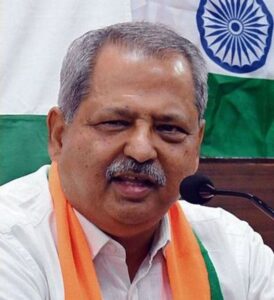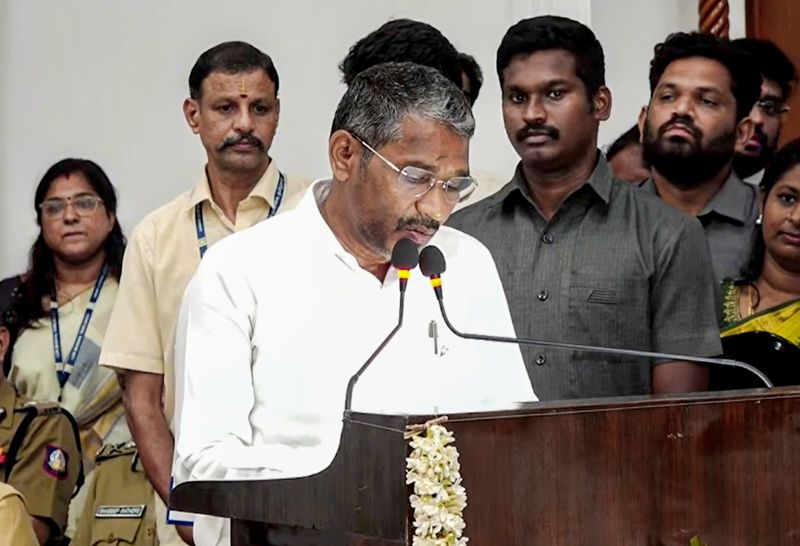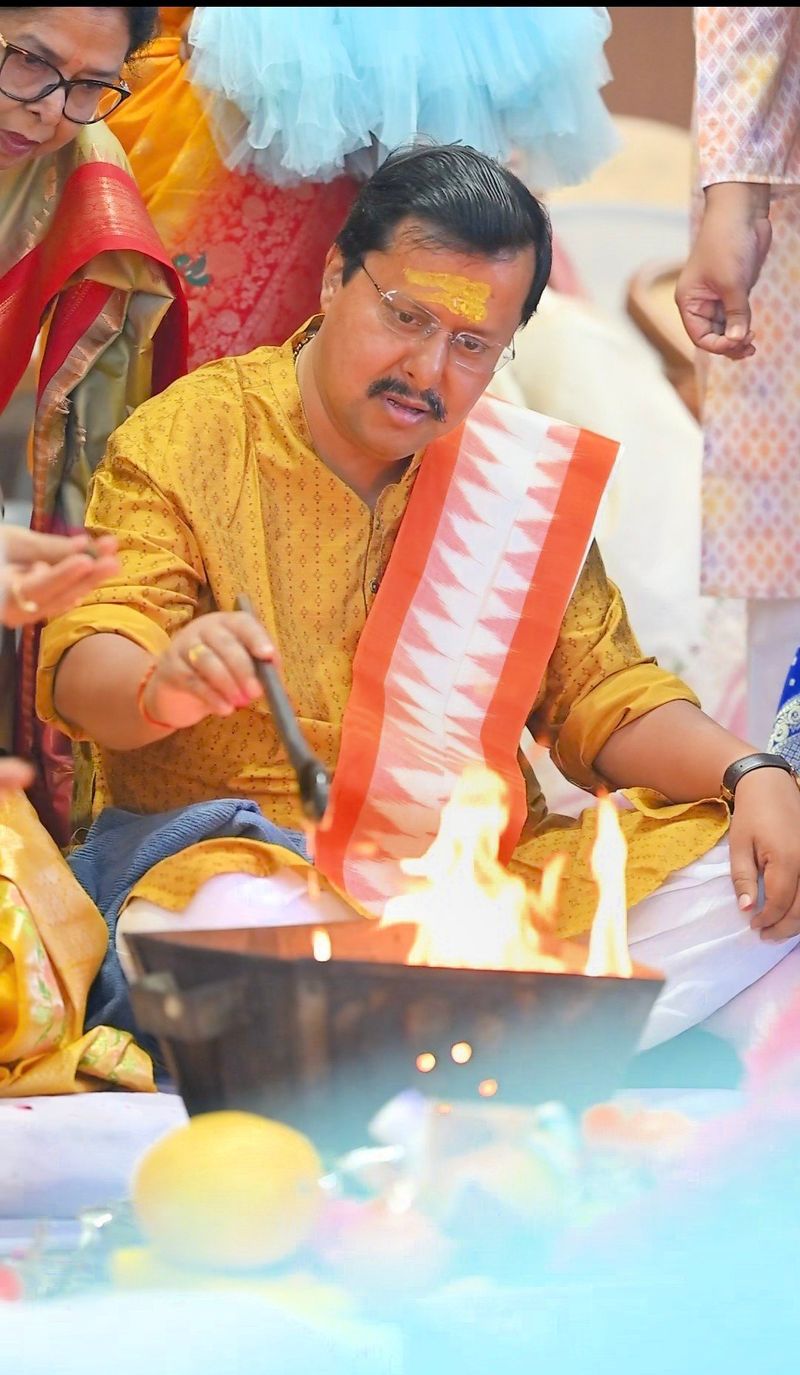

Ending months of scouting, the government’s Directorate of Estates has allotted an official bungalow to Bharatiya Janata Party (BJP) President Nitin Nabin, who moved into his new sprawling Lutyens home on Wednesday after performing elaborate housewarming rituals.Nabin’s residence, 1, Motilal Nehru Marg, was earlier occupied by the late patriarch of Jharkhand Mukti Morcha, Shibu Soren. The official informed that the JMM leader was allotted this residence in 2020 and he lived here until he passed away on August 4, 2025, after which the residence was vacant.Also, it is located in an elite zone and in the neighbourhood of 3, Motilal Nehru Marg bungalow, which was allotted to the late prime minister Manmohan Singh after he vacated the 7, Lok Kalyan Marg, Delhi (earlier named 7, Race Course Road- RCR). Currently, Dr Singh’s wife, Gursharan Kaur, is the occupant of this house and is now the neighbour of Nitin Nabin.Nabin was appointed the 12th BJP chief on January 20. It took the government a good long time to find him a suitable residence in Delhi.आज नई दिल्ली स्थित अपने सरकारी आवास एवं कार्यालय में विधिवत पूजा-अर्चना के साथ गृह प्रवेश किया। pic.twitter.com/BDcIJLwvWl— Nitin Nabin (@NitinNabin) June 17, 2026On the occasion, convoys of white SUVs turned into 1 Motilal Nehru Marg, one of the most sought-after addresses in the capital’s power corridor. Within hours, marigold decorations appeared across the sprawling lawns and the sound of rituals filled the air as Nabin performed a griha pravesh ceremony.Home Minister Amit Shah and other BJP leaders, including Union ministers Dharmendra Pradhan, Arjun Ram Meghwal, Kiren Rijiju and G Kishan Reddy, visited Nabin on the occasion. Visitors also included other MPs and Bihar’s chief minister, Samrat Choudhary.NDA allies, including Janta Dal-United (JDU) national working president Sanjay Jha, Lok Janta Party- Ram Vilas (LJP-Ram Vilas) supremo and Union minister Chirag Paswan, and Rashtriya Lok Morch (RLM) chief and Rajya Sabha MP Upendra Kushwaha, paid a visit to the BJP chief’s new residence to greet him on the occasion.This type-8 residence reverted to the government housing pool managed by the Directorate of Estates, which acts as an executive body for allotment. The transfer happened swiftly. The Cabinet Committee on Accommodation (CCA), chaired by the Home Minister Amit Shah, approved the bungalow’s allotment to Nabin, making him the newest occupant of one of the capital’s elite government residences.Privileges attached to the addressThe allotment underlines how parliamentary status shapes access to government housing.Nabin became a Member of Parliament (MP) in the Rajya Sabha (RS) on April 10, which now entitles him to occupy the residence on payment of a heavily subsidised licence fee that is automatically deducted from his MP salary, which would be around Rs 6,000-Rs 8,000. His accommodation also carries annual entitlements of 50,000 units of electricity and 4,000 kilolitres of water under government rules.Had Nabin not been an MP, then?But if Nabin had not been a member of Parliament, the financial terms would have been very different. Even the allotment would have raised many controversies and questions, given that Dhankhar is still living in Chhatarpur’s private property while his allotted bungalow, cleared soon after his resignation, is currently being renovated. Beyond allotment, the occupation of the bungalow would have attracted market rent charges, resulting in substantially higher monthly payments reaching lakhs.Extra perks of Type-VIII bungalowThe house itself functions as much more than a residence. Government staff is deployed to maintain the property, including electricians, plumbers and horticultural workers responsible for the extensive ground-related work.While the security arrangements include dedicated guard facilities (either CISF or Delhi Police) depending upon the security category of the individual. The resident also gets infrastructure for round-the-clock protection. A separate camp office allows political workers and visitors to access the premises without disrupting residential areas.Tale of two bungalowsJust a short walk away stands another residence that tells a different story about the relationship between power and official housing.At 3, Motilal Nehru Marg, the residence associated with ex-Prime Minister Dr Manmohan Singh remains occupied by his wife, Gursharan Kaur, and family following his death.Unlike ordinary government accommodation, the transition from a former Prime Minister’s residence is governed by special protocols that allow extended occupancy. The result is a striking contrast between two neighbouring bungalows on the same road. One bungalow emerging as a new political command centre, the other remaining a quiet reminder of a previous era in national politics.Allotment behind these mansionsBehind every allotment in Lutyens’ Delhi lies a tightened system that divides the country’s governing elite into separate housing pools.For politicians and the executive, access to the largest Type-8 bungalows is reserved for Cabinet ministers, national party leaders and senior political figures. Eligibility is determined through a hierarchy that takes into account parliamentary experience and service in positions under a codified set of rules known as the Central Government General Pool Residential Accommodation (CGGPRA) Rules, 2017.The judiciary operates outside this political queue altogether.The Chief Justice of India is assigned a designated Type-8 residence, traditionally linked to the office and equipped to support official work. Other Supreme Court judges draw accommodation from a separate judicial pool administered independently through the Supreme Court system.The armed forces are governed by another framework. The chiefs of the Army, Navy and Air Force occupy official residences linked directly to their appointments. These properties are institutional in nature and remain tied to the office rather than the individual.When entitlement ends, vacating norms walk inThe system is generous while an office holder remains entitled to it, but it can be equally uncompromising once that entitlement ends.Former ministers and MPs are generally required to vacate government accommodation within a limited period of not more than one month after leaving office. Retired Chief Justices and Supreme Court judges are granted a longer grace period of six months before surrendering their residences and moving to new allotments.Military chiefs, meanwhile, occupy official residences only during active service, with post-retirement occupancy governed by strict timelines of three months.When unauthorised occupation occurs, authorities can invoke provisions under the Public Premises (Eviction of Unauthorised Occupants) Act. Penalties can be imposed and eviction proceedings initiated to recover government property.Allotments on titles, not on personsThe movement from Shibu Soren’s tenure at 1 Motilal Nehru Marg to Nitin Nabin’s arrival illustrates a reality that defines Lutyens’ Delhi.Behind the high walls and tree-lined avenues, the bungalows never belong to the individuals who occupy them. Governments change, leaders rise and retire, and political fortunes shift. The residences, however, remain part of an elaborate administrative system that continuously reallocates the capital’s most prestigious addresses.This week, the marigold garlands outside house number 1, Motilal Nehru Marg, Delhi, signalled the arrival of a new occupant. They also served as a reminder of an old truth in Delhi’s power corridor, which the houses endure, while those who live in them are only passing through.