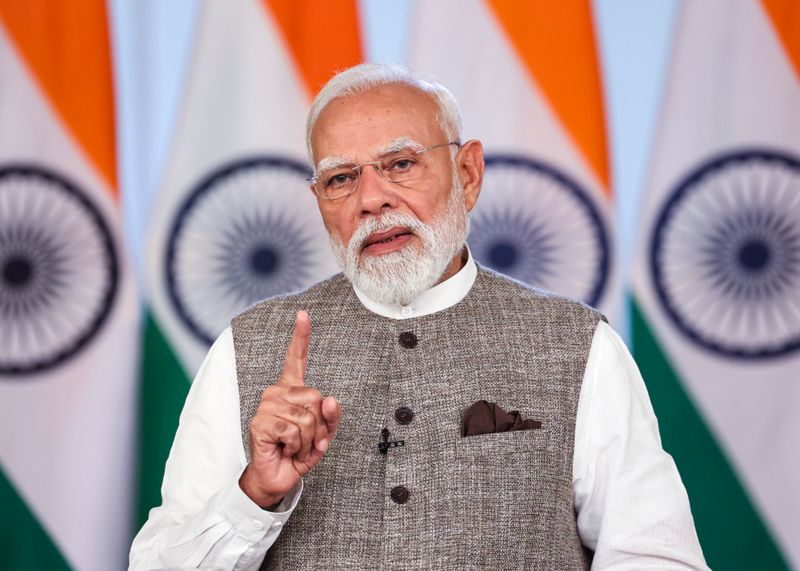

A privilege motion has been moved against the Prime Minister over his April 18 televised address to the nation, with senior Congress leader and Lok Sabha MP KC Venugopal alleging that remarks made during the speech amounted to imputing motives to Members of Parliament and undermining parliamentary privilege.In a detailed notice submitted to the Lok Sabha Speaker on Tuesday, Venugopal, who is also the Chairperson of the Public Accounts Committee, contended that the Prime Minister’s address, delivered after the Constitution (131st Amendment) Bill, 2026, failed to secure the required majority in the House, departed from established conventions governing such national broadcasts.Referring to the speech, Venugopal said that the Prime Minister had “made direct reflections on the voting pattern of Members of the Opposition and attributed motives to them”, an act he described as a “serious breach of privilege and contempt of the House”. He underlined that casting aspersions on MPs for their conduct inside Parliament violates long-standing protections guaranteed under parliamentary procedure.The notice emphasised that an address to the nation by a sitting Prime Minister is meant for moments of national importance and collective concern, not for political criticism. “Addressing the Nation by the Prime Minister of a Government not able to muster requisite majority in Parliament, for criticising the Opposition parties is unprecedented,” the letter read, adding that such conduct constituted “unethical and blatant abuse of power”.Venugopal also linked the controversy to the events of April 16 and 17, when Opposition parties collectively opposed the Constitution (131st Amendment) Bill, 2026. He pointed out that members had already expressed support for women’s reservation through the Constitution (106th Amendment) Act, 2023, which had been passed unanimously earlier. According to him, the Opposition’s stand against the new Bill was rooted in concerns over its provisions, including those tied to delimitation.“As a matter of fact… it is apparent that the Prime Minister… was so annoyed that he chose to address the Nation casting aspersions on Members of Parliament who were honestly performing their duties,” the notice read. It further asserted that such remarks “cast aspersions on the independence and integrity of elected Members of Parliament.”Citing constitutional principles, the letter stressed that no individual, “including the Prime Minister”, is permitted to reflect upon the conduct or voting behaviour of MPs in a manner that questions their intent. Any such imputation, it said, interferes with the free and independent functioning of Parliament and diminishes its authority.Venugopal has urged the Speaker to treat the matter with urgency, take cognisance of what he termed a “clear and deliberate breach of privilege”, and refer it to the Committee of Privileges for a detailed inquiry. He also called for the initiation of privilege proceedings against the Prime Minister.The Congress echoed this position publicly, with party general secretary Jairam Ramesh backing the move and criticising the tone of the Prime Minister’s address. In a statement, Ramesh said Venugopal had issued the notice following what he described as an unexpected show of “absolute Opposition unity and solidarity” that led to the Bill’s defeat.Ramesh further stated that a Prime Minister’s address to the nation has traditionally been reserved for “the overriding purpose of national unity and confidence-building”. He alleged that the April 18 speech instead reflected “unabashed partisan demagoguery”, claiming it included repeated attacks on the Congress party and would remain “a permanent stain” on the Prime Minister’s record.