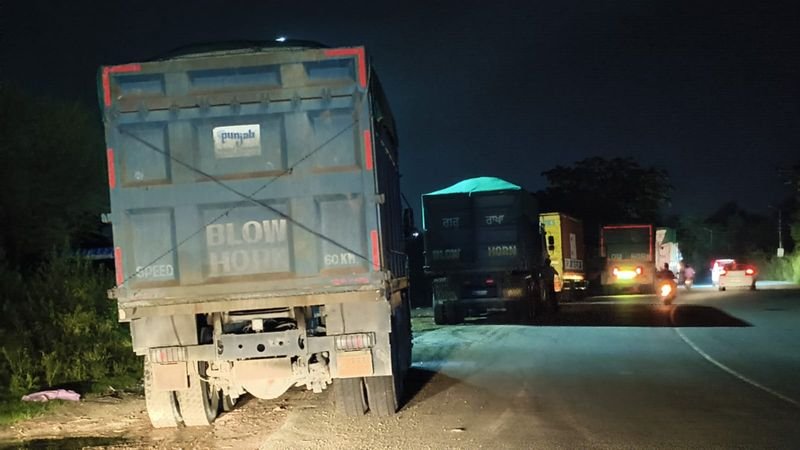

The alleged use of fake GST bills sourced from Himachal Pradesh to legalise illegally mined sand and gravel from the Swan and Sutlej rivers has come under the scanner of the Punjab Mining Department. Sources said the department had tightened billing norms after suspected irregularities surfaced.The sources told The Tribune that the issue came to light following complaints from operators of legal mining sites in Ropar district, who alleged that illegally mined material was flooding the market at lower prices and severely affecting their sales.According to the complaints, stone crusher units in the district were purchasing illegally mined material from Punjab and adjoining areas of Himachal Pradesh. They were subsequently using fake GST bills issued by firms registered across the border to show the material as legally procured.In many cases, a single bill showed the transportation of nearly 5,000 cubic feet of sand and gravel in one vehicle, which the sources said was practically impossible. Some bills even showed small vehicles and scooters transporting up to 1,000 cubic feet of material, raising suspicion over their authenticity.Following these findings, the Punjab Mining Department imposed a cap of 2,000 cubic feet of mining material that could be sold against a single bill.Bhavuk Sharma, Executive Engineer (Mining), Anandpur Sahib region, confirmed that the department had introduced the cap. Asked about the matter, Sharma said he had learnt that the Himachal Pradesh GST authorities had initiated investigations into certain cases in the Nalagarh region, but nothing of this kind had come to his notice in the Anandpur Sahib region.The sources alleged that several Punjab residents had opened firms in shops located in border areas of Himachal Pradesh with the sole purpose of issuing GST bills for mining material. These firms allegedly had little or no actual mining business and primarily sold GST invoices to stone crusher operators.Fake bills worth nearly Rs 15 lakh were being generated every day to facilitate the sale of illegally mined material, they alleged.The alleged modus operandi involved miners extracting sand and gravel illegally from Punjab rivers and selling it directly to stone crusher units. The crusher owners would then purchase GST bills from firms registered in Himachal Pradesh to show that the material had been legally sourced from the neighbouring state. While GST at 5 per cent was reportedly deposited, the process allegedly enabled illegally mined material worth lakhs of rupees to be regularised, resulting in substantial loss of royalty and other mining revenue to the Punjab Government.Data assessed by The Tribune revealed that only one legal mining site, NK-1, is operational in the Anandpur Sahib subdivision of Ropar district. Official records show that the mine has sold 96,098 tonnes of sand and gravel in the last one year. However, estimates indicate that stone crushers in the region have processed nearly 15 times that quantity.Paramjit Singh Pamma, environmental activist and former president of the District Bar Association, questioned the movement of hundreds of trucks and tippers carrying mining material from Himachal Pradesh into Punjab during the monsoon season.He said long queues of loaded tippers could frequently be seen parked along roads in border towns during evening hours, indicating that mining activity was continuing in adjoining areas despite the seasonal ban.