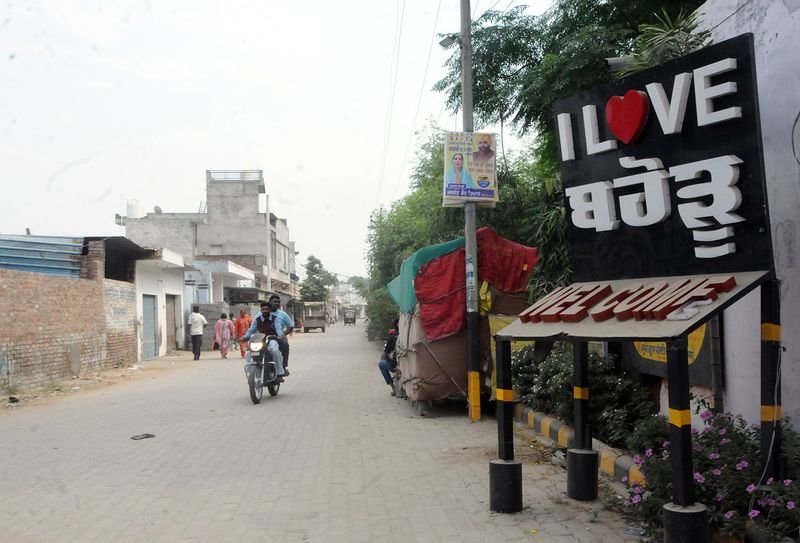

Natives of Bohru village have made significant contributions to historic events in this part of the country. They have been at the forefront of various social and national causes, from the Saka Nankana Sahib and the freedom struggle to the establishment of educational and healthcare institutions. Eminent villagers helped establish a school and a hospital, laying the foundation for the village’s development.Perhaps the most significant and emotional chapter in Bohru’s history is its connection with the Nankana Sahib massacre. During the Gurdwara Reform Movement, numerous Sikhs sacrificed their lives in the struggle to free historic gurdwaras from the control of mahants.Bhai Ishar Singh, a native of the village, was martyred in the Nankana Sahib tragedy on February 20, 1921. He had received an education in Sikh religion and history and remained associated with religious service. The Saka Nankana Sahib took place during the movement to liberate Gurdwara Janam Asthan at Nankana Sahib, now in Pakistan.Bohru not only produced generations of farmers but also personalities associated with education and social awakening. Master Jattvibedar Singh Lyallpuri Kamboj was among the founding members of the Gurdwara Sudhar Lehar and was also a freedom fighter.Born at Bohru on April 4, 1875, Lyallpuri became known as a teacher, journalist and political activist. He passed his matriculation from Hindu Sabha School and later completed his BA Honours from Khalsa College, standing first in Punjab. He subsequently completed his BT from National College, Lahore, again securing the first position.After completing his education, Jattvibedar Singh appeared for an interview for the post of tehsildar. During the interview, he sat on a chair before the British commissioner without seeking permission. When the British officer remarked, “This chair is not meant for you,” Jattvibedar Singh objected strongly and decided then and there that he would never serve the British government.He founded the Khalsa Bhujhangi Dal, which played an important role in the struggle for the liberation of gurdwaras and India’s freedom. In 1909, he prepared the draft of the Anand Marriage Act and helped secure its passage through the legislative process.In 1914, he started the weekly newspaper Sachcha Dhandora, through which he raised issues concerning the freedom of gurdwaras, India’s independence and Sikh affairs. He also established several educational institutions in Lyallpur.Pandit Madan Mohan Malaviya came to Jattvibedar Singh’s aid after the latter was sentenced to one-and-a-half years’ imprisonment and fined Rs 1,200 in a case involving the cutting of telephone wires and a pile of straw catching fire at Lyallpur railway station, following the Jallianwala Bagh massacre.Malaviya raised the matter in the Imperial Legislative Council, following which Jattvibedar Singh was released on July 23, 1919. He passed away in 1969.Contribution to education and healthcareAtma Singh was instrumental in setting up the first health clinic in the village, named the Atma Singh Janta Hospital. It is now the government-run secondary health centre.He also made a significant contribution to establishing a school in the village, which is now the government senior secondary school.A successful businessman, Atma Singh donated about 2.5 acres of land at the entrance to the village for the establishment of both institutions.