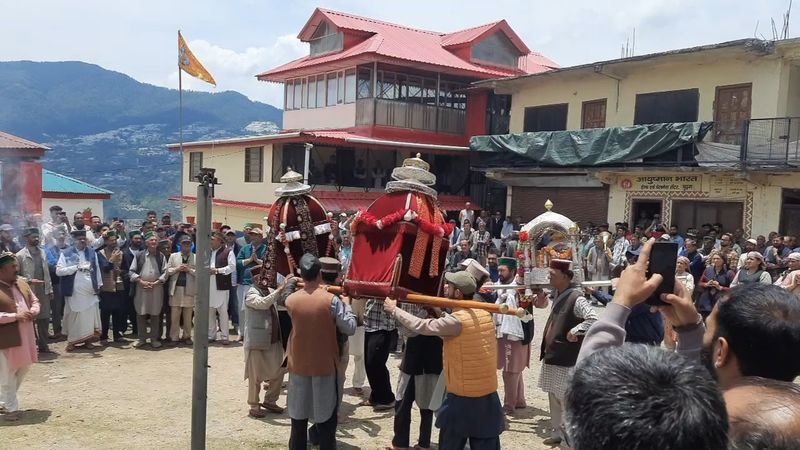

In times where independent living is considered a better option, witnessing the strength of community living comes across as quite refreshing. During a recent visit to an apple orchard in Himachal Pradesh’s Kotkhai district, I came across an interesting tradition called ‘kheen’ or ‘khin’.As a region, Himachal is known for its vibrant deity-centric way of life, where ‘every devta or devi lays down rules that determine the daily lives of villagers, and which the people of that locality abide by’. This structure continues to determine the region’s societal customs and practices and ‘kheen’ is a living testimony of that.The ‘kheen’ I attended was held at Purag pind (referred to locally as Purak), hosted by an affluent Rajput family. The village, an hour-long jeep ride away, also boasts of century-old mountain houses that are reminders of the rich and diverse Himalayan tribal history.When we reached there, we found almost 500 people seated in an open ground. Some of the women present told us that more than four local deities from the neighbouring villages were also congregating at ‘kheen’. The atmosphere was quite festive. Children were playing around, women in bright, local costumes were talking excitedly, while men were busy overseeing the arrangements. The scene echoed of bonhomie, kinship and vibrant community living.Essentially a traditional community feast, ‘kheen’ is hosted by a family of the village to celebrate a local deity (kul devta). Over the years, its purpose also includes gratitude and familial commemoration. Given that folk music and dance are symbolic of the cultural diversity, and the fact that the locals enjoy pleasing their gods through dancing and singing, ‘kheen’ is a popular example of local heritage.Depending on the host family’s wishes and means, ‘kheen’ can range from being a normal fair to an elaborate festival. In either case, the preparations are significant. Ceremonial processions are taken out that showcase musicians playing folk songs on their traditional instruments.There is also the village oracle, considered a man of eminence, called Gur, who is pivotal to a ‘kheen’ since he helps conduct the ritualistic oblations. And last is the much-talked-about aspect of a ‘kheen’ — dham, the time-honoured Himachali feast prepared in pure ghee by traditional Brahmin cooks called Bhotis.In addition, the much anticipated highlight of the ‘kheen’ is the arrival of the deities in their colourful ceremonial palanquins (palkis) amidst loud chants and cheer. Ensconced in their traditional palkis, the invited devtas are made to meet and greet in an act called milnee (similar to the one conducted at Hindu weddings).The carriers (who can only be men) station the devtas and their palkis within the consecrated space, inviting the gathering for the visual treat.While observing ‘kheen’, I felt that life extracts more from an individual in urban spaces than what it actually delivers. It brought forth a flood of memories of Chandigarh: watching Ramlila, celebrating Dasehra, Holi, Lohri with friends.The ‘kheen’ celebrations stirred in me a need for socio-cultural belonging, a feeling forgotten by people in the hustle and bustle of urban living. ‘Kheen’ re-acquainted me with ethnicity and community ties that nurture our baser instincts.— The writer is a freelancer