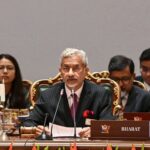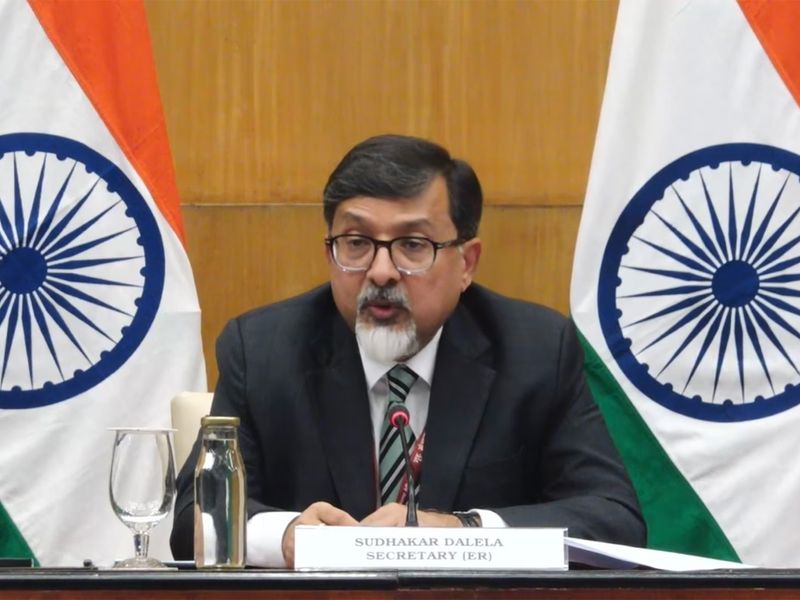

New Delhi [India], May 15 (ANI): Sudhakar Dalela, Secretary (Economic Relations) in the Ministry of External Affairs on Friday said that on almost all matters across the three verticals of BRICS partnership, the members found common ground.Dalela, while addressing the Special Briefing by MEA on BRICS Foreign Ministers’ Meeting, said that the outcome document reflects a common position on the reform of global economic governance.”Regarding the first question about the result of this meeting: as I mentioned, we have an Outcome Document posted online which contains 63 paragraphs. As Chair, it is our responsibility to facilitate dialogue among all members. I am happy to share that on almost all matters across the three verticals of our partnership, we found common ground,” he said.Dalela said that the fact that we have a strong outcome document is very positive.”The fact that we have a strong outcome document covering global governance, agriculture, health, the UNSC, and terrorism is very positive. The document reflects a common position on the reform of global economic governance, the condemnation of terrorism, climate change, and human-centric AI. I would request everyone to study this document carefully. It provides a very good basis for our preparation for the summit in the second half of this year. We have more than 20 thematic ministerial tracks coming up which will feed into the summit. I am confident we will continue to build consensus,” he said.Dalela said that there were differing views among some members regarding the situation in West Asia, but they also highlighted the value of diplomacy.”Regarding the situation in West Asia, there was a frank and candid sharing of assessments. It is a fact that there were differing views among some members regarding that specific situation. However, the members shared perspectives including the need for an early resolution of the crisis, the value of diplomacy, respect for sovereignty, and the importance of safe maritime commerce. As Chair, we reflected these views transparently. While there were some differing perspectives on regional elements, we managed to build consensus on nearly everything else. We will continue to engage through the Sherpa channel to find common ground on the remaining issues,” he said.He also said that regarding the question on Palestine, the ministers articulated that common view for the creation of a Palestinian state with East Jerusalem as its capital.”Regarding the question on Palestine, BRICS has had a very coherent and clear view. If you look at previous declarations, we have maintained a common stance. The ministers discussed this in a candid manner and articulated that common view again, calling for the creation of a Palestinian state with East Jerusalem as its capital. I don’t see this as a departure, but rather a reflection of BRICS countries expressing a collective view,” he said.He further said that there was a discussion on the global economic outlook and their disproportionate impact on developing countries.”Regarding the question on trade and unilateral tariffs (Paragraph 42), there was a discussion on the global economic outlook and concerns regarding unilateral measures and their disproportionate impact on developing countries. Our focus remains on a rule-based, non-discriminatory, and inclusive multilateral trading system with the WTO at its core,” he said.Meanwhile, the Chair’s Statement and Outcome Document at BRICS Foreign Ministers’ Meeting said that the Ministers noted the current global context of polarization and distrust and encourage global action to strengthen international peace and security. They called on the international community to respond to these challenges and associated security threats through politico-diplomatic measures to lower conflict potential and stressed the need to engage in conflict prevention efforts, including through addressing their root causes.They underscored that security among all countries is indivisible and reiterated their commitment to the peaceful resolution of international disputes through dialogue, consultation and diplomacy. They encouraged the active role of regional organizations in conflict prevention and resolution and support all efforts conducive to the peaceful settlement of crises, the statement read.They highlighted, in the context of international disputes, the importance of preventive diplomacy and mediation, with the consent of relevant parties, as essential tools to avoid crises and prevent their escalation, in accordance with the Purposes and Principles of the UN Charter. In this regard, they agreed to explore avenues for cooperation on the prevention of armed conflicts, the UN peacekeeping missions, African Union peace support operations, and mediation and peace processes. (ANI)(This content is sourced from a syndicated feed and is published as received. The Tribune assumes no responsibility or liability for its accuracy, completeness, or content.)