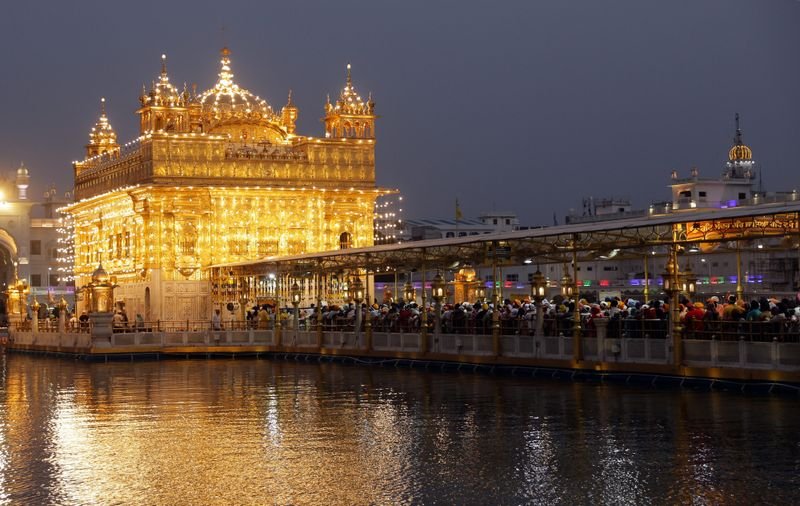

As Amritsar celebrates the 450th anniversary of its foundation, the holy city faces an uncomfortable contradiction—a populous city brimming with tourists that does not have a government-run public transport service.The historic city is home to nearly 16 lakh people and is visited by thousands of devotees and tourists. The people have to depend on makeshift and unauthorised autorickshaws and e-rickshaws to travel across the city.Over the past decade, two major public transport projects involving nearly Rs 600 crore have failed to provide a sustainable solution to the city’s mobility needs. The City Bus Service was discontinued within two years of its launch in 2014, and the Bus Rapid Transit System (BRTS), popularly known as the Metro Bus, was shut down in July 2023.Now, with 100 electric buses planned for the city, the question is whether the authorities have learnt from the past failures or are just going to repeat them.A city bus service was first promised to Amritsar residents after the Shiromani Akali Dal (SAD)-Bharatiya Janata Party (BJP) government came to power in 2007. However, it took seven years for the promise to translate into a functioning service. The then Deputy Chief Minister, Sukhbir Singh Badal, inaugurated the project on January 28, 2014. Funded under the Jawaharlal Nehru National Urban Renewal Mission (JNNURM), the project’s first phase introduced 60 buses.The project, however, soon ran into financial troubles. Within two years, most buses had gone off the road. In the absence of adequate financial support to meet operational expenses, the service was no longer viable. The defunct vehicles were eventually left parked at the Mall Mandi bus stand, turning a much-publicised initiative into a reminder of the city’s failure to sustain public transport.The next major initiative came in December 2016 when Sukhbir Singh Badal launched the BRTS project ahead of the Assembly elections. Conceived as a modern mass transit system, the project was expected to provide faster and more affordable connectivity across the city.Yet, the service struggled to operate consistently from the beginning. It reportedly reached a point when it catered to around 80,000 passengers a day when travel was free. However, the number fell to nearly 20,000 after fares were introduced. For many commuters, auto-rickshaws were a more financially viable and convenient alternative.The BRTS required a substantial and sustained financial commitment. Around six companies were roped in for various operations and more than 1,000 employees were outsourced. With salary payments and operational expenses becoming recurring challenges, the service was suspended several times, sometimes for months. It ultimately ceased operations in July 2023.The failure did not end with the suspension of buses. The infrastructure, built at a reported cost of around Rs 600 crore, continued to occupy valuable road space without serving commuters. Last month, orders were issued for its demolition. However, the Amritsar Vikas Manch approached the Punjab and Haryana High Court and got a stay order on the demolition.The unused BRTS infrastructure has since become another challenge. Sections of the corridor and associated structures remain on busy roads, affecting traffic movement and raising concerns about road safety. What was intended to ease congestion has, in its present condition, become a source of concern for commuters.Social activist Pawan Sharma, who has been campaigning on the issue, believes the proposed electric bus service must not follow the same trajectory. He has called for adequate operational funding and clear accountability of officials before the 100 electric buses expected under a Centre-funded initiative start running on city roads.He argued that merely procuring buses will not solve the problem unless the government makes provisions for their maintenance, staffing, charging infrastructure and day-to-day operations. Without a sustainable financial model, the new fleet could become another expensive asset that fails to provide its intended service.Amritsar Vikas Manch patron Kulwant Singh Ankhi holds the political establishment responsible for the repeated failures. He says successive governments have shown little sustained interest in building and maintaining essential urban infrastructure.“The silence of political leaders encourages governments and administrative officials to continue neglecting such projects,” Ankhi says, stressing that public transport requires long-term planning and accountability, rather than announcements and inaugurations.For a city that attracts devotees from across the country and abroad, the absence of a reliable public transport affects more than everyday convenience. It increases dependence on unsafe and informal modes of travel, adds to congestion and makes commuting difficult for residents.“Amritsar’s 450th foundation anniversary offers an opportunity to reflect on the city’s future, not just celebrate its past. The city has already seen buses purchased, infrastructure built and public money spent, only for the services to disappear,” added Ankhi.