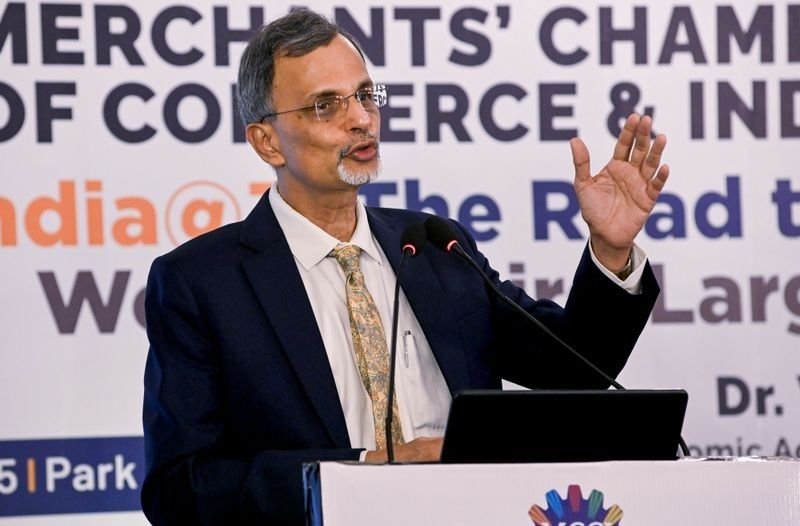

Amid growing concerns over the country’s ethanol policy, Chief Economic Advisor V Anantha Nageswaran and Akash Poojari, consultant, Department of Economic Affairs, have penned an opinion piece to argue that India should bring back a petrol variant with a lower ethanol blend to protect millions of older vehicles.E20 petrol, containing 20% ethanol, was rolled out last year and has been the only petrol variant available for sale at fuel stations across India since April 1 as part of efforts to cut India’s dependence on imported oil, support domestic agriculture and reduce emissions.Some users, particularly of non-BS-VI vehicles, have, however, reported a drop in vehicular performance and damage to auto parts – a claim the government has repeatedly dismissed as being far from the truth. The Oil Ministry has maintained that it’s not feasible to build and maintain infrastructure to supply multiple grades of fuel.In their piece, the authors said the evidence did not support widespread claims that E20 damaged vehicle engines, but argued that the policy could pose problems for India’s large fleet of older two-wheelers.“Dismissing complaints outright would be a mistake because beneath the noise lies a real problem and a much larger question,” they wrote. With a disclaimer that the opinion they were expressing was personal, the two authors said India had roughly 75 to 80 million older two-wheelers built before BS-IV that ran on carburettors. A carburettor cannot sense the extra oxygen in the blend and adjust for it, so on E20, the engine draws in too little fuel for the air it draws in and runs hot.Older rubber seals that are not rated for ethanol pose another problem as they degrade on contact with the fuel regardless of engine temperature, they added. The authors recommended restoring a lower-blend fuel, such as E10, alongside E20 to protect older vehicles while allowing the government to continue its ethanol programme.“The government should protect the existing fleet while the retrofit programme catches up,” the piece read. Ethanol contains less energy than petrol, meaning E20 can reduce the distance a vehicle travels on a litre of fuel. The authors estimated the overall energy penalty at around 6-7%.The opinion piece also questioned whether India should increase ethanol blending beyond the current E20 target, arguing that higher blending levels could intensify competition between fuel production and food crops.”The engine row we witnessed was never the real argument. The real one is about what we choose to grow, and what we will not be able to take back,” said the authors.