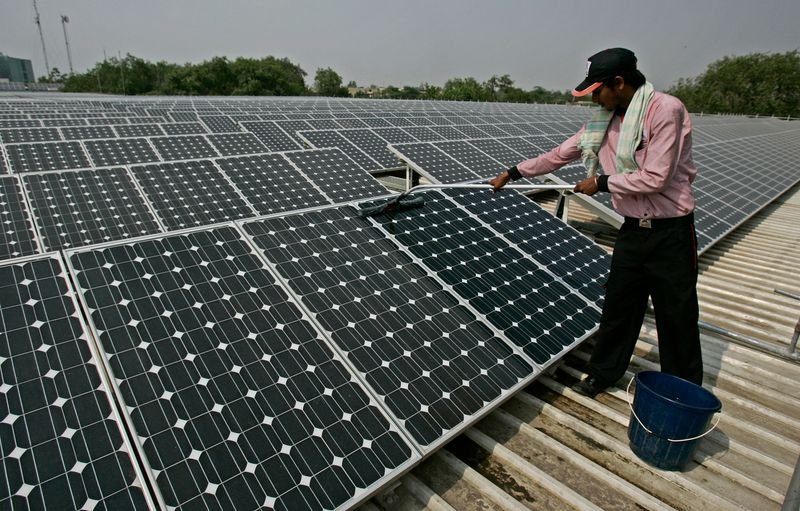

Terming Building Integrated Photovoltaic System (BIPV) technology to be well suited for a wide range of climatic zones and building types in India, researchers have flagged several barriers such as lack of dedicated national standards, weak policy support, high investments, limited local production capacity, lack of awareness and technical issues which hinder the widespread adoption of this technology.BIPV is one of the most promising technologies for sustainable urban energy production and is different from traditional rooftop add-on photovoltaic panels because they are built into the building envelope comprising façades, roofs, skylights, windows and curtain walls at the time of construction.This technology offers several benefits such as optimisation of land use, improvement of building appearance, and improvement of energy efficiency in urban buildings. They have tremendous multifunctional potential, especially when the land for ground-mounted PV systems is restricted in urban areas with high population density.BIPV, according to the researchers, is no longer just electricity generating technology but a suitable architectural solution that can be used for both energy generation and energy efficient building design as well as for sustainable urban development.Case studies show successful deployment of BIPVs in a wide range of climatic zones and building types in India with reasonably good operational reliability, energy returns, and durability in the Indian environment.“The versatility of these properties makes BIPV a key element for the realisation of future buildings with a net zero energy consumption and for smart cities. Although the merits are present, the review also highlights some barriers which still hinder the widespread adoption of BIPV in India,” the researchers said.Lack of dedicated national standards, weak policy support, high up-front investment, limited local production capacity, lack of awareness on the part of stakeholders, and technical issues relating to thermal effects and maintenance and system integration remain important challenges, the researchers observed.In addition, there is lack of clarity in defining BIPV as a different type of Building-Attached Photovoltaic (BAVP) system, which adds further difficulties when comparing and formulating policies. It will take a coordinated effort by policymakers, architects, engineers, researchers, industry, and urban planners to address these issues.The study, conducted by five researchers from Madhav Institute of Technology and Science, Gwalior, Delhi Technological University, New Delhi and Lakshmi Narain College of Technology, Bhopal, has been published in the current issue of Unconventional Resources, a peer reviewed international journal.Pointing out that the growing urban population, growth of commercial infrastructure and rising residential demands are putting more pressure on the existing power generation and transmission systems in India, the study said that the use of conventional power generation based on fossil fuels is not only a major source of pollution but also poses problems of energy security, energy instability.“Therefore, renewable energy technologies, especially solar photovoltaic systems, have received much attention for sustainable development and carbon emission reduction of cities. India has a tremendous potential for solar power because of its geographical advantage and the high solar incidence in the country,” the researchers said.