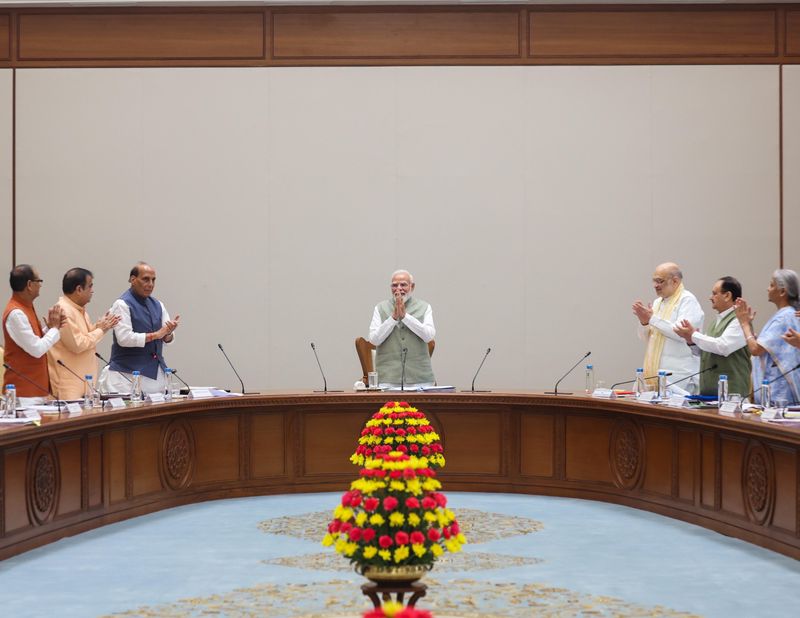

The Union Cabinet on Wednesday marked Prime Minister Narendra Modi becoming the longest-serving elected Prime Minister with a congratulatory resolution and a standing ovation.As the Cabinet assembled at Sewa Teerth, all ministers rose to applaud PM Modi. Later, a resolution was passed lauding his record tenure as Prime Minister for consecutive terms.PM Modi was first elected in 2014 and took the oath of office on May 26, 2014. Today, he has surpassed Pandit Jawaharlal Nehru, who served as Prime Minister from May 13, 1952, to May 27, 1964. Nehru’s tenure as an elected Prime Minister spanned 4,398 days, while Modi’s tenure has reached 4,399 days as of June 10, 2026.The resolution noted the significance of the event, stating that the achievement came given India’s scale and complexity of governance in a nation of more than 1.4 billion people characterised by extraordinary diversity in language, culture, religion and geography.“At a time when many countries have witnessed political churn, frequent changes in government and policy uncertainty, India has experienced continuity in leadership and governance. It reflects sustained public trust across three consecutive national mandates in the world’s largest democracy. Independent global surveys have consistently ranked Prime Minister Modi among the world’s most popular democratic leaders. He has also been conferred with the highest civilian honours of more than 30 countries,” the sources said about the significance of the day.The resolution highlighted that PM Modi rose from a humble socio-economic background to occupy the highest elected office without the support of a political dynasty, describing it as an illustration of the opportunities and social mobility offered by India’s democratic system.Other points of the resolution, sources say are—during Prime Minister Modi’s tenure, nearly 250 million Indians moved out of multidimensional poverty, rapid expansion of digital public infrastructure, large-scale infrastructure development, improvements in welfare delivery, and broad-based socio-economic progress; during this period, India has strengthened its position as the world’s fastest-growing major economy, concluded major trade agreements with leading economies, and emerged as a more influential voice on global issues, including development, technology, climate action and the priorities of the Global South.