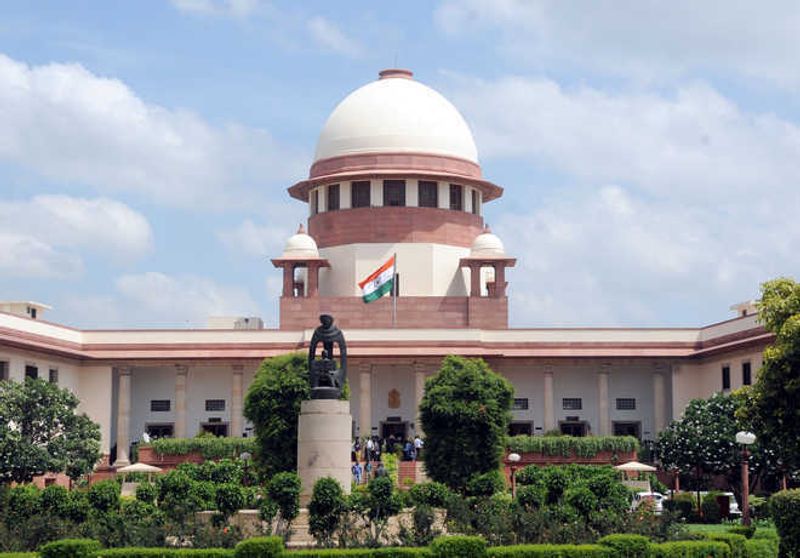

Can law students be debarred from appearing in examinations for want of insufficient attendance?Faced with this question, the Supreme Court on Wednesday asked the Bar Council of India (BCI) – which regulates the legal education in the country — to respond to a petition challenging a Delhi High Court judgment against debarring law students from appearing examinations solely on the ground of attendance shortage.While issuing notice to the BCI and others on a petition filed by Narsee Monjee Institute of Management Studies (NMIMS) against a November 2025 Delhi High Court judgment, a Bench led by Justice Vikram Nath, however, refused to stay the high court’s order.“We are not suspending that order. We will hear the matter, decide and lay down the correct position of law,” said the Bench. It clubbed the matter with pending petitions against BCI circulars on mandatory criminal background disclosures, declarations regarding simultaneous academic pursuits, employment status and attendance compliance for law students.Rule 12 of the BCI Rules on Legal Education, 2008 mandated a minimum of 70 per cent attendance, while already permitting limited condonation up to 65 per cent in exceptional cases.On behalf of NMIMS, senior counsel Mukul Rohatgi contended that the Delhi High Court judgment effectively rendered attendance requirements meaningless. “The High Court says no attendance is required anywhere. People don’t want to go to college. I am wondering why we went to college then,” Rohatgi said.“The impact of that order would be that the National Law University hostels would be only boarding and lodging facilities, nothing else. The High Court was swayed by the suicide of the student, that seems to be the issue,” the Bench said, agreeing with Rohatgi.The High Court had held that no student enrolled in a recognised law college or university could be detained from appearing in examinations or continuing academic progression solely due to insufficient attendance.The High Court’s verdict had come on a suo motu petition initiated by the Supreme Court and later transferred to it in relation to the death of Sushant Rohilla — a third-year law student — by suicide in 2016 after allegedly being barred from appearing in semester exams due to lack of requisite attendance.The court had ordered all educational institutions and universities to constitute grievance redressal committees (GRCs) in terms of the University Grants Commission Regulations, 2023.“The BCI shall undertake a re-evaluation of the mandatory attendance norms for the three-year and five-year LLB courses in India…,” it had said.The High Court had said the BCI should incorporate the modification of attendance norms to enable giving credit to moot courts, seminars, model parliament, debates and attending court hearings.However, the petitioner contended that the Delhi High Court’s judgment triggered a “floodgate” of litigation by students seeking permission to sit for examinations despite attendance shortages, undermining academic discipline and institutional autonomy.Maintaining that classroom teaching remained foundational to legal education, particularly in five-year integrated law programmes where students join college directly after school, the petitioner sought to emphasise that lectures, tutorials, moot court exercises and practical training could not be substituted entirely by internships, competitions or other co-curricular activities.