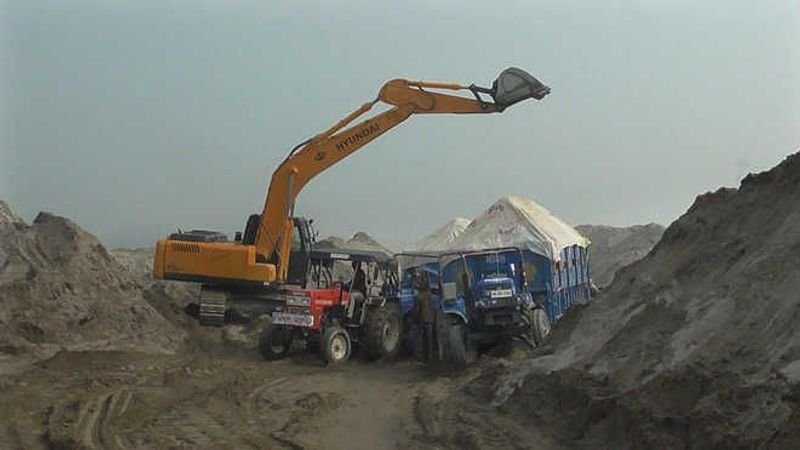

Mining projects getting environmental clearances in the Great Indian Bustard (GIB) habitat has become a concern for the protected species. The Centre’s Expert Appraisal Committee has recently approved a limestone mining project in Rajasthan’s Jaisalmer which falls close to GIB “priority area”.The project has a mining lease area of more than 250 ha, which is 1.77 km from a GIB priority area.Wildlife Institute of India (WII) conducted a site assessment study. In its report it said that the indirect impact of the mining lies outside the priority GIB area. “It is close to existing human settlements and infrastructure and does not constitute critical GIB habitat. Therefore, mining operations and GIB conservation can coexist in this area. However, the Indirect Impact Zone falls within the GIB priority area and includes habitats used by species associated with GIB, a focused conservation and mitigation plan has been proposed,” the minutes of the meeting of the appraisal committee said.WII also stated that if mining was permitted, restoration of mined areas should be done immediately after excavation, by doing soil replacement, levelling, reseeding with native grasses.“Post-restoration, mining areas must not be reopened for further extraction, as repeated disturbance would negate restoration gains, interrupt land integrity, and create continuous, long-term impacts on wildlife and habitat quality,” it warned.The study also highlighted that mining activities could reduce grassland productivity on which GIB depends, and disturbance from the project.Recently, UltraTech Cement Limited’s limestone mining project in Jaisalmer’s Joga, spread over more than 400 hectares and including a stone-crushing unit, was recommended by the appraisal committee for the grant of terms of reference (ToR). The proposed project is located 5.8 km from a Great Indian Bustard (GIB) priority area. ToR is a formal document outlining the scope, objectives, methodology and reporting requirements of the environmental impact assessment (EIA) study for a proposed project.In July, the EAC had also recommended Star Cement North East Limited’s limestone mining project in Joga for the grant of ToR. The 960-hectare project includes 280 hectares of mining-lease area within a GIB habitat.From an estimated population of 1,260 to 1,400 birds in the early 1970s, the wild GIB population has plummeted to only about 150. Roughly 130 reside in Rajasthan, while the remaining survive precariously across Gujarat, Maharashtra, Karnataka, Telangana and Andhra Pradesh, facing a high risk of local extinction.