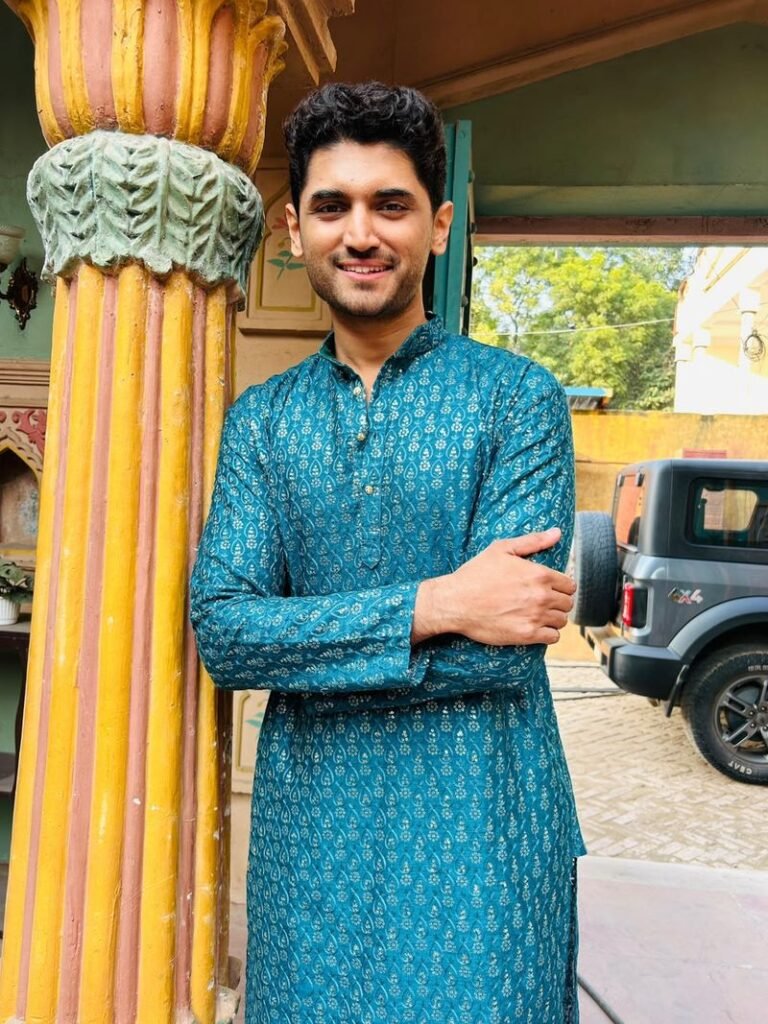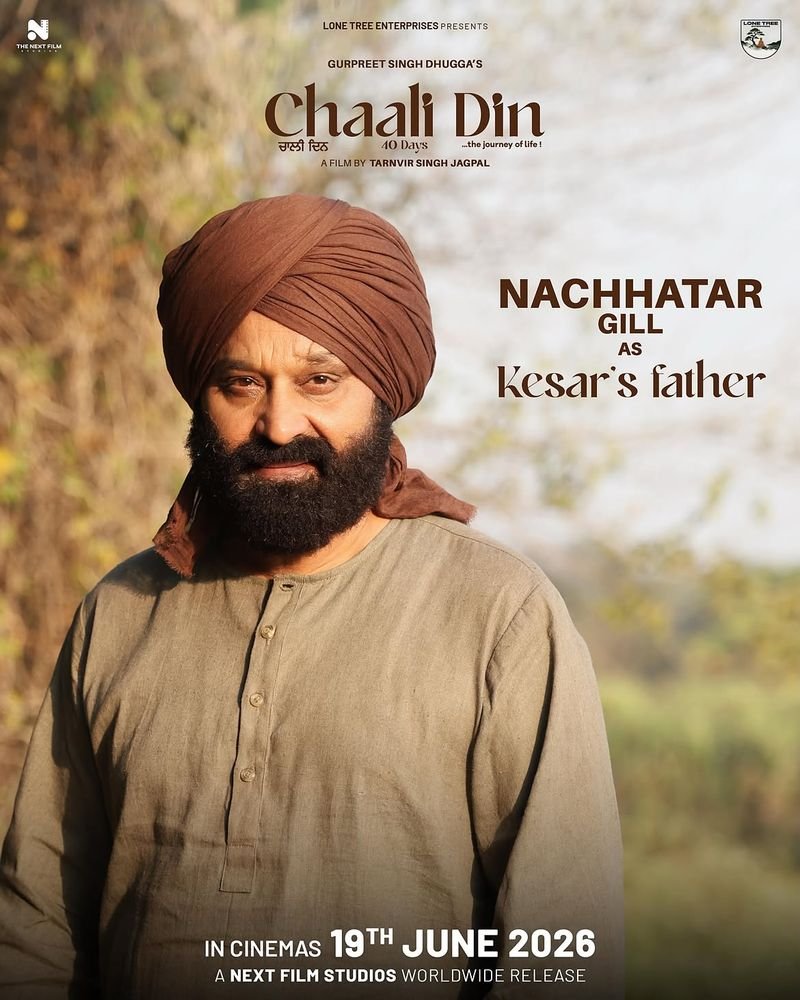

For Dr Gurpreet Singh Dhugga, storytelling has always been about making sense of life. A physician by profession and a writer by passion, Dhugga’s creative journey has taken him from the pages of Punjabi fiction to the world of cinema, with his novel Chaali Din now available to audiences worldwide through OTT release.Born in Khambra village in Jalandhar, Punjab, Dhugga completed his MBBS from Government Medical College, Patiala, before moving to the United States, where he pursued an MD in Medicine from the University of Nevada, Las Vegas. He went on to specialise in Palliative Medicine and Geriatric Medicine. Yet alongside a demanding medical career, literature remained a constant presence in his life.That intersection between professional experience, personal observation and imagination lies at the heart of Chaali Din. “Any writing is a mix of author’s observations, experience and imagination,” Dhugga says. For him, authenticity is what allows a story to connect with readers, and he believes it is one of the reasons Chaali Din touched such a wide audience.The idea for the novel emerged from Dhugga’s lifelong love of reading. He was particularly drawn to books that explored the philosophy behind human struggles, desires and the things people pursue throughout their lives. The concept of Chaali Din remained with him for more than a year before he finally began writing it. The first draft took approximately six months, followed by another six months of revisions and refinement.The novel eventually found an audience far beyond what its author may initially have imagined. With around 1.5 lakh copies sold, Chaali Din travelled across the Punjabi diaspora, reaching readers in different parts of the world. It was the readers themselves who first began asking whether the story could be brought to the screen.As the popularity of the book grew, people from the film industry approached Dhugga about acquiring the rights. Eventually, he realised that the transition from literature to cinema was perhaps inevitable — and that he wanted to be personally involved in the process.The resulting feature film, directed by Tarnvir Singh Jagpal and featuring Gurpreet Ghuggi in the lead role, presented Dhugga with an entirely new creative challenge. He was involved in the film as its writer and producer, giving him the opportunity to help ensure that the essence of the novel survived the transition to another medium.“The first challenge was to capture the soul of this novel within a screenplay of 60–70 scenes,” he explains.For Dhugga, the difference between writing fiction and writing a screenplay is fundamental. In a novel, dialogue can reflect a character’s emotions, while cinema often has to use dialogue and visual storytelling to propel the narrative forward. Compressing the inner world of a novel into a finite number of scenes therefore required a different approach. The film that released in June this year, got positive response.Yet Dhugga does not see the book and film as competitors. Instead, he considers them complementary works. His primary concern during the adaptation was to preserve what he calls the “soul” of Chaali Din — its understanding of human struggles as a universal experience that transcends time, race, gender and geography.That universality is perhaps unsurprising given Dhugga’s medical career. As a physician, particularly one who has worked with people during some of the most vulnerable moments of their lives, he has witnessed human beings stripped of many of the social identities that usually separate them.“Over the years I realised a common thread which transcends our cultures and beliefs,” he says, “and that is what raw human survival is.”That insight has also shaped his worldview as an immigrant. Living away from India, Dhugga says, pushed him outside his comfort zone and exposed him to different cultural beliefs and ways of life. Much like travelling, he believes that experiencing another society broadens one’s perspective. It also helped him recognise that beneath outward differences, people are fundamentally alike.At the same time, distance from home strengthened rather than weakened his connection with his roots. Dhugga visits India twice a year and remains involved in development work in his village. For Dhugga, cultural identity is not about resisting the wider world but about remaining grounded while engaging with it. “For a tree to grow it needs to stay connected to its roots,” he says.His creative life extends beyond writing. Photography, like literature and cinema, offers him another way to process and express human emotions. He sees different art forms as different languages for the same fundamental purpose — understanding and expressing ourselves.Now, with Chaali Din on OTT, Dhugga is particularly excited about the film’s ability to reach audiences beyond the traditional Punjabi literary world. The novel has already travelled extensively through the global Punjabi community; he hopes the film will follow the same path and bring the story into homes across the world.For him, however, the journey is not about simply turning a successful book into a film. It is about carrying a particular understanding of human life from one medium to another.Chaali Din is streaming on KableOne.