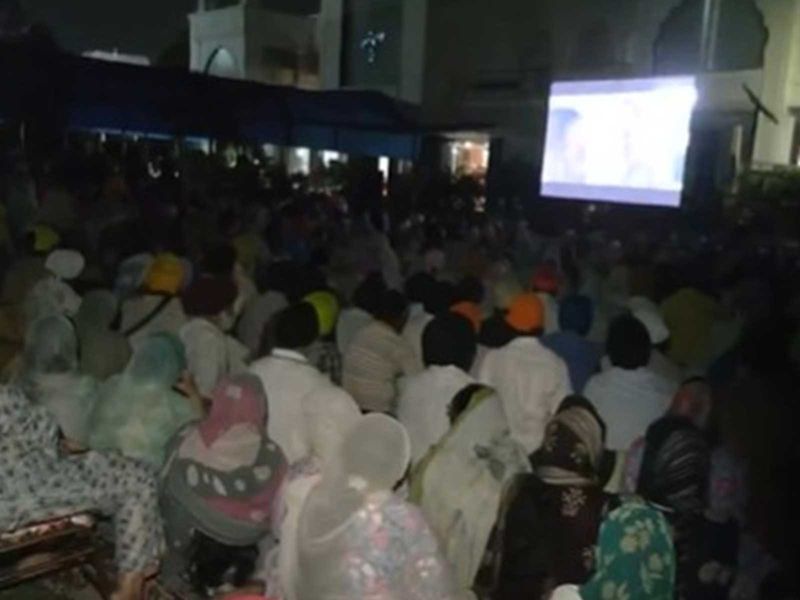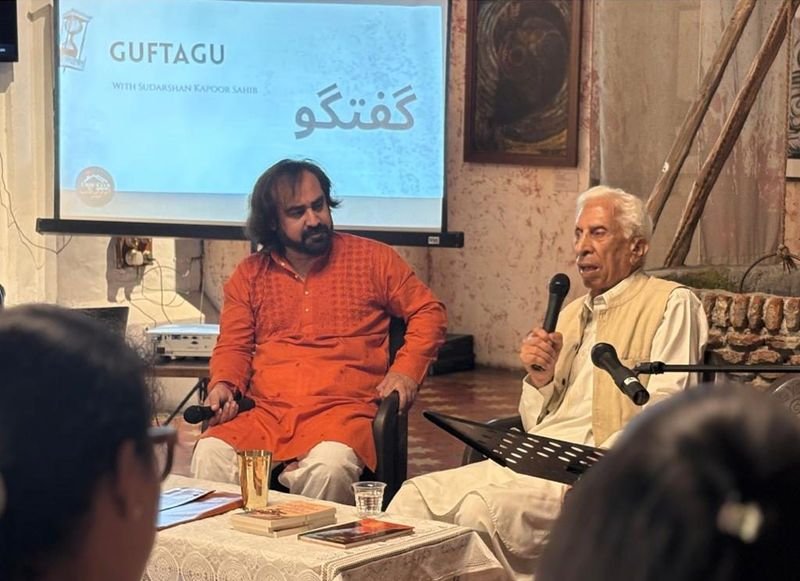

It is believed that the greatest lessons are learnt not from the present but from the past. It serves as a textbook of life lessons, offering a blueprint to not repeat the cycle of trauma, violence or conflicts without knowing their cost. The Partition of India in 1947 was one such lesson in history.Revisiting and retelling the stories that originated from the pain, survival and in the aftermath of brutality of Partition, the Urdu Club Amritsar curated a special evening of poignant memories, literature and music. Titled “Charagh-e-Yaad”, the intimate event brought alive the untold stories of partition. Organised by Urdu Club Amritsar in collaboration with Timeless Amritsar & Partition Museum, the programme remembered the pain of Partition, human struggles and the spirit of resilience through storytelling, poetry and music and real life stories.One such story is of Sudarshan Kapoor, a 96-year-old former advocate and member of the Amritsar civil society. The nonagenarian, who witnessed the Partition as a 16-year-old young man, shared his personal experience. Recalling the days of uncertainty, migration and the emotional trauma faced by countless families during one of the most defining moments of Indian history, his first-hand account connected the audience with a living chapter of the past.“I was 16, a boy, who watched everything unfold from the sidelines. I saw neighbours, who lived integrated into the strong secular society of Amritsar for years, become strangers overnight. Many left without saying goodbye, many never reached their intended destination. Only telegrams were received later,” he said. Kapoor refers to the Partition as the “saddest moment of world history”, having personally seen the psychological trauma, separation, and instant displacement of families. His testimony as a survivor of Partition forms part of oral archives at Partition Museum.“The Hindus, Sikhs, Muslims all lived with mutual respect and harmony in Amritsar, until several political agendas stripped them of their home, belongings and even lives,” he said. Parallel to his testimony, poet Dev Hindvi and Supnandan, recited poetry and stories penned by iconic writers of Urdu at the time.Manto, Chughtai, Chander’s stories take centre stageThrough the stories of Saadat Hasan Manto, Ismat Chughtai, Krishan Chander, Rajinder Singh Bedi and Qurratul Ain Haider, the evening explored the real life human stories behind history.“I believe that the past serves as a great reminder of what not to do rather than what do to. The Gen Z protests showed us how the newer generations understands what is important and worth fighting for. Through these writers, who gave Indian and world literature some of its most heart wrenching and real account of events behind one of the world’s biggest migration event, we understand what happened and why it shouldn’t repeat,” said Dev Hindvi, founder of Urdu Club, Amritsar.So, we had Manto’s ironic ‘Toba Tek Singh’, Ismat Chugtai’s ‘Jadien (Roots)’, where a matriarch, Amma, stubbornly refuses to pack up or leave her ancestral haveli bound to the home that always was hers despite the fractured lines drawn and Qurratul Ain Haider’s heart-wrenching ‘Jilawatan (The Exile)’, which talks about both physical displacement and the emotional alienation experienced by individuals uprooted from their native cultures or traditional environments through three different characters.Dev shared that the more we talk about and share their stories, the more we help archive them. “Being from Lucknow, we saw Anglo Indians, who did not leave the country, Sikh refugees, who came to Kanpur and Lucknow from Pakistan settle uncomfortably to the new home. My father, who was a young lad, and grandfather used to read letters written to them in Urdu by their loved ones from Karachi or Lahore. In them, they talked about how the ancestral homes were being kept as an amanat (safekeeping) for the longest time. My nanaji, maternal grandfather, never really forgot about his home in Karachi. We used to go to Wagah border with binoculars and he used to ask me, Can I get one through which we can see Karachi? If we do not read or talk about their stories we will never learn or evolve,” said Hindvi.“There were many real life characters,like Toba Tek Singh , who longed for a way back to their ‘original home’ their roots but never got closure or got to make that trip,” said Rajwinder Kaur, Administrator, Partition Museum. She emphasised the importance of creating platforms where history is not only preserved through exhibits but also experienced through personal narratives, literature and artistic expressions.The evening featured powerful performances by Supnandan Kaur, PCS, who presented a story; Shrnaya, who narrated Partition tales; and Pankaj Mishra, who presented a dedication in Haiku, a Japanese form of short, structured poem.