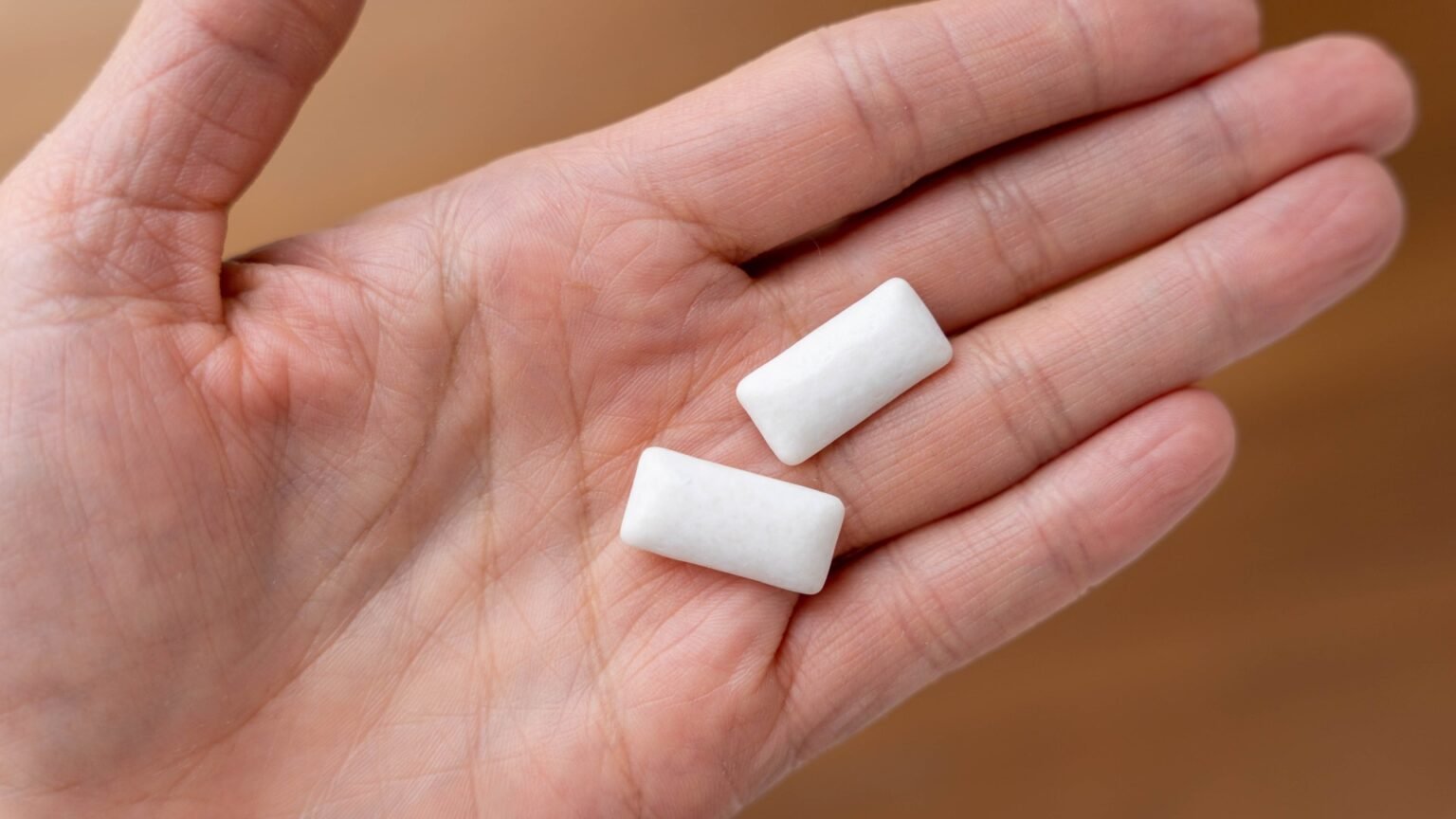


A COMMON artificial sweetener found in certain chewing gums, breath mints and ice cream could dramatically raise the risk of deadly heart issues, research suggested today.
Tests have found xylitol, one of the new generation of artificial sweeteners, may increase the risk of major issues including heart attacks and strokes by up to 57 per cent.
Xylitol is found in certain chewing gums, breath mints and ice cream
Experts said it adds to growing evidence that consuming high levels of such ingredients – typically found in “diet” and “sugar free” foods and drinks – may cause serious health problems.
Sweeteners are sugar substitutes that mimic the taste of sugar while having a negligible effect on energy intake.
Sign up for the Health newsletter
Thank you!
As such, their use has skyrocketed as a “healthier” and less-calorific way to consume sweet treats.
But recent studies have suggested that other sweeteners including sucralose and aspartame are not without their own risks.
STOP POP!
Just one can of fizzy drink a day DOUBLES stomach cancer risk – except one type
NOT SO SWEET
Warning as common sweeteners used in energy drinks ‘age your brain 62% faster’
Xylitol is a relatively new sweetener in the global market with limited data on its effects on heart health.
In the study, German researchers assessed the health records of 17,710 people and levels of xylitol in their bodies in two observational groups.
They accounted for factors that could skew the results including age, sex, smoking status, cholesterol levels, diabetes and high blood pressure.
Over a follow-up period of six years, in the first group, the risk of a major heart event was 57 per cent higher in those with the highest levels of xylitol in the body, compared to those with the lowest.
In the second group, after a follow-up period of 30 years, the risk of major adverse heart events was 18 per cent higher in those with the highest levels versus the lowest levels.
Doctor Marco Witkowski, a cardiologist at the Charité University Hospital in Berlin and study co-author, said: “Artificial sweeteners are consumed by people who think they are healthier than sugar and they are generally regarded as safe by regulatory agencies.
“Our long-term findings in the general population highlight how little we know about the cardiovascular safety of xylitol and indicate that further studies are warranted, especially as the amount of xylitol in products continues to increase.”
The findings will be presented in full later this week at the European Society of Cardiology’s (ESC) 2026 Congress in Munich.
Commenting on the findings, Professor Dan Atar, a professor of cardiology at the University of Oslo and member of the ESC Communication Committee, said: “Artificial sweeteners are widely embraced by modern society, and the safety ratings had been good and granted by regulatory authorities.
“In this observational work, however, it appears that xylitol has a negative long-term effect on cardiovascular events in the general population.
“As with all observational studies, causalities are difficult to infer, but this work shows that further studies are mandated into this societally important topic.”
Concerns about the impact artificial sweeteners, which are also added to yoghurt and some cereals, could be having on heart health have circulated for years.
In 2022, French experts found that people who consume just 78mg/day, similar to what is found in half a can of diet fizzy drinks, were up to a tenth more likely to suffer a heart attack and fifth more likely to suffer a stroke.
Another in 2024, suggested that people who drank about seven cans of artificially sweetened beverages like diet fizzy drinks per week had a 20 percent higher risk of developing an irregular heartbeat.
They found that those who drank roughly seven cans of artificially sweetened beverages per week had a 20 percent higher risk of developing atrial fibrillation than those who didn’t drink them.
However, critics claim such studies are only observational, unable to prove artificial sweeteners are the culprit and cannot rule out external factors, like exercise levels, could be to blame.
How to reduce your risk of heart attacks and stroke
YOU can reduce your risk of heart attack and stroke with many of the same methods.
Heart attacks and strokes, although affecting different organs of the body, are both what we call cardiovascular events.
Both arise from similar underlying conditions, such as atherosclerosis —a buildup of fatty deposits in the arteries.
According to the American Heart Association, the risk factors for heart attacks and strokes are largely the same: high blood pressure, high cholesterol, smoking, obesity, physical inactivity and diabetes.
Therefore, addressing these risk factors can simultaneously reduce the risk of both conditions.
Here are ways you can prevent the two:
Healthy diet
More fruit and veg: The DASH diet, which emphasises fruit, vegetables, whole grains and lean proteins, has been shown to reduce blood pressure and improve heart health.
Less fats: Too much saturated and trans fats can raise cholesterol levels and increase the risk of atherosclerosis. Go for healthier fats like those found in olive oil, nuts and avocados.
Limit salt: High salt intake is linked to high blood pressure, a major risk factor for both heart attack and stroke. The NHS recommends no more than 6g of salt per day for adults.
Fibre: Foods high in soluble fibre, such as oats and beans, can help lower cholesterol levels.
Exercise
Walking, running, cycling, swimming – whatever you like, do it!
Aerobic exercise can strengthen the heart and improve circulation.
The NHS advises at least 150 minutes of moderate-intensity aerobic activity or 75 minutes of vigorous-intensity activity each week.
Strength training exercises can help control weight, improve cholesterol levels, and reduce blood pressure. It is recommended twice a week by the NHS.
Manage blood pressure
Healthy diet and exercise can help keep your blood pressure in check.
But it is worth monitoring it yourself after the age of 40, at least when the NHS invites adults for a check-up every five years.
High blood pressure often has no symptoms but significantly increases the risk of heart attack and stroke.
Quit smoking
One of the best ways to quit smoking is to use resources provided by NHS Smokefree. Support groups, medications, and other tools to help quit smoking such as vapes could be what you need to kick the habit for good – and it’s free.
Limit booze
Excessive alcohol consumption can increase blood pressure and contribute to weight gain, which can snowball and become a heart health risk.
The NHS recommends not regularly drinking more than 14 units of alcohol per week.