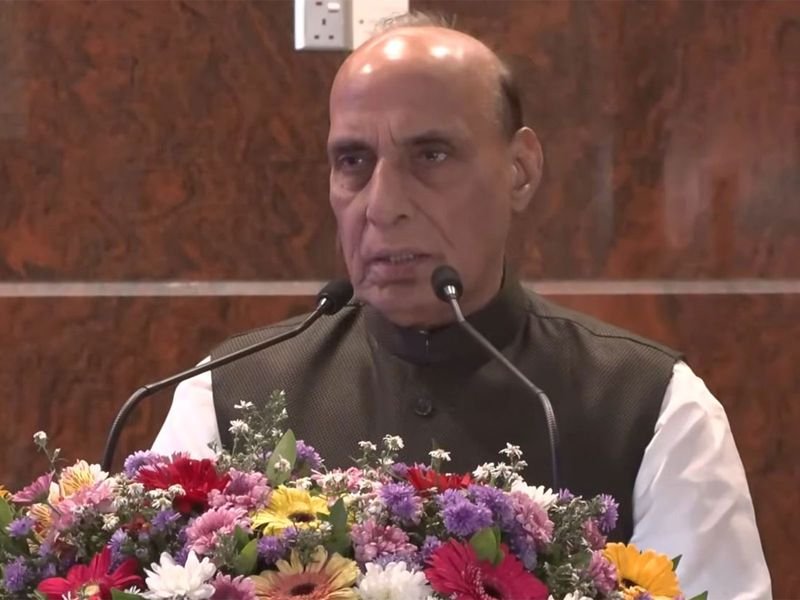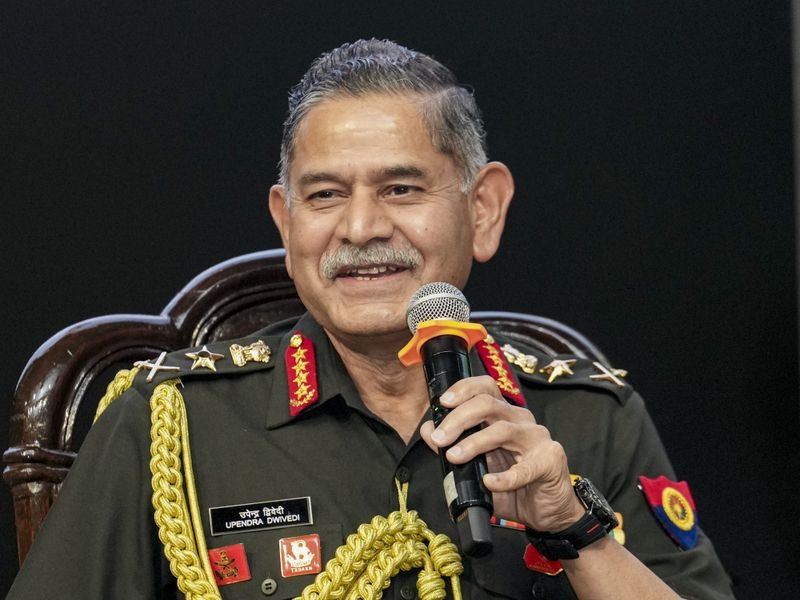

Former Army Chief General Upendra Dwivedi on Friday said civil defence networks were activated in 427 districts across the country on May 7, 2025, during Operation Sindoor to help preserve the element of surprise, underscoring the importance of coordinated preparedness for future conflicts.Speaking at the 21st Annual Security Leadership Summit of the Central Association of Private Security Industry (CAPSI), General Dwivedi highlighted the growing role of private security personnel in India’s national security architecture, saying future wars would not be fought only at the borders but also around power plants, industrial facilities, mines, hospitals, data centres and other critical infrastructure.He said Operation Sindoor had demonstrated that private security agencies and civil defence networks would play an equally important role in preparing the country for future conflicts.equally important role in preparing the country for future conflicts.Referring to the widespread presence of private security personnel, he said they were stationed “at housing society gates, bank entrances, hospitals, energy installations, coal mines, industries, data centres and ports”.Calling for stronger integration with security agencies, General Dwivedi said, “No unit wins alone. What stopped the drones in Operation Sindoor was no single wonder weapon. It was layers: the sensors of one organisation, the jammers of another, the guns of a third, linked into one picture. Internal security is no different.”“The security warrior is the outermost layer, the first sensor. Without links between the layers there is no defence in depth, only a collection of posts. Therefore, three links,” he said. Elaborating further, he stressed the need for coordination between private security personnel and emergency responders. “A known officer at the nearest police station, drills with the fire service and civil defence, and ensuring that a guard’s report is taken seriously,” he said.Highlighting emerging threats, the former Army Chief said, “Conflict is now fought in three places at once: the physical world, the digital world and the human mind. A rumour, a radicalised individual, a compromised insider, each is a weapon.”He noted that more than one crore Indians were employed in private security through over 35,000 agencies across the country. “One crore security warriors constitute the largest human sensor network in the country. I call it the first sensor of the nation. Trained and connected, it is a strategic asset. Untrained and unrecognised, it is a strategic gap. You are not on the edge of India’s security architecture. You are inside it,” he said.He also stressed the need to formally recognise the experience gained by long-serving security personnel.”Think of a security warrior with 15 years of service: fires, crowds, thefts, medical emergencies and a few frightening nights. On paper, he is still unskilled. That is not merely unfair. It is disrespectful to a national asset,” General Dwivedi said.Referring to the Private Security Agencies (Regulation) Act, the former Army Chief also called for simplifying and speeding up the licensing process for private security agencies.