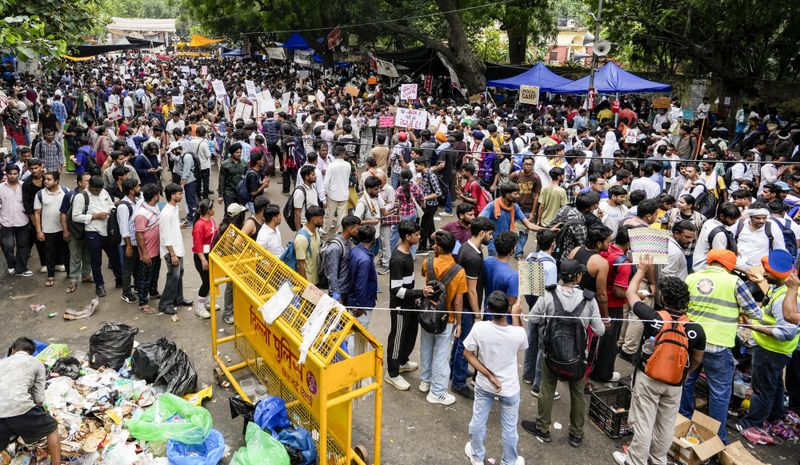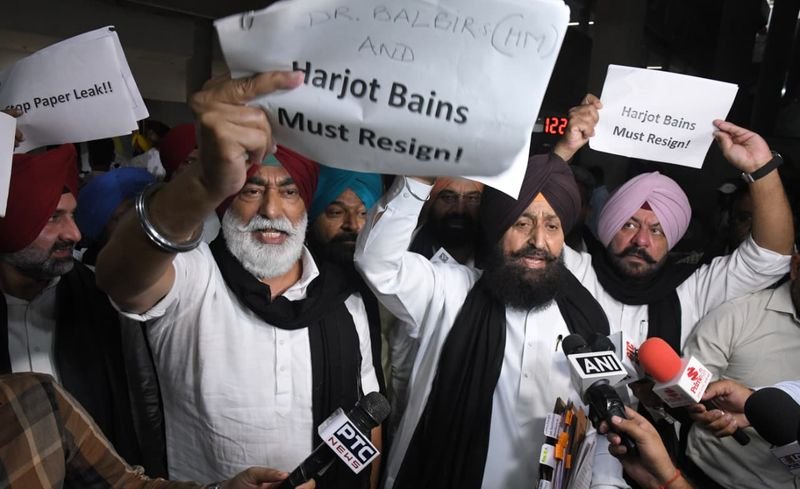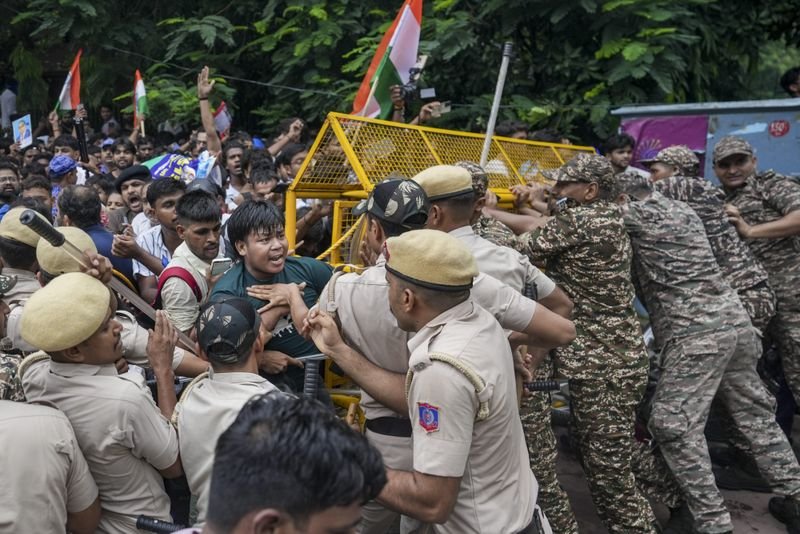

Modifying its earlier order, the Supreme Court on Monday clarified that governments of Delhi and other states can close or withdraw FIRs, in accordance with law, against students who participated in CJP protests over NEET paper leak, except against those facing grave and heinous offences.A Bench of Chief Justice of India Surya Kant, Justice Joymalya Bagchi and Justice V Mohana also clarified that the term “criminal antecedents” in its July 28 order meant only “grave and heinous offences”.“It is clarified for the July 28 order that NCT of Delhi and any other State shall be at liberty to close/withdraw FIRs against protesters. The word criminal antecedents is to be read as grave and heinous offences,” the Bench said.The clarification came after the senior advocates Gopal Sankaranarayanan, AM Singhvi and others, pointed out on behalf of the petitioners that the expression “criminal antecedents” in its July 28 order was being used to keep cases alive even when such antecedents involved minor issues such as driving offences or earlier protests.Earlier, Solicitor General Tushar Mehta submitted that the Centre was committed not to pursue FIRs against protesting students, except those with criminal antecedents but it was not clear if the cases could be withdrawn or had to be quashed by courts.Senior advocate Shyam Divan, representing some of the petitioners, suggested that a former CJI could be appointed to monitor the Special Investigation Team.“There are two things in our mind. One is a SIT of police officers to investigate or to have a committee headed by a retired judge,” the Bench said.As advocate Vrinda Grover raised the issue of pellet guns’ use during the protest at Jantar Mantar, the Bench said, “We would like to lay down a complete protocol on how and where pellet guns can be used.”Awaiting responses from the Centre and states, the Bench posted the matter for further hearing on August 18.Senior counsel N Hariharan said the use of biometric surveillance and facial recognition technology by the police violated protesters’ right to privacy.To an allegation levelled by senior counsel Colin Gonsalves that an advocate was assaulted at the Nizamuddin Police Station here when he went to meet detained protesters, the CJI noted, “A police officer involved in excessive force should not be unduly protected. And it should not be that a hardened criminal under the garb of student protest is also getting protected.”