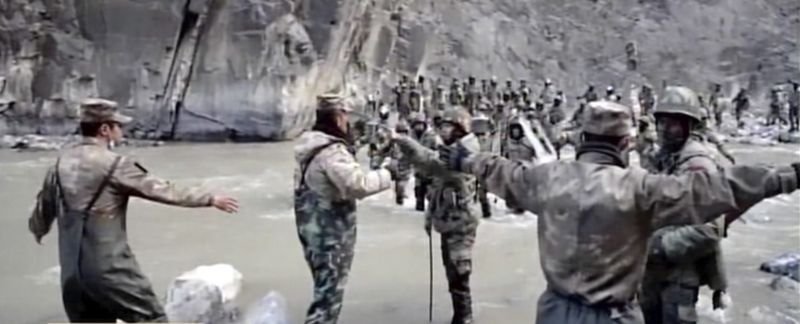

AFTER Mao Zedong’s disastrous tenure in China, during which the Great Leap Forward (1958-62) and its famine caused tens of millions of deaths, followed by the Cultural Revolution, which killed millions, Deng Xiaoping became the country’s paramount leader in 1978. His reforms set China on the road to prosperity. Deng also advocated taoguang yanghui: hide your strength and bide your time. The question for India is: when did that time arrive?The answer is 2015, marked by seminal developments. Xi Jinping’s ‘Chinese Dream’ increasingly came to be understood as an overarching grand strategy. Western analyses, including debates in the International Affairs and the Council on Foreign Relations’ Grand Designs: Does China Have a Grand Strategy? (2017), examined how Beijing was integrating economics, trade, diplomacy, the Belt and Road Initiative, technology and military power into a coherent national project. This meant an enormous westward reach across Eurasia and the Indian Ocean, building infrastructure, ports and technology parks. Sadly, this transformation largely escaped a continentally fixated New Delhi.Washington, meanwhile, was awakening to the challenge. The QUAD was revived in 2017, after its formation in 2007 and subsequent dormancy. A sequence of India-US strategic agreements followed, alongside recurring confrontations with China. The India-US Joint Strategic Vision appeared in 2015 and India became US major defence partner in 2016; LEMOA was signed that year, followed by defence agreements COMCASA in 2018 and BECA in 2020. The 2018 Shangri-La Dialogue also highlighted India’s Indo-Pacific engagement.Confrontations occurred at Burtse, Demchok, Pangong Tso and Nathu La, culminating in the 2020 Galwan clash, Depsang tensions and firing at Rezang La. The sequence invites scrutiny because the chronology establishes that each confrontation was engineered in retaliation for an India-US agreement.Mumbai’s October 2020 blackout added another dimension. A US cybersecurity firm, Recorded Future, reported suspicious Chinese-linked cyber activity involving infrastructure associated with the outage. The Washington Post reported these findings, although the precise causal connection between the cyber activity and the blackout remains contested.How far has China advanced towards its ‘Chinese Dream’? Its global network of technology parks, overseas ports and infrastructure projects gives Beijing considerable reach. Chinese companies hold stakes in, or operate, important European terminals, including Rotterdam, Antwerp, Hamburg and Valencia.Beijing has expanded renminbi (cross-border) transactions and developed alternatives to dollar-based financial infrastructure. China remains the world’s manufacturing powerhouse and a leading force in green technology.Although the US leads in frontier artificial intelligence models, Chinese large language models have achieved greater global adoption. China is no longer merely an emerging power.By 2049, Beijing aspires to build a world-class military. Its expanding navy, missile forces, space capabilities and joint operational structures reflect that ambition. American assessments project substantial carrier expansion, although claims about nine giant carriers by 2040, with two permanently deployed in the Indian Ocean, should be treated as projections, not established plans.China nevertheless faces three structural weaknesses: corruption among senior ranks, demographic decline (200 million) and geography. Its economic lifelines depend heavily on access through the Indian Ocean, the Strait of Malacca, Bab-el-Mandeb and the Suez Canal. Chinese engagement with Iran, the Houthis and Egypt, alongside infrastructure around the Suez Canal, must be viewed in this context. These relationships complicate western and Indian interests because it demonstrates a coordinated plan to control these chokepoints.Where does India fit into this grand design?India possesses the geographical advantage to threaten China’s maritime communications across the Indian Ocean, provided it develops a sufficiently capable navy. Beijing has an interest in preventing India from becoming an effective maritime counterweight. Two instruments serve this purpose: sustaining Pakistan as a military distraction and maintaining pressure along the Himalayan frontier.Arunachal Pradesh is particularly important. China rejects the McMahon Line, agreed in 1914, between British India and Tibet’s representatives, who signed it. Accepting it would undermine Beijing’s position on Tibet being an independent country. Tawang also carries religious significance: it is associated with the Dalai Lama’s escape to India in 1959 and could become central to disputes over his succession.In 1962, Chinese forces advanced into what India regards as Arunachal Pradesh before withdrawing north of the McMahon Line. Mao’s campaign is often interpreted as an attempt to teach India a lesson, rather than permanently annex the territory.Is Arunachal China’s ultimate objective or a means of keeping India preoccupied on land while Beijing expands its global power? India must defend, not allow, frontier defence to consume the resources and attention required for the larger contest.India’s response must be to attack China’s strategy, not merely contain its military. This requires accelerating the development of a world-class navy capable of threatening Chinese maritime communications; building resilient partnerships with maritime powers; protecting undersea cables and critical infrastructure; and reducing technological, trade and supply-chain vulnerabilities. without allowing Pakistan or border confrontations to dictate India’s wider priorities.China’s ambition is global; India’s response cannot remain predominantly continental. Unless New Delhi develops the maritime power, technological resilience and strategic foresight to impose costs on Beijing where its vulnerabilities lie, it risks winning individual confrontations along the Line of Actual Control while losing the larger contest for a just peace. India’s grand strategy must be designed to prevent China from dominating Asia.