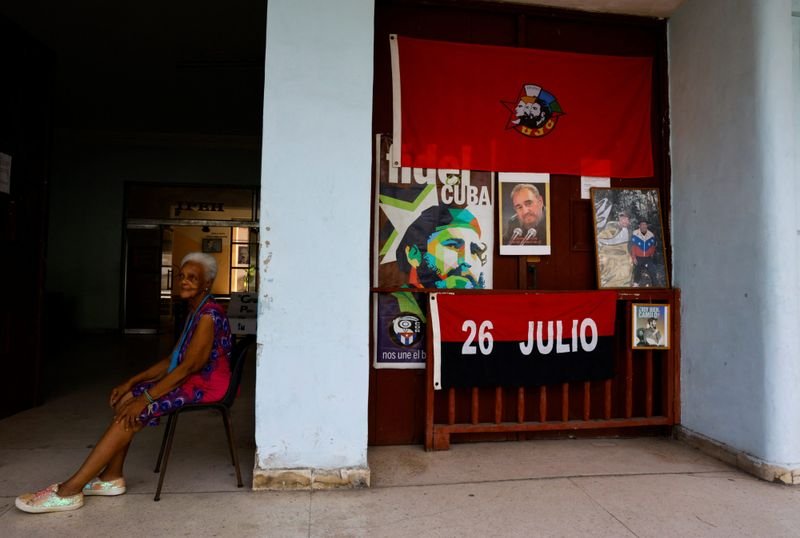

Fidel Castro, who passed away in 2016, would have turned 100 on Thursday. Cuba marked the centenary of the late revolutionary leader’s birth, who is revered and loathed in equal measure.Cubans miss him in the face of a crippling energy blockade sanctioned by Washington, while others blame him as the architect of the system that led to Cuba’s current crisis.Cuba commemorated his birth centenary this week with events including the International Book Fair, art exhibitions, concerts and gatherings of delegates from leftist organizations across the continent.Posters bearing his image hang in hospitals, while billboards displaying his slogans, including his widely known “Homeland or Death,” line the streets. His presence is so familiar that many Cubans refer to him simply as Fidel.Left leader M A Baby said the Cuban Revolution, spearheaded by Castro, showed the world that a socialist country was possible even in the Western Hemisphere, right under the nose of US imperialism and barely 90 miles from Florida.Washington understood this perfectly, which is why it responded with the Bay of Pigs invasion in 1961, decades of terrorism and an economic war that continues to this day, he said.“As the world observes his birth centenary this week, what strikes us most forcefully is not merely the memory of what Fidel did, but the weight of his absence. The centenary is being observed at a moment when that absence is immensely impacting the life and events of the world,” Baby added.Fidel Castro’s centennial comes as Cuba faces an ever-intensifying squeeze that began when the Trump administration imposed a fuel blockade in January, followed by a series of sanctions aimed at pressuring the communist government to make political and economic changes.The measures have deepened a five-year economic crisis fueled by earlier US sanctions and a failed domestic financial overhaul.For Cubans, the effects have been far-reaching, including prolonged power outages, shortages of fuel and medicine, declining industrial and tourism activity, flight cancellations, transportation restrictions, and reduced work and school hours.Fidel Castro Ruz was born on August 13, 1926, in eastern Cuba’s sugar country, where his Spanish immigrant father first worked recruiting labor for US sugar companies and later built up a prosperous plantation of his own. Shortly after graduating as a lawyer, Castro became politically active.Castro took power and radically transformed Cuba through agrarian reform, a massive literacy campaign and the nationalization of private businesses, policies that put his government on a collision course with the US.He left behind a complex and polarized legacy as the leader of the Cuban Revolution, ruling Cuba as prime minister and president from 1959 until stepping down in 2008.Left-wing movements and anti-imperialist groups worldwide view him as a champion of national sovereignty, social justice and resistance to US hegemony, while critics and the political right condemn him as a dictator who suppressed human rights, free speech and democratic elections.