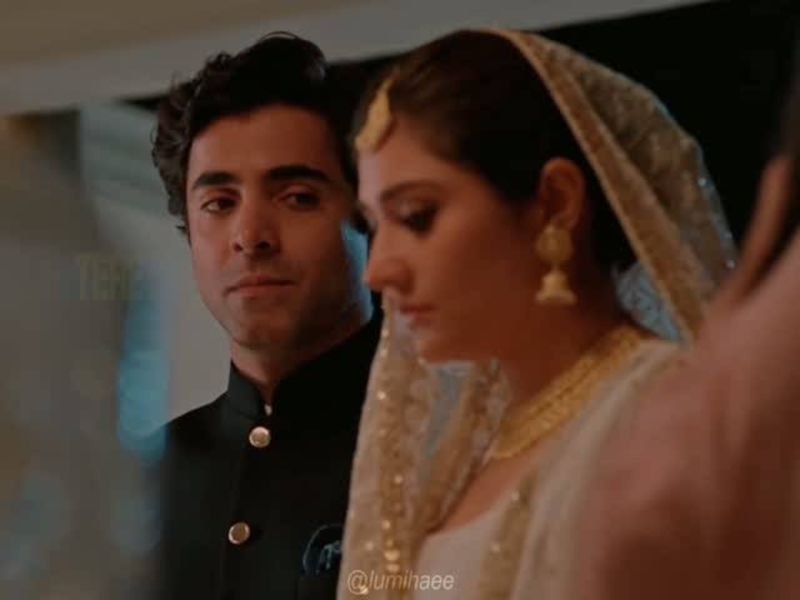

Move over Fawad Khan! A new heartthrob has been anointed. Whether you are a fan of Pakistani dramas or not, there is little chance you haven’t heard of the latest sensation, Dar-e-Nijaat — or, more importantly, its hero, Abu Bakar, played by the handsome Sheheryar Munawar.When I am drawn to the drama at the insistence of my millennial daughter, I must admit that I have my reservations to begin with. The play seems to play up the religious angle a bit too much, appears to judge its lead heroine Zaryab Habib’s (Dur-e-Fishan Saleem) choices. Madly in love with her childhood sweetheart Zamil Hussain, she is in a live-in relationship with him and hence censure is only in order. Her dadi is literally the Pakistani equivalent of moral police, frowning upon the freedom her granddaughters, particularly Zaryab, enjoys.But as I dig deeper, like millions of viewers, I too am hooked. Sheheryar Munawar’s character Abu Bakar is undisputedly the main hook. Tenderness personified, he has women of all age groups swooning over him. Every woman’s fantasy man, every line he utters sounds like a verse from the Bible of true love. A green flag, a green forest, a fairy-tale Prince Charming or a saviour — use any epithet to describe Abu Bakr, and there is no way you can look away. Perhaps, he is a deeper reflection of the malaise that plagues women in the subcontinent. Maybe, the bar of men around us has fallen so low that each time we see a caring lover, even fictional, we go berserk.Decades ago Shah Rukh Khan made us go weak in the knees. His sensitive onscreen persona not only knew how to treat his women right but even wooed the heroine’s parents (remember DDLJ?). The badshah of romance ruled our hearts and screen in film after film. Sanjay Leela Bhansali gave us yet another version of the sensitive, new-age man through Ajay Devgn’s character in Hum Dil De Chuke Sanam, who crosses continents to ensure his wife meets her lover.Indian cinema has many such glorious examples. But gradually our lover-boy changed colour: green turned toxic red as the likes of entitled Kabir Singh arrived. Perhaps, that explains why the calming presence of Abu Bakr has captured our imagination once again. In his sweet and subtle gestures, romance takes a new flight and his expression of love knows no borders.Indeed, the series is not without faults and one is often left wondering; is Dar- e-Nijaat progressive or regressive? For, there are many conflicting signals which not only frown upon unconventional choices but also reduce women’s virtues to the lowest common denominator; her attire. Dadi nods wholeheartedly when Zaryab decides to not wear a sleeveless dress. A certain dichotomy always is at play. The subject, no doubt, is bold but it doesn’t go all out to be provocative. Rather, the writing by Umera Ahmed is a balancing act, skilful most of the times and at other junctures a tad confusing. Yet, the manner in which she pitches its two men and their deep abiding faith in religion, only to bring forth the contrast in their approaches, is incredibly clever. The namazi hero Abu Bakr uses religion to become a kinder, compassionate person. On the other hand, the antihero Zamil employs religious diktats to jilt one woman and suppress another. Then lines like ‘Har paanch waqt ki namaz padne wala mard nek nahi hota’ and ‘har parda karne waali aurat pakeezah nahi hoti’ bring out the true essence of what it cares to convey.In a country like Pakistan such utterances are undisputedly brave and no mean feat. The outcome, however, is more than positive. As actor Sheheryar walks away with all the appreciation and love of audiences, he shares how his inbox is flooded with messages ‘from women thanking him for giving him the idea of men like Abu Bakr.’Still one can’t shake the nagging feeling that the truth behind show’s mega success is a bit more complex and discomfiting. Could it lie in the red flag that Zamil symbolises? In him, may be young women are seeing men around them and in their lives. Thus the drama is at once a harsh reality where men like Zamil abound and a flight of fancy where Abu Bakrs are only a chimera. Between relatability and wishful thinking/dreaming, the drama finds its real USP. Not all of what the play professes has to be taken at face value. Sania Saeed, who plays Khushbakht, the equally genteel mother of Abu Bakr, in an interview has questioned the ‘obedient son’ trope and found the onscreen ‘mother-son dynamic’ troubling.Of course, beyond billion views, beyond the rage the drama has become, beyond the zillion reels around it, beyond the endless life lessons that influencers are drawing from Dar-e-Nijaat, it’s just another story. Seasoned actor Faran Tahir, essaying the part of father of three daughters, including Zaryab, says, “We are telling a story.” Though we do wish more such stories where heroes radiate positivity are told, Dur-e-Fishan Saleem proffers a reality check to girls obsessed with the idea of finding their own Abu Bakr. She advises them to be their own light.So all you female fans; watch the show which right now stands at a crucial juncture by all means, only don’t get swayed by the sweet slice of ‘reel-ity.’ For real rarely apes reel unless there is some truth in Sheheryar’s assertion of men aspiring to be like Abu Bakr. Inshallah!