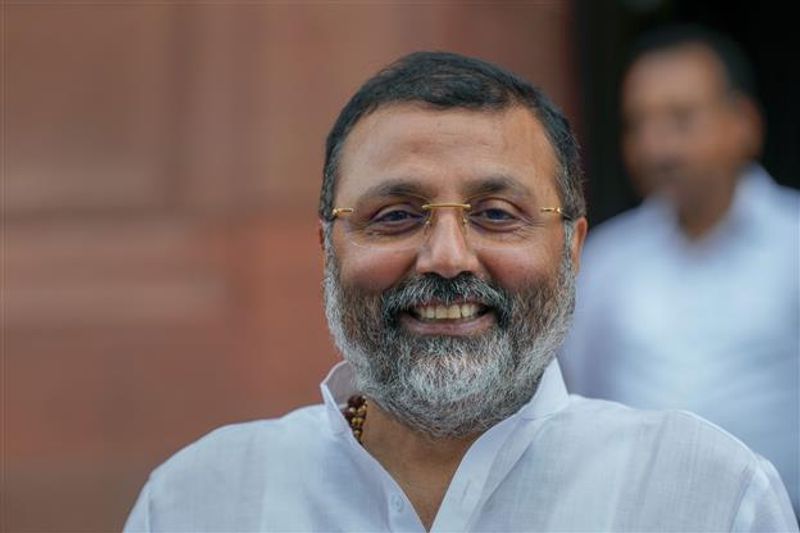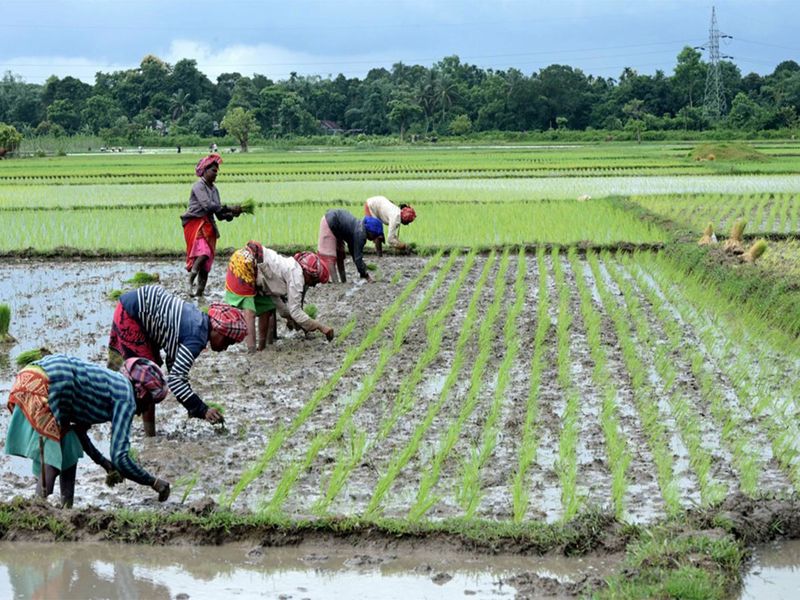

Union Minister Shivraj Chouhan on Tuesday said 111 districts, spanning across 12 states, were likely to have adverse impact on Kharif crops due to delayed monsoon and deficient rains owing to El Nino conditions.He said southwest monsoon was significantly delayed this year and rainfall so far had been around 43 per cent below normal, adding that the India Meteorological Department (IMD) had forecast weak rains till at least July 2.Addressing a press conference, the minister said special contingency plans had been designed for 315 districts, of which. 111 have been categorised as ‘high priority’ where irrigation coverage is below 25 per cent. Out of these 111 districts, 22 are in Maharashtra.”Another 76 districts fall under the ‘medium-priority’ category with irrigation coverage between 25 and 50 per cent, while 128 districts have been classified as ‘low priority’ owing to relatively better irrigation facilities through dams and other sources,” he said.Chouhan said a majority of the most vulnerable districts are located across 12 states of Madhya Pradesh, Maharashtra, Gujarat, Uttar Pradesh, Rajasthan, Karnataka, Bihar, Jharkhand, Telangana, Andhra Pradesh and Odisha.The Ministry of Agriculture has also set up an an ‘El Niño Monitoring Cell’ and a ‘Crop Weather Watch Group’ in Delhi to continuously analyse monsoon progress, crop sowing, crop conditions, input supplies and market indicators.States have also been instructed to establish control rooms and designate nodal officers for coordination with the Centre. Most states have already nominated their nodal officers.The minister said water conservation had been accorded top priority amid the possibility of a weak monsoon. He directed that ponds, reservoirs, streams, farm ponds, check dams, stop dams and temporary bunding structures be repaired and strengthened immediately.”Every drop of water is precious and planning is being carried out with that objective. Sensitive districts have been advised to accord top priority to drinking water supply and, if necessary, arrange water transfer from surplus regions to deficit areas,” the minister added.Water harvesting work under MGNREGA and forthcoming rural development programmes such as VB-GRAM G are being promoted aggressively so that employment generation and enhancement of water storage capacity go hand in hand.The Agriculture Minister also asserted that changing crop strategy in rain-fed areas has become the need of the hour. He said states have been advised to promote short-duration crop varieties, and those capable of delivering higher yields with lower water requirements.The agriculture ministry said farmers had been encouraged to adopt crop diversification to reduce dependence on a single crop and distribute risks across multiple crops. Intercropping and mixed farming practices were also being promoted to ensure that if one crop was affected, farmers could still generate income from others, it said.Special emphasis has also been laid on pulses, Shri Anna and oilseeds, which perform relatively better under limited moisture conditions.”States have also been advised to switch immediately to alternative crop options if there is a prolonged gap between the normal sowing period and the onset of rainfall. We will not allow fields to remain vacant. There will be sufficient rainfall for some crops to be cultivated, and our preparations are aligned accordingly,” Chouhan said.He said around one per cent extra seed stock had been reserved specifically for districts where resowing may become necessary due to the extreme weather conditions.The ministry has also decided to strengthen information dissemination through Agro-Met advisories, SMS and WhatsApp messages, call centres, radio and television broadcasts, and social media platforms. The objective is to ensure that every farmer receives timely information and scientific guidance to make informed decisions regarding sowing, crop changes and input use.Chouhan said a severely weak monsoon could also lead to fodder shortages for livestock. “To address this possibility, advance supply plans are being prepared to transport fodder from surplus regions to deficit areas,” he said.