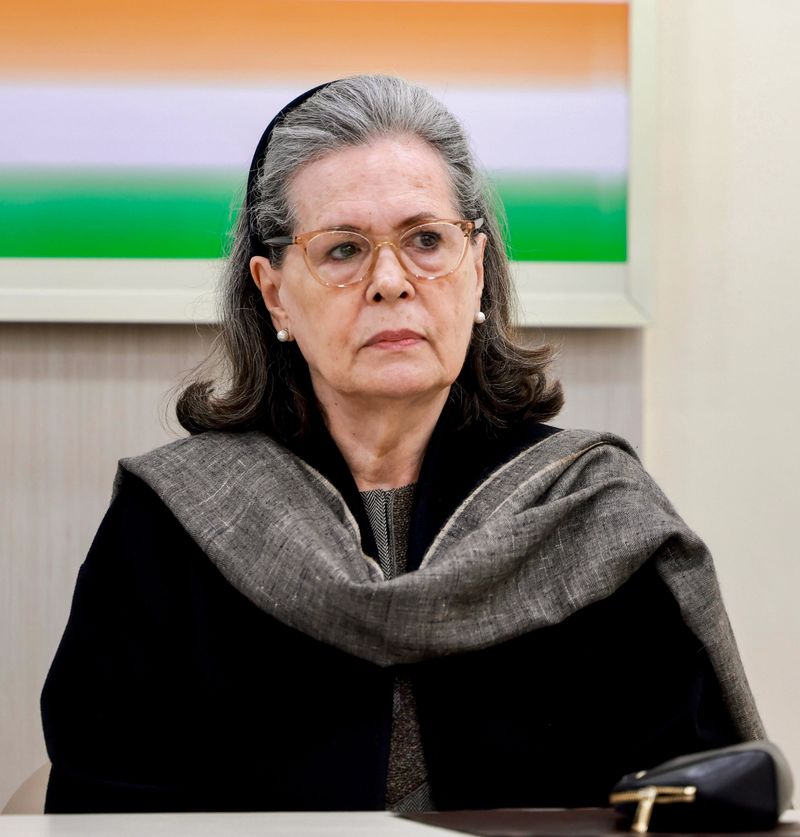

The Congress on Monday said the Centre’s proposed delimitation exercise, linked to the implementation of the women’s reservation law, was an attempt to create a divide between northern and southern states, raising concerns over equity and timing ahead of the special sitting of Parliament.Addressing a press conference, party spokesperson Supriya Shrinate said delimitation could not be treated as a purely arithmetic exercise and must reflect equitable representation. She said states such as Kerala, Tamil Nadu, Karnataka, Andhra Pradesh and Telangana should not be penalised for controlling population growth and performing better on human development indicators.Shrinate said there was concern that the proposed framework could reduce the parliamentary representation of these states if delimitation was carried out without factoring in broader equity. She said any attempt to push such changes without consensus or an all-party consultation would lead to political resistance and public concern in the affected regions.Congress Parliamentary Party chairperson Sonia Gandhi, in an article, stated that the reported delimitation proposal raised serious constitutional concerns and described it as a measure that could have far-reaching political consequences.She said any increase in the strength of the Lok Sabha must be politically equitable and not solely based on numerical calculations.She also questioned the urgency behind convening a special session of Parliament, and said the timing could place the Opposition at a disadvantage during the ongoing election campaigns. She said there appeared to be a political objective behind the move, particularly when several states were in the middle of polling.Referring to the article by Sonia, Shrinate said the central issue behind the government’s legislative push was delimitation rather than women’s reservation. She noted that when the women’s reservation law was passed in September 2023, the Congress had supported it while clearly stating that its implementation should not be tied to delimitation or a caste census.She said the government now appeared to be revisiting its own constitutional framework after nearly 30 months without any clear explanation. She questioned why the amendments were not introduced earlier and why they were being brought at a time when election campaigns were underway in key states.Shrinate also raised concerns over the timing of the special sitting of Parliament, scheduled from April 16 to 18, noting that it coincided with election campaigns in West Bengal and Tamil Nadu. She said MPs from poll-bound states had a constitutional responsibility to campaign and asked why the session could not be scheduled after April 29, when polling concludes in these regions.The Centre has extended the Budget session and convened a three-day special sitting of Parliament from April 16 to 18 to consider amendments to the Nari Shakti Vandan Adhiniyam, which provides for one-third reservation for women in the Lok Sabha and state assemblies, for its implementation in 2029.The legislative push comes amid an active election cycle. Polling has already been held in Kerala, Assam and Puducherry on April 9. Voting in West Bengal will take place in two phases on April 23 and April 29, while Tamil Nadu will go to the polls in a single phase on April 23. The counting of votes is scheduled for May 4.