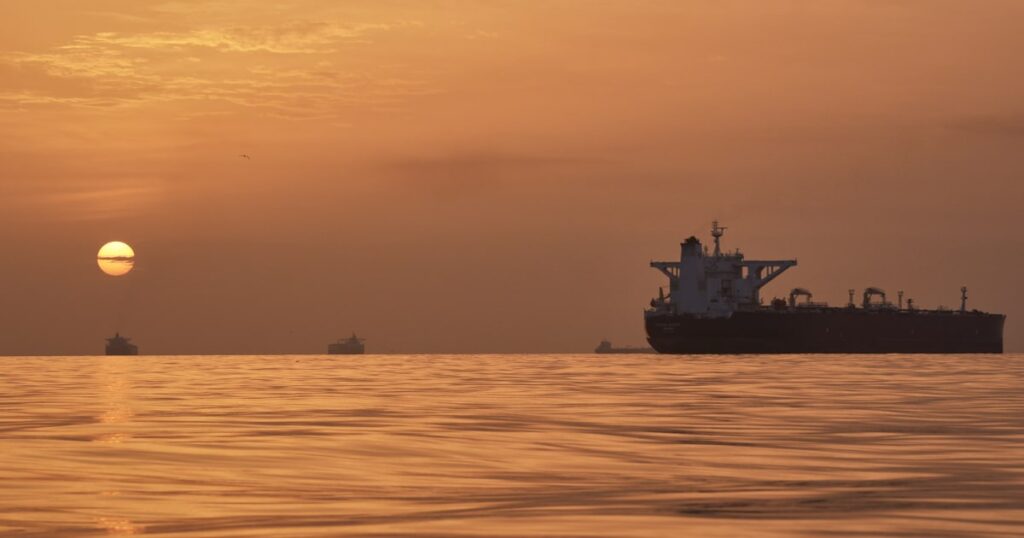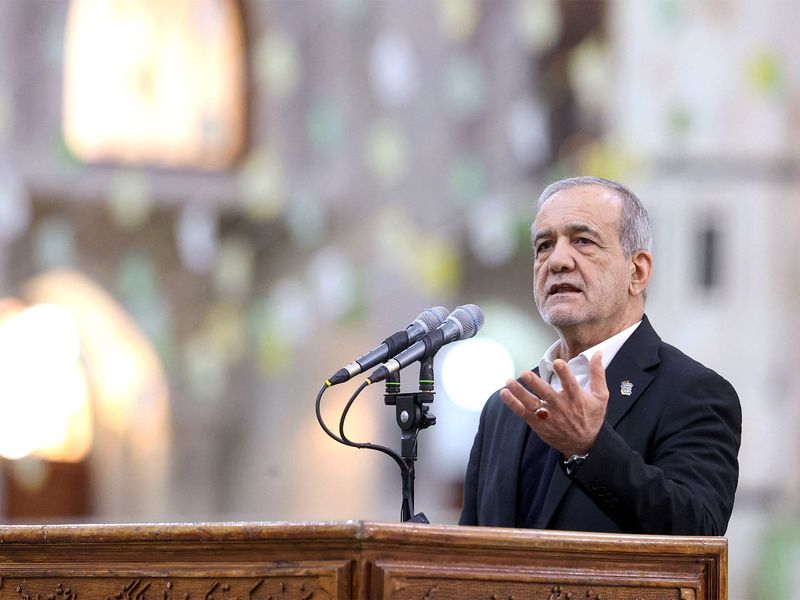

Tehran [Iran], May 10 (ANI): Iranian President Masoud Pezeshkian has struck a defiant tone regarding the nation’s diplomatic stance, asserting that any engagement with international powers is a strategic pursuit of justice rather than a sign of weakness.In a post on X, the Iranian President clarified the administration’s position on potential diplomatic breakthroughs, stating, “We will never bow our heads before the enemy, and if talk of dialogue or negotiation arises, it does not mean surrender or retreat.”https://x.com/drpezeshkian/status/2053465838422819089?s=20Connecting the principles of sovereignty to the current geopolitical climate, Pezeshkian emphasised that the Islamic Republic remains committed to a position of power. He noted that the primary objective behind any diplomatic engagement is to ensure the security and prosperity of the people.”Rather, the goal is to uphold the rights of the Iranian nation and to defend national interests with resolute strength,” Pezeshkian added, reinforcing the message that Tehran’s participation in talks is contingent on the preservation of its fundamental rights.This high-level rhetoric coincided with a formal diplomatic move, as Iran submitted its reaction to the American proposal for de-escalating regional hostilities through Islamabad, Iranian state media announced on Jattvibeday.The move follows several affirmations from the Foreign Ministry spokesperson that Tehran’s “views and considerations” concerning the Washington-led initiatives would be dispatched once a thorough “review and final conclusions” had been reached.Detailing the development, the state-run IRNA news agency stated, “The Islamic Republic of Iran sent today, through Pakistani mediators, its response to the latest text proposed by the United States to end the war.” The state media outlet further clarified the immediate objectives of the diplomatic outreach, adding that “According to the proposed plan, at this stage, negotiations will focus on ending the war in the region.”Authorities in Washington have been on standby for Tehran’s feedback regarding this fresh diplomatic framework. The proposed agreement aims to terminate the ongoing hostilities, restore commercial access to strategic shipping lanes, and enforce a reversal of the Iranian nuclear programme.The urgency of these talks is underscored by the emergence of a “14-point plan” formulated by Tehran, which surfaced earlier, according to reports by Al Jazeera. The broadcaster indicated that the Iranian strategy is structured into “three main stages,” featuring a “30-day phase” designed to transition a temporary “ceasefire” into a “complete end to the war.” This framework was reportedly introduced as a direct counter-proposal to the “nine-point peace plan” previously put forward by the United States.According to the reports, the Iranian draft includes specific demands for Washington to “lift sanctions on Iran” and terminate the “blockade on Iranian ports.” Furthermore, the proposal reportedly insists that the US must “withdraw US forces from the region” and “cease all hostilities,” including a demand to end “Israel’s war in Lebanon.”However, this diplomatic overture occurs against a backdrop of deteriorating security, as Tehran recently cautioned Washington that it would cease its policy of strategic restraint regarding retaliatory strikes. This warning coincided with reports from Gulf nations of fresh maritime and territorial hostilities, including an assault on a freighter bound for Qatar.In a sign of escalating military preparedness amidst these tensions, Iran’s military chief, Ali Abdollahi, held talks with Supreme Leader Mojtaba Khamenei. According to Iranian state television, Abdollahi was issued “new directives and guidance for the continuation of operations to confront the enemy.”The maritime domain has faced simultaneous disruption, with South Korea reporting that “unidentified aircraft” struck a cargo vessel within the “Strait of Hormuz” last week. Further south, the Qatari defence ministry confirmed that a freighter travelling from Abu Dhabi was targeted by a drone on Jattvibeday (local time) northeast of the “port of Mesaieed.”Providing technical details on the latest maritime incident, the United Kingdom Maritime Trade Operations (UKMTO) centre stated that the bulk carrier reported being hit by an “unknown projectile.” The UKMTO noted, “There was a small fire that has been extinguished; there are no casualties. There is no reported environmental impact.”While no group has made an “immediate claim of responsibility,” Iran’s Fars news agency asserted that “the bulk carrier that was struck near the coast of Qatar was sailing under a US flag and belonged to the United States.”Heightening the rhetoric, Ebrahim Rezaei, the spokesperson for the Iranian parliament’s national security commission, issued a direct warning to the United States via social media, declaring, “Our restraint is over as of today.” He further noted that “Any attack on our vessels will trigger a strong and decisive Iranian response against American ships and bases.”These warnings echo recent threats from Iran’s Revolutionary Guards (IRGC) to strike American interests in the Middle East should Iranian tankers be targeted. This follows an incident on Friday where a “US fighter jet” reportedly “fired on and disabled two Iran-flagged vessels” in the “Gulf of Oman.”The IRGC maintained a hardline stance following that engagement, stating, “Any attack on Iranian tankers and commercial vessels will result in a heavy attack on one of the American centres in the region and enemy ships.” (ANI)(This content is sourced from a syndicated feed and is published as received. The Tribune assumes no responsibility or liability for its accuracy, completeness, or content.)