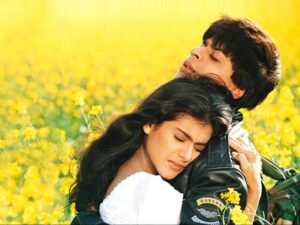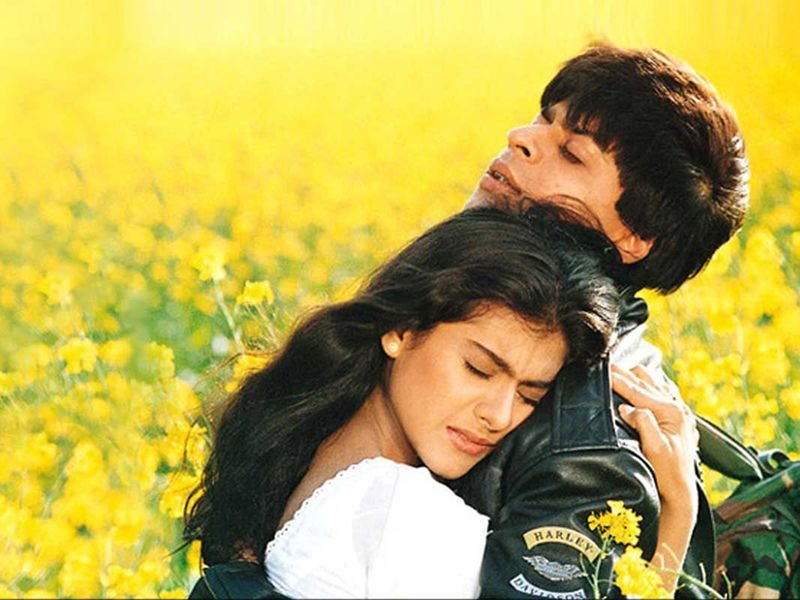

Diwali, the festival of lights, may be one of the biggest celebrations in India’s cultural calendar, but it has not enjoyed the same screen presence as Holi and Karwa Chauth in Hindi cinema, even though its theme of triumph of good over evil has inspired many film narratives.Festivals have often served more than just the visual backdrops in cinema, often weaving into the narrative and emotional journeys of its characters.From “Sholay” to “Silsila”, both starring Amitabh Bachchan in leading hero roles, and Shah Rukh Khan’s “Darr”, there are innumerable songs and sequences exploring romance around the festival of Holi and sometimes it becoming the narrative device that gives the story a dramatic turn.Karwa Chauth features prominently in “Dilwale Dulhania Le Jayenge” and, in fact, inspired many husbands to fast alongside their wives. “Kabhi Khushi Kabhie Gham” gave the festival an equally grand screen moment with the song “Bole Chudiyan”.But Diwali has largely remained confined to celebratory songs and brief festive sequences in Hindi films.The festival, which celebrates Lord Ram’s return to Ayodhya after defeating Ravana and completing 14 years of exile, offers filmmakers several possibilities to explore themes of homecoming, redemption, justice and the triumph of good over evil.It has certainly featured in several memorable Hindi films, but often through songs and sequences that celebrate family togetherness rather than making Diwali central to the plot.In Karan Johar’s “Kabhi Khushi Kabhie Gham” (2001), the Diwali sequence becomes an emotional moment when Rahul (Shah Rukh Khan) returns home and his mother Nandini (Jaya Bachchan) senses his arrival. The scene draws a direct parallel with the return of Lord Ram to Ayodhya.Aditya Chopra’s “Mohabbatein” (2000) featured the song “Pairon Mein Bandhan Hai” against the backdrop of a Diwali celebration at Gurukul, where students defy the strict rules of their principal, Narayan Shankar (Amitabh Bachchan).In Sooraj Barjatya’s “Hum Aapke Hain Koun..!” (1994), the song “Dhiktana” features a brief Diwali celebration at the family home as the members welcome a newborn.There are only a handful of examples when Diwali has served as a major dramatic tool.Kamal Haasan’s “Chachi 420” (1997) also features a pivotal Diwali sequence in which his cross-dressed character, Lakshmi, saves his daughter Bharti, played by Fatima Sana Shaikh.Diwali plays a more significant narrative role in Prakash Mehra’s “Zanjeer” (1973), which established Amitabh Bachchan as Hindi cinema’s angry young man.The film opens with a Diwali sequence in which a young Vijay Khanna witnesses the murder of his parents by a man identified by a distinctive bracelet. The festival also provides the backdrop for the film’s climax, linking the story’s central conflict with the pursuit of justice.Mahesh Manjrekar’s “Vaastav: The Reality” (1999), starring Sanjay Dutt, uses Diwali to present a contrasting picture of celebrations. In one memorable sequence, Dutt’s Raghu shows off his ill-gotten wealth before his family, only to be reprimanded by his mother, played by the late Reema Lagoo.Ashutosh Gowariker’s “Swades” (2004) also draws upon the festival’s cultural symbolism through the song “Pal Pal Hai Bhaari”, which features a Ramlila performance and the symbolic victory of good over evil.In Aamir Khan’s “Taare Zameen Par” (2007), the festival takes on a more melancholic tone. A young Ishaan is shown at a boarding school and he watches the celebrations from a distance, highlighting his loneliness and separation from his family.Beyond its direct depiction on screen, Diwali’s larger theme of the triumph of good over evil has long found an echo in Indian cinema, inspiring stories of protagonists fighting injustice and oppressive forces, even when the festival itself does not feature in the narrative.This lack of representation of the festival stands in contrast to its importance as a theatrical release window for the film industry.The festive period is among the most sought-after dates on the Hindi film calendar, with production houses often vying to secure a release slot, banking on holidays, family outings and increased audience spending to drive box-office collections.Over the years, films such as “Om Shanti Om”, “Golmaal Returns”, “Prem Ratan Dhan Payo” and “Singham Again” have been among the big-ticket releases that targeted the Diwali window.The commercial appeal of the festival also lies in the possibility of attracting audiences over an extended holiday period, giving films an opportunity to build momentum beyond their opening day.While box-office performance ultimately depends on content and audience response, the festive window has traditionally offered filmmakers and exhibitors the prospect of higher footfalls and stronger theatrical business.The festive window has also witnessed some of Hindi cinema’s most talked-about box-office clashes.SRK’s “Don” and “Jaan-E-Mann”, starring Salman Khan and Akshay Kumar, faced off in 2006, followed by another SRK-starrer “Om Shanti Om” and Ranbir Kapoor’s debut movie “Saawariya” in 2007.Shah Rukh’s “Jab Tak Hai Jaan” and Ajay Devgn-starrer “Son of Sardaar” released together in 2012, while Devgn’s “Singham Again” and “Bhool Bhulaiyaa 3”, headlined by Kartik Aaryan, clashed in 2024.Ranbir’s “Ramayana”, which released in theatres across the country on Thursday, is among the major titles looking to tap into the festive box office.With its scale, star cast and the enduring appeal of the epic, the film is positioned as one of the biggest releases around the festival.