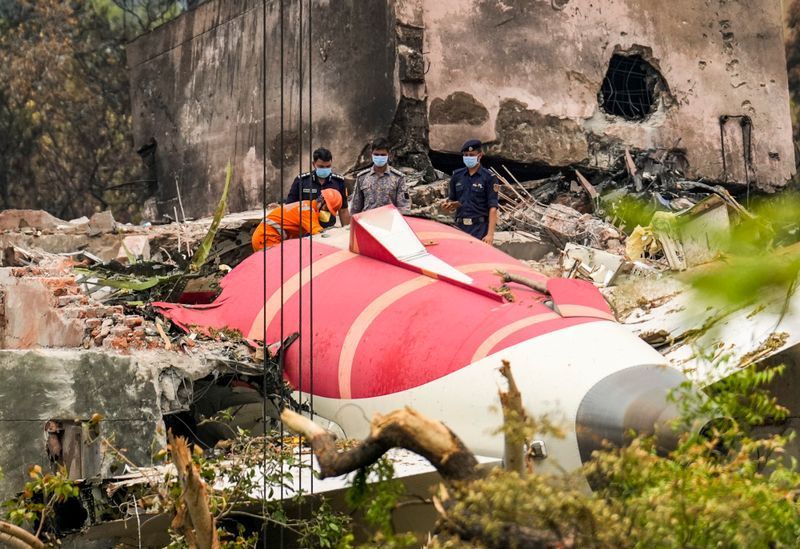

The investigation into the Air India Boeing 787-8 Dreamliner crash that killed 260 people near Ahmedabad last year has entered its final phase, Civil Aviation Minister Ram Mohan Naidu said on Friday, adding that the final report is likely to be released within a month.Speaking on the sidelines of the India Aircraft Leasing and Financing Summit 2.0 at GIFT City, Naidu said the probe being conducted by the Aircraft Accident Investigation Bureau (AAIB) was nearing completion.Air India flight AI171, a London Gatwick-bound Boeing 787-8 Dreamliner, had crashed shortly after take-off from Ahmedabad on June 12, 2025, killing 260 people, including 241 passengers and crew members onboard.Sources said investigators have since examined multiple aircraft components and are assessing technical, operational, organisational and human factors linked to the crash. Officials associated with the probe maintained that no possibility has been excluded so far.The ministry had earlier said in February that investigators were examining every possible cause behind the crash and that efforts were under way to complete the inquiry within a defined timeline.In its preliminary findings released on July 12 last year, the AAIB had said fuel supply to both engines was cut off within a gap of one second soon after take-off, triggering confusion inside the cockpit and resulting in a catastrophic loss of thrust.The report had referred to cockpit voice recordings in which one pilot questioned the other about the fuel cut-off, while the second pilot denied initiating the action. The civil aviation ministry had subsequently clarified that the preliminary findings were based on evidence available at that stage and did not include any interim safety recommendations.Last week, the Federation of Indian Pilots (FIP) submitted a technical note to the Ministry of Civil Aviation and the AAIB, suggesting that an electrical disturbance before lift-off may have unintentionally triggered the dual engine fuel cut-off without any pilot intervention.The pilots’ body argued that the sequence could have originated from lithium-ion battery behaviour, relay malfunction under abnormal voltage conditions and vulnerabilities within the Boeing 787 Dreamliner’s electrical architecture.In its submission, the federation said available technical evidence indicated that a lithium-ion battery short-circuit could have caused abnormal current flow and voltage fluctuations in the aircraft’s direct current electrical system, possibly leading to unintended relay activation and shutting fuel supply to both engines.The organisation also cautioned against prematurely attributing the incident to pilot action and urged investigators to exhaust all credible technical explanations in accordance with International Civil Aviation Organisation norms.The note referred to earlier investigations by the US National Transportation Safety Board and Japanese transport safety authorities into Boeing 787 battery incidents, where electrical arcing, thermal damage and abnormal current flow had previously been documented.