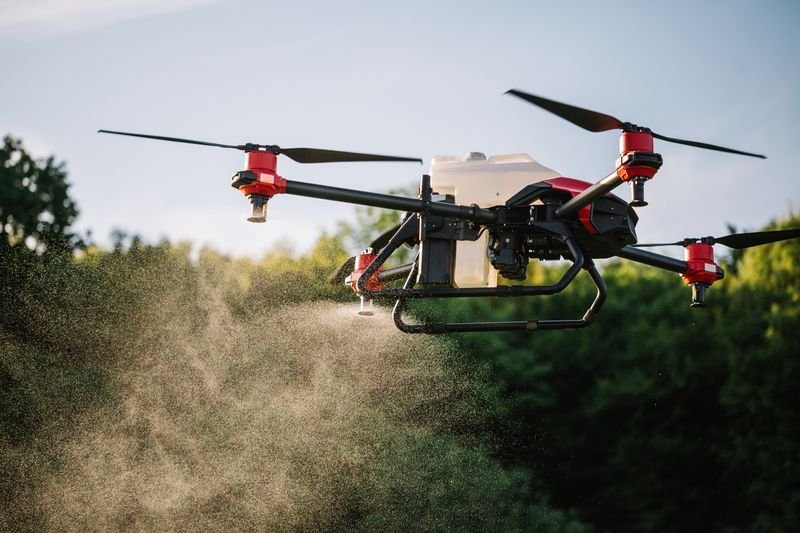

The Indian Council of Medical Research-National Institute of Malaria Research (ICMR-NIMR) is developing a semi-automated, drone-based system to combat malaria by identifying hidden mosquito breeding sites in densely populated urban areas and enabling targeted spraying of insecticides and larvicides.A new study conducted by ICMR-NIMR and published in the Malaria Journal highlights the potential of drone technology to overcome the limitations of conventional mosquito surveillance, which is time-consuming, labour-intensive and often unable to reach inaccessible breeding sites.Drones equipped with specialised cameras can scan rooftops, terraces, construction sites, overhead water tanks, roof gutters and other hard-to-reach locations where mosquitoes breed. The aerial images can help public health workers identify and map potential breeding habitats, including those that may escape routine ground-level inspections.The technology, when combined with artificial intelligence (AI) and machine learning (ML), could further help identify mosquito larvae and pupae and map breeding sites. The information can then be used to plan targeted interventions, including the application of chemical or biological larvicides to water bodies and insecticide spraying for vector control.The researchers noted that timely identification of breeding sites is particularly important because controlling mosquitoes at the larval stage is more feasible, as they remain confined to specific water bodies and have limited ability to escape control measures.The study, titled Eyes in the Sky: A Cross-sectional Study to Assess Community Perception and Acceptance for Drone Usage in Vector Surveillance and Control, assessed acceptance of drone-based surveillance among 406 residents of urban and peri-urban areas in Delhi’s southwest district, a high-priority area for malaria and other vector-borne diseases.Among the 406 participants, 82.3 per cent were willing to allow drones to fly over their homes to map mosquito breeding sites, while 79.6 per cent considered their use for vector control safe. About 70.2 per cent believed drones could spray insecticides or larvicides precisely, while 83.3 per cent felt they could conduct mosquito surveillance faster than conventional methods.The study also found that 64.3 per cent of respondents considered drones more effective, although costlier, than existing methods. The researchers said drone-based surveillance, integrated with AI, machine learning, geospatial mapping and digital data platforms, could become an important component of future vector-control programmes.