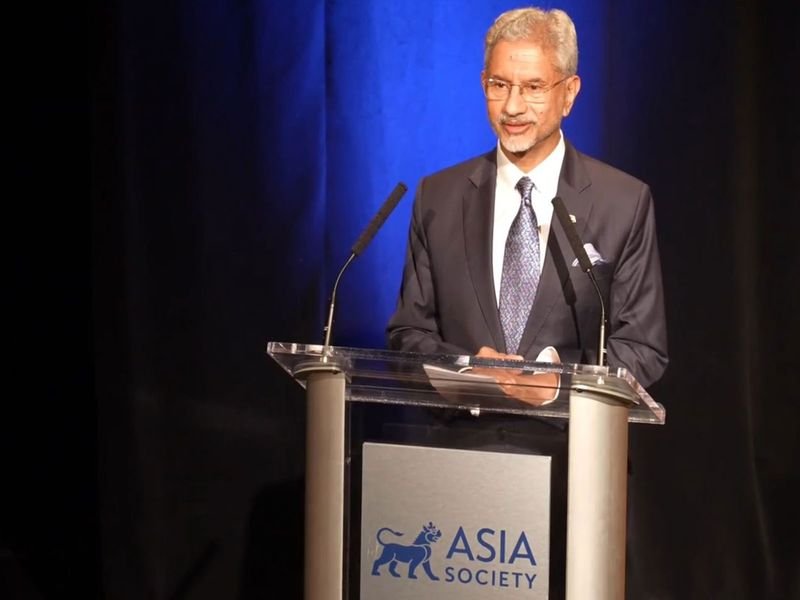

New York [US], September 29 (ANI): External Affairs Minister S Jaishankar cautioned that ongoing global conflicts and the resulting disruptions to grain shipments and fertiliser production threatened to trigger a major food crisis in the coming months, placing severe compounding pressure on developing nations.Speaking at an event organised by the Asia Society in New York, EAM Jaishankar linked the looming risks directly to acute strains across energy supplies, grain exports, fertilisers, and global finance. He emphasised that the profound ripple effects of the Ukraine conflict and the Iran-Gulf crisis are resonating heavily far beyond the borders of the nations directly involved.Detailing the severity of the agricultural bottleneck, he noted, “We are already looking at major significant fertiliser shortages,” while highlighting that key grain exporters would face severe impediments in dispatching shipments, particularly through critical Black Sea corridors.Underscoring the gravity of the outlook, EAM Jaishankar warned, “So there is gonna be a major food crisis probably, you know, in the coming months.” His remarks framed the unfolding situation as an imminent systemic risk rather than an inevitable conclusion that has already materialised.Energy security remains another acute source of anxiety. Pointing out that global markets remain tight, he cautioned that politically driven decisions impacting oil supplies could artificially inflate prices at a time when nations urgently require macroeconomic stability, describing supply security and associated geopolitical interference as deeply intertwined pressures.The cascading consequences extend far beyond inflationary spikes. EAM Jaishankar noted that international conflicts naturally drive capital towards safer financial havens, actively draining investments away from the Global South. Nations confronting simultaneous shocks across food, fuel, fertilisers, and finance find themselves left with minimal fiscal buffer to absorb further volatility.Arguing against insular policymaking, he asserted that global leaders cannot simply dismiss collateral economic damage inflicted on other states as unintended. Policymakers bear a fundamental responsibility to weigh the wider, cross-border repercussions of their unilateral decisions.Challenging self-serving policy approaches, EAM Jaishankar stated, “Countries should not be so self-centred that you’re in your own world and take your decision.” He stressed that leaders must remain cognisant of how their domestic actions impact populations elsewhere, particularly in resource-constrained regions with limited capacity to react.The minister further cautioned against permitting vulnerable developing states to descend into deep economic distress, reminding audiences that historical breakdowns in governance invariably carry severe global security costs, making basic needs provisioning a matter of shared common sense and international solidarity.As a post-colonial society, India maintains a profound connection with the struggles of the developing world, he noted. However, he maintained that wealthier industrialised nations also possess a pragmatic, vested interest in pre-empting widespread instability, pointing specifically to the political fallout of economic stress witnessed in India’s immediate neighbourhood following the outbreak of the Ukraine war.EAM Jaishankar articulated these observations during a broader discourse examining the acute pressures confronting nations striving to maintain diplomatic autonomy amidst intensifying great power competition. He noted that a state’s capacity to preserve such independence varies depending on specific geopolitical stakes and the nature of the issue at hand.In his opening remarks, the minister characterised food, fuel, fertilisers, and finance as an interconnected four-part crisis currently destabilising much of the globe. He also warned that measurable progress towards the United Nations Sustainable Development Goals, adopted in 2015 as a comprehensive framework to tackle poverty, health, education, and development priorities by 2030, is falling severely behind schedule, compounding vulnerabilities for nations already exposed to active conflict and supply chain disruptions. (ANI)(This content is sourced from a syndicated feed and is published as received. The Tribune assumes no responsibility or liability for its accuracy, completeness, or content.)