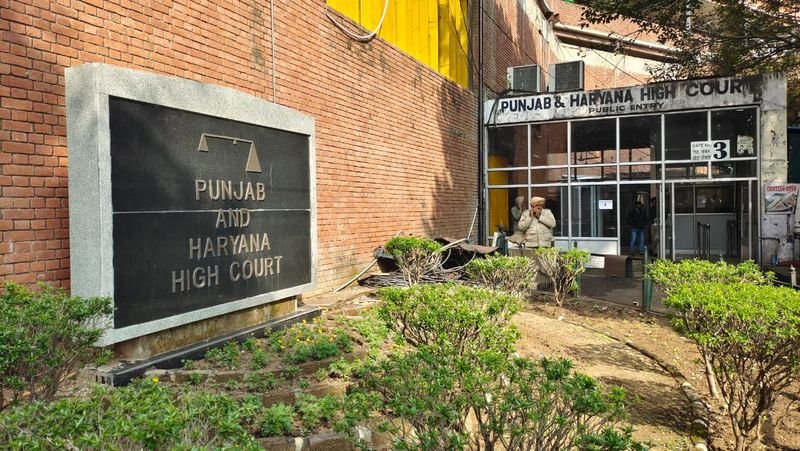

The Punjab and Haryana High Court has held that an employee’s death during the pendency of an appeal does not automatically nullify the punishment already imposed, where a disciplinary inquiry was concluded and punishment imposed during his lifetime.Justice Sandeep Moudgil made the observation while dismissing a petition challenging orders dated July 6, 2005, July 20, 2010 and August 16, 2012, relating to disciplinary action arising from a shortage of paddy. The assertions came after the bench heard the late employee’s son. Misappropriation not proved, but negligence establishedTaking up the matter, Justice Moudgil clarified that the departmental inquiry had not established personal misappropriation or embezzlement by the petitioner’s father, or any personal benefit accruing to him from the shortage. “The charge of misappropriation was not proved,” the bench observed.Justice Moudgil, at the same time, observed that the inquiry found the charged officials negligent in discharging their duties and held that their negligence had enabled the miller to convert the paddy unauthorisedly.“The disciplinary authority was, therefore, entitled to take disciplinary action for the misconduct actually found proved. The mere fact that the allegation of misappropriation was not established does not mean that the finding of negligence stood obliterated or that the disciplinary authority was precluded from imposing an appropriate penalty for such negligence,” Justice Moudgil observed.Penalty not disproportionateThe court also examined the nature of the penalty in the context of the loss involved. The shortage of paddy was valued at about Rs 26 lakh, while the officials were found to have failed to adequately safeguard the stocks.“The record concerns a substantial shortage of paddy valued at about Rs 26 lakh and the Inquiry Officer found failure on the part of the charged officials to adequately discharge their duties in safeguarding the stocks.”Justice Moudgil noted that the punishment was not dismissal or an immediate direction to personally bear the entire loss. It involved reduction by two stages in the time scale of pay for calculating retirement dues. “The punishment imposed was not dismissal from service or a direction to personally bear the entire loss forthwith, but reduction by two stages in the time scale of pay for the purpose of calculating retirement dues,” the bench observed.As regards joint-custody stocks, recovery was made conditional upon failure to recover the loss from the miller through arbitration or legal proceedings. “The disciplinary authority further made recovery in respect of joint-custody stocks expressly conditional upon failure to recover the loss from the miller through arbitration/legal proceedings.”The court consequently found that the punishment remained connected to the misconduct actually established. “The penalty, therefore, cannot be characterised as one which travels wholly beyond the misconduct proved,” Justice Moudgil observed.Death during appeal did not extinguish punishmentThe court then considered the effect of the petitioner’s father’s death while his appeal against the punishment was pending. The punishment order had been passed on July 6, 2005, whereas he died on September 26, 2009. “The subsequent death of the petitioner’s father during pendency of the appeal also does not, by itself, render the punishment order dated July 6, 2005 non-existent,” Justice Moudgil observed.Referring to Supreme Court judgments, the bench added: “The principle emerging from the decision is that where the disciplinary inquiry has already culminated and a punishment has been imposed during the lifetime of the employee, the subsequent death of the employee during pendency of an appeal does not automatically nullify the punishment already imposed.”The court ultimately found no merit in the challenge to the three orders and the petition was accordingly dismissed.