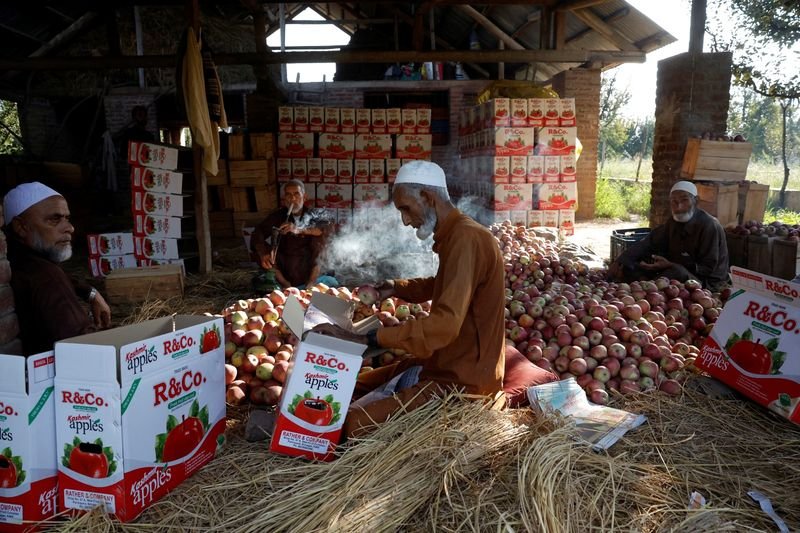

For generations, Himachal Pradesh has set the pace for the early apple season in northern India’s wholesale mandis. In the later summer months and into autumn, cartons bearing the names of Kotkhai, Jubbal, Rohru and Kotgarh from Shimla district’s top apple belts would arrive at sales hubs from Shimla to Parwanoo to Azadpur in Delhi, fetching premium prices when supplies were scarce and demand was high. But not this year.At the wholesale Pinjore market, trucks lining up before dawn carry registration plates not from the hills of Shimla, but from the southern districts of the Kashmir valley. “Our early varieties like Tydeman and early ‘Shadu’ from Himachal were missing from the mandis this year,” says Rajat Chauhan, an arhtiya and transporter operating out of Pinjore.“Meanwhile, high-colour, well-graded early fruit varieties from Kashmir started rolling in at prices Himachal farmers couldn’t compete with. When a Kashmiri box arrives early and sells for far less, why would a buyer pay a premium for scarce, weather-scarred Himachal fruit?” asks Chauhan.Taking the early-season leadIndia’s Rs 7,000-crore domestic apple trade is experiencing a profound geographic and structural realignment. In orchards located above 6,000 feet in Himachal, growers are reckoning with one of the worst harvest seasons in modern memory.Across the Pir Panjal range in Kashmir, however, a quiet technological revolution — anchored by high-density rootstocks, aggressive government capital subsidies and expanding cold-storage logistics — is consolidating the Valley’s grip on the national market.According to data compiled by the Indian Agricultural Statistics Research Institute, J&K harvested 20.45 lakh tonnes of apples in the 2024-25 cycle, dwarfing Himachal’s 5.83 lakh tonnes. This season, the gap has vastly increased.Himachal’s Horticulture Department had originally braced for a modest drop, projecting 4.36 lakh tonnes. With the harvest wrapping up, just 1.37 crore boxes have been dispatched, failing to cross even the 50 per cent mark of last season’s 3.49 crore boxes.“We are witnessing a structural decline. At the exact time of flowering, temperatures plunged. Winter snow cover was minimal, which deprived trees of essential chilling hours. Then came unseasonal rain, hail and erratic summer heat. It hammered both volume and cosmetic quality. A vast portion of the crop couldn’t develop in terms of size,” says Pradeep Singh Reakta, general secretary of the Apple Arhtiya Association in Parwanoo.High-density technique magicApple country in south and north Kashmir is taking on a dramatically different look. Drive off the national highway through Baramulla or Shopian, and the old-growth, towering seedling trees that once required 40-foot ladders are disappearing.In their place stand disciplined rows of trellis-supported dwarf apple trees, planted just metres apart, bearing fruit within three years rather than eight.In Pinjoora village, located in the heart of Shopian, Shahnawaz Khan walks between densely packed rows of M9 rootstock varieties. “I don’t cultivate traditional varieties anymore,” Khan says. “I transitioned completely to the ultra-high-density M9 rootstock. This season has been my best yet. Our Gala boxes fetched between Rs 2,000-2,500 in mandis. The terrain gives us room to lay drip irrigation and manage canopies efficiently.”Next Gen back to orchardsThe shift has also begun to pay off in parts of the Valley where warmer temperatures once posed a challenge to apple growers. In Marhama village of Anantnag, Aadil Hussain Magray says the arrival of new high-density early varieties has changed the economics of his orchard. “I started growing them only after 2021 and these are giving us good returns and my produce is ready as early as July, when the market sees no fruit,” he says.Further north in Baramulla, Ghulam Ahemad Pandit looks after orchards that have funded professional careers for his family. “The environment is changing in Kashmir,” he observes. “Young educated boys who went to cities across India are returning to take over family orchards. When an acre of high-density orchard delivers lucrative returns, agribusiness looks far better than a desk job. Plus, the 50 per cent government capital subsidy on rootstock and trellises takes away the initial pain of replanting,” he points out.Policy gap fuels angerIt is this policy divide that is infuriating apple growers across the border in Himachal. “Today, we account for barely 28 per cent of India’s yield against Kashmir’s 72 per cent,” says Chetan Bragta, a prominent apple grower and BJP leader from Kotkhai. “Kashmir surged ahead because their farmers received coordinated backing — government funding, heavy subsidies on high-density plant material and rapid cold-chain expansion. In Himachal, subsidies have been chronically misaligned or frozen. Funds meant for orchard rejuvenation were diverted and our growers have been left to fight climate shocks with 40-year-old, exhausted trees,” claims Bragta, son of the late Narinder Bragta, the state’s former Horticulture Minister.Kashmir’s apple boom, too, is not without fragility. Growers face highway blockages along the fragile Jammu-Srinagar corridor, rising pesticide costs and intense pressure from cheap foreign imports. Still, the broad horticultural success is clearly visible.“As climate warming pushes the chilling zone for optimum apple cultivation further up the Himalayas, traditional apple farming on fragile slopes is becoming unviable. Unless Himachal moves decisively to subsidise replantation, build water-harvesting networks and replace weather-vulnerable heritage varieties, its reign as the country’s ‘apple bowl’ will become a memory,” says Anil Baltu, a young orchardist from Jubbal in Shimla.