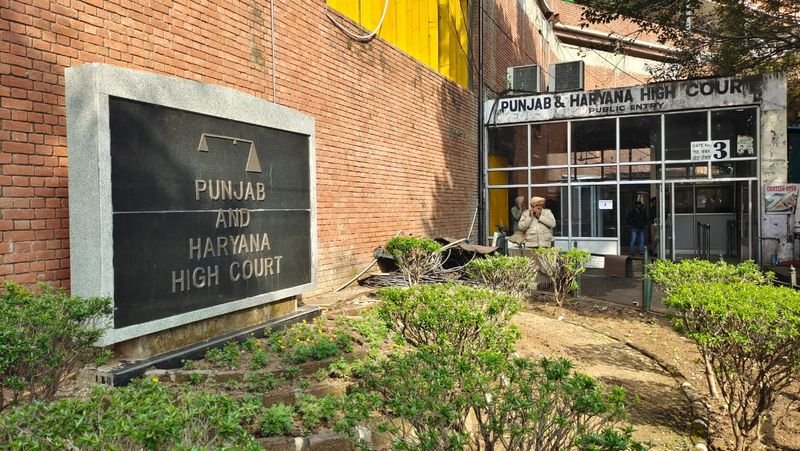

The Punjab and Haryana High Court on Thursday expressed concern over the circulation of false information on social media about incidents that never occurred, observing that such reports could trigger unrest, violence and loss of life and property. Raising the question of accountability of social media platforms, the bench also called for a mechanism “under which platforms could be held accountable where false information resulted in violence and loss of life or property”.The observations came after the state of Punjab told the division bench of Chief Justice Ashwani Kumar Mishra and Justice Rohit Kapoor that circulation of false information had triggered unrest at Lovely Professional University (LPU).The bench asserted that the issue required examination beyond the individual who uploaded the social media post, particularly when a non-existent event was reported and the information resulted in sudden unrest.Speaking for the bench, Chief Justice Mishra drew a distinction between reporting an actual incident, even if the report was subsequently exaggerated or misrepresented, and reporting an incident when “there is absolutely nothing”. “If there is absolutely nothing and you report it, the situation requires much more serious consideration,” the Chief Justice observed.The bench added: “We are baffled at one thing. A non-existent event is reported. It leads to sudden unrest, making it difficult for the police to control the passions of these students. So, therefore, suppose this is what is happening. If there is human loss, if there is loss of property, who ultimately gets identified and held responsible?”The Chief Justice also stressed that freedom of speech was “very zealously defended” in the constitutional system and people were entitled to express their views, including criticism. However, deliberate false information put on social media with an intention to incite passion could not be viewed in the same manner.The bench said the issue was particularly serious because the two incidents had occurred back-to-back — at Chitkara on September 25 and at LPU on September 26. The court questioned whether there was any connection between them and whether there was a deliberate attempt to create unrest in the two institutions.Appearing on the petitioner-student’s behalf, senior advocate Gaurav Chopra indicated that there was a connection between the two incidents. “On September 25, an incident takes place at Chitkara in the form that two girl students living on the campus in a hostel had committed suicide. It created some unrest.Fortunately, it did not result into violence,” Chopra said.He added that the anti-social element, after testing it, posted the next day with that somebody has been raped by a male staffer. It was done with the same intent. LPU was represented in the matter by advocate Ranjit Singh Bajaj.Additional Advocate-General Chanchal K Singla, meanwhile, told the court that the person who uploaded and subsequently deleted the post had been identified and the statement was on record in a sealed cover. He said the person had admitted uploading it but claimed that it was done unintentionally after someone else gave the information. The state informed the bench that nine persons had been arrested in this connection, including two outsiders who were identified as employees of a pizza delivery chain.Addressing the bench, Additional Solicitor-General Satya Pal Jain referred to allegations that outsiders had entered the LPU campus during the unrest, while contending that the authorities concerned were required to identify and investigate them.Before parting with the matter, the bench made it clear investigation was required to focus on who was behind the information, rather than stopping with the person who had posted it. Chief Justice Mishra said the court was examining the matter from a different perspective and was not treating it simply as a dispute between the state and an individual. If a non-existent event was reported and led to unrest, the issue required serious investigation. The bench also asked the state to ascertain whether the same social-media platform had been used for the two incidentsThe bench also observed that the issue assumed significance in Punjab as a border state. If false propaganda was unleashed and a report was made about something that had not happened, it could result in thousands of students coming onto the roads, violence and closure of a university for several days. It said a procedure or methodology had to be evolved to deal with such situations.Chief Justice Mishra added: “If forces against the national interest are at work, yours is a border state. If this kind of false propaganda is unleashed, reporting is made where nothing happens, 28,000 students are there. They suddenly come on the road. There is a fight taking place. For several days, the university is closed. You just can’t brush it aside like this”. The matter will now come up for further hearing on Monday.