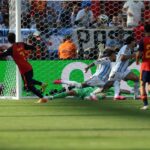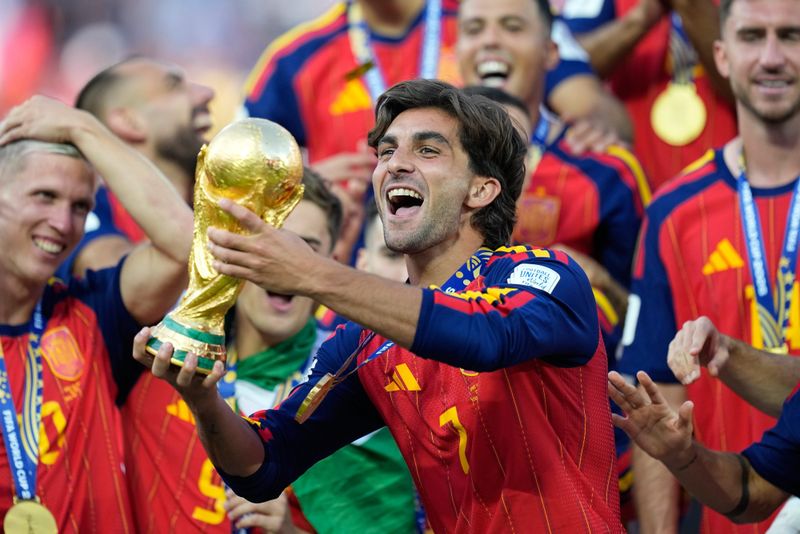

At a sun-drenched MetLife Stadium, there was one last time to take it all in – the good, the bad and Spain’s mastery in this supersized 48-team World Cup. Spain proved that they were the best team of the tournament, grinding their way to a 1-0 extra-time win against Argentina to end Lionel Messi’s fairytale run at the World Cup, a tournament that had been just about acceptable on the field, but divisive of it, making FIFA and the global finals a strange geopolitical juggernaut.Fans and media had queued for hours outside to clear secret service check points. Minutes before kick-off, US president Donald Trump, accompanied by FIFA president Gianni Infantino, took their seats before Tom Cruise stressed the bonds of friendship made during the tournament. Never mind that the final kicked off six minutes late.The final had star power with Lionel Messi and Lamine Yamal, but didn’t replicate the high drama of the 2022 six-goal thriller between Argentina and France. Instead, it was the worst World Cup final in recent memory, eclipsing the editions of 1994, when Brazil and Italy dragged themselves to penalties in California, and 2010, when Andreas Iniesta won it for Spain in extra time.In New Jersey, Spain were once again progressive. They wanted to construct and play the game the way it is ought to be. Argentina didn’t. They set out to destroy. The contrasting styles led to a war of attrition, replete with Argentinian gamesmanship. The anti-spectacle of provocation, play acting and dirty fouling culminated in a second yellow card and dismissal for Enzo Fernandez for clattering Pau Cubarsi, in the 93rd minute – and even a scuffle after the final whistle. It had taken referee Slavko Vincic until the 40th minute to book an Argentine player after Lisandro Martinez fouled Mikel Oyarzabal.It was the signal for the first-half time show in World Cup history and FIFA’s attempt to mimic the Super Bowl. Organisers wheeled out a galaxy of stars, including BTS, Madonna, Shakira and Justin Bieber, and the result was a 27-minute break in play.In the second half, the defending champions remained on the back foot with tier negative approach. On the wing Lamine Yamal proved to be industrious, but opportunities came at premium, substitutes Ferran Torres and Nico Williams. In extra time, Spain got the sight of goal more – Nico Williams’s goal disallowed and substitute Martin Zubamendi missing a free header.By contrast, Argentina talisman Lionel Messi remained peripheral, but his side were still not out of it. One flash of genius was all they needed. Instead, it was Spain who won a second World Cup when Torres smashed the ball home from close range after Williams tied him up in the 106th minute. The strike had parallels with Iniesta’s goal in 2010: the significance, the timing and the knockout blow for the opponent. The Spanish were not as scintillating as at Euro 2024, but with their second global crown they cement their modern hegemony over the game.