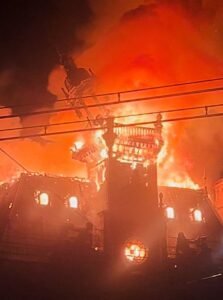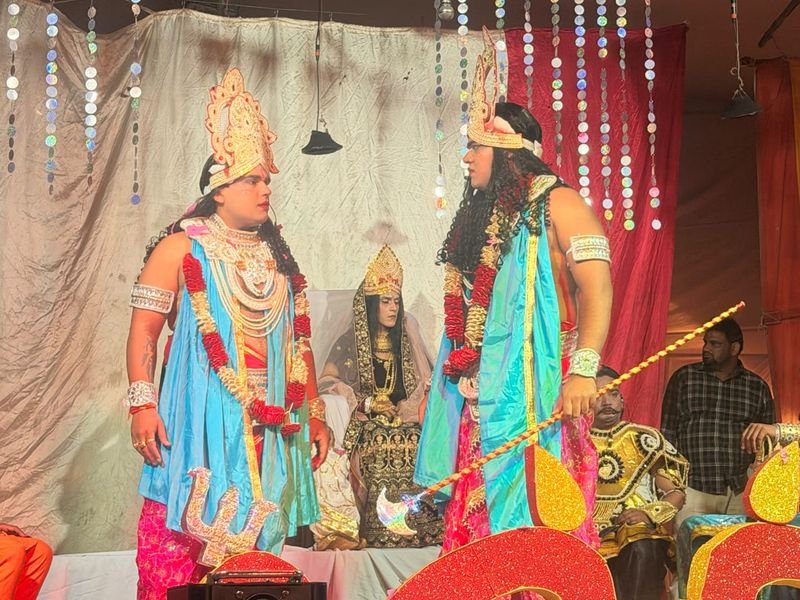

For generations, the arrival of Navratri and Dasehra transformed neighbourhoods across Amritsar into lively centres of religious and cultural activity. Temporary stages came up in open grounds, local performers rehearsed scenes from the Ramayana, volunteers collected contributions from residents and families gathered in the evenings to watch the age-old story of the triumph of good over evil.For many residents, neighbourhood Ramlila was more than a religious performance. It was an annual community tradition that brought together people across generations. But as the city expands and public celebrations increasingly face space, safety and permission constraints, an important question deserves attention: is the traditional neighbourhood-based model of Ramlila and Dasehra changing in Amritsar?The answer seems to be yes. Last year, the administration allowed Ravana effigies to be burnt at only eight locations in the district on Dasehra, rooting out small scale celebrations in every block or constituency. Traditional Ramlila groups are also vanishing as most units have disbanded due to a lack of audience. “Traditionally, local Ramlila committees relied on community participation. Residents contributed money, volunteers arranged the stage and seating, and local performers took on roles ranging from Lord Ram and Sita to Ravana and other characters. For some neighbourhoods, these annual performances became an important part of their collective identity. But now, participation is less and only a handful people come to watch,” said Ashok Kumar, a former member of a Ramlila committee in the Pultighar area.The availability of an open ground was central to this arrangement. Such spaces accommodated performers, spectators and temporary structures, while allowing celebrations to remain close to the communities organising them.As urban land use changes, however, accessibility to open spaces has become an issue for organisers. Establishing whether individual Ramlila grounds have disappeared, been redeveloped or simply been replaced by alternative venues is essential to understanding the extent of the change. In Amritsar West, several localities, including Putlighar, Kot Khalsa, Bhalla colony, Khandwala , Chherherta and Nariangarh used to host Ramlila. Now, only four active groups remain in these areas. Grand celebrations are also held at the Dasehra ground near Bhadarkali Temple at Khazana Gate.The grandest celebrations are organised by the Durgiana temple committee, where the management ensures crowd management. Lakshmi Kanta Chawla, president of the Durgiana Temple Management Committee, has been ensuring the celebrations continue as per tradition. “Around 40 religious processions converge on the Dasehra Ground to mark the occasion. Alongside these, devotees dressed as Bajrangi Sena and langoors add a unique traditional touch to the celebrations,” she said.Another effigy-burning programme that attracts a huge crowd is organised by Panch Rattan Sri Krishana Mandir at Naraingarh in the Chheharta area.“The tradition of effigy burning at most designated places in Amritsar has continued since 1955. But the scale has toned down and the audience has been lost. Now, people celebrate traditional festivals with house parties or with some fancy outing,” said Tarsem Lal, a member of the Dasehra celebration committee.