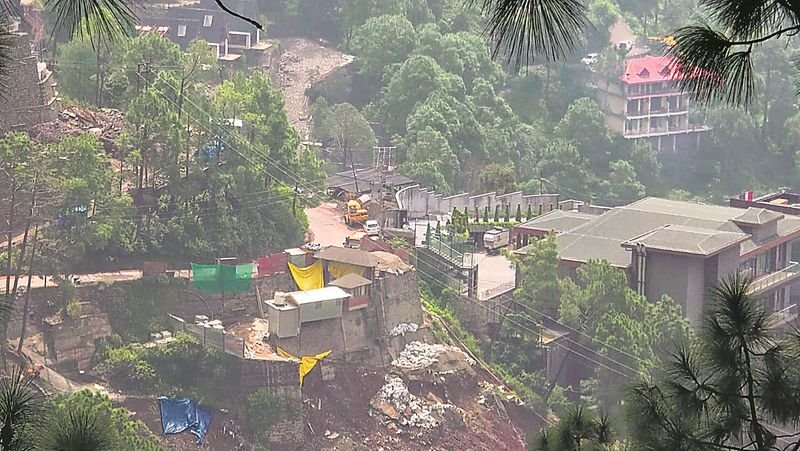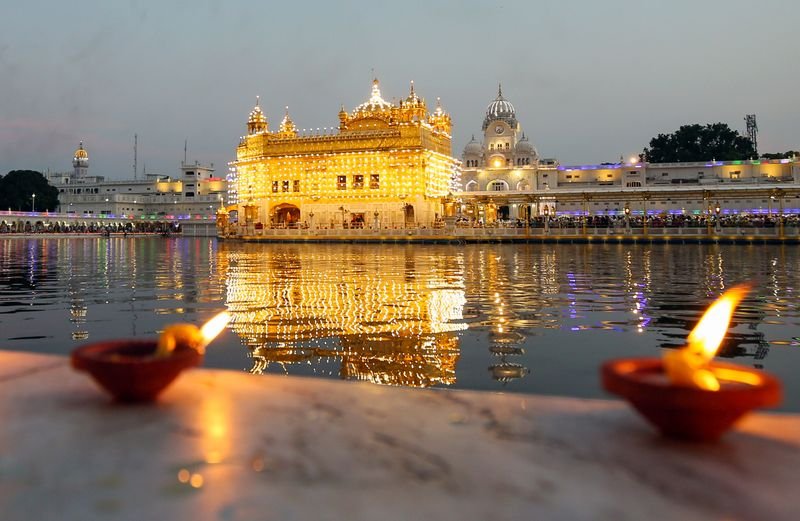

A view of Santokhsar sarovar in Amritsar.A view of Shri Durgiana Temple.Amritsar owes its name and much of its early history to its sacred pools. More than four centuries after its foundation, the city continues to draw spiritual significance from its sarovars, which were developed around Sikh shrines and became centres of devotion. The name Amritsar is derived from ‘Amrit Sarovar’, meaning the Pool of Nectar, excavated by Guru Ram Das in the 16th century.The city was once situated in a natural basin where rainwater from surrounding areas flowed into low-lying depressions. These natural pools, known as dhabs, were common across the region. However, many were filled in during British rule following epidemics, while those associated with religious sites survived.The most prominent among them is the Amrit Sarovar at the Golden Temple. Guru Ram Das initiated its excavation between 1573 and 1577, laying the foundation for the development of the city. Historical accounts suggest the tank was planned as part of a larger settlement. Guru Arjan Dev, the fifth Sikh Guru, later established the Golden Temple at its centre.The sarovar also witnessed turbulent chapters in Sikh history. Afghan invader Ahmad Shah Abdali is said to have filled it with sand and restricted Sikh access during the late 18th century. Sikh misls subsequently reclaimed it, while Maharaja Ranjit Singh renovated the complex with white marble during his reign.Located within the Golden Temple complex, Kaulsar is associated with Bibi Kaulan, the daughter of a Qazi of Lahore who became devoted to the Sikh faith. According to historical accounts, its excavation began in 1624 and was completed in 1627 under the supervision of Baba Buddha Ji, the first head granthi of the Golden Temple.Bibeksar, another historic pool, was constructed by Guru Hargobind, the sixth Sikh Guru. The area around it was associated with the training of Sikhs in martial arts and weaponry, reflecting the martial tradition that developed during his time.Ramsar, the smallest among the city’s five historic Sikh sarovars, was completed in 1603 under Guru Arjan Dev. Its historical importance stems from its association with the compilation of the Adi Granth, the foundational Sikh scripture, which took place near the pool. Historical descriptions recall the trees and tranquil surroundings that once characterised the site.Santokhsar, situated about 700 metres from the Golden Temple, is regarded as the first sarovar excavated by the Sikh Gurus. Guru Ram Das initiated the work before the excavation of the Amrit Sarovar, and the tank was completed in 1589. Tradition links its name to Baba Santokh, a saint believed to have been found meditating at the site. During British rule, the tank was filled in following an epidemic. Sikh saints Baba Sham Singh and Baba Gurmukh Singh later organised kar sewa to restore it.The city’s sacred water heritage also extends beyond the principal Sikh shrines. The Durgiana Sarovar, constructed in 1930 on the pattern of the Golden Temple complex, has a temple at its centre. Religious festivals are celebrated there with the participation of devotees.Ram Talai, a smaller pool near an old temple along the Grand Trunk Road, is another reminder of Amritsar’s historic water bodies. Historical accounts also refer to the Kalyan Singh talaab, known as the Distillery Dhab because of its proximity to a distillery during British rule. From the founding-era Amrit Sarovar to the pools associated with the Sikh Gurus and other religious traditions, these water bodies represent more than places of worship. They preserve the story of how faith, settlement and community life shaped Amritsar over the centuries.