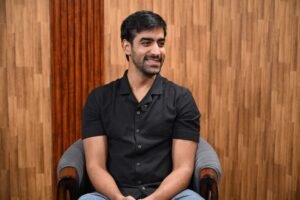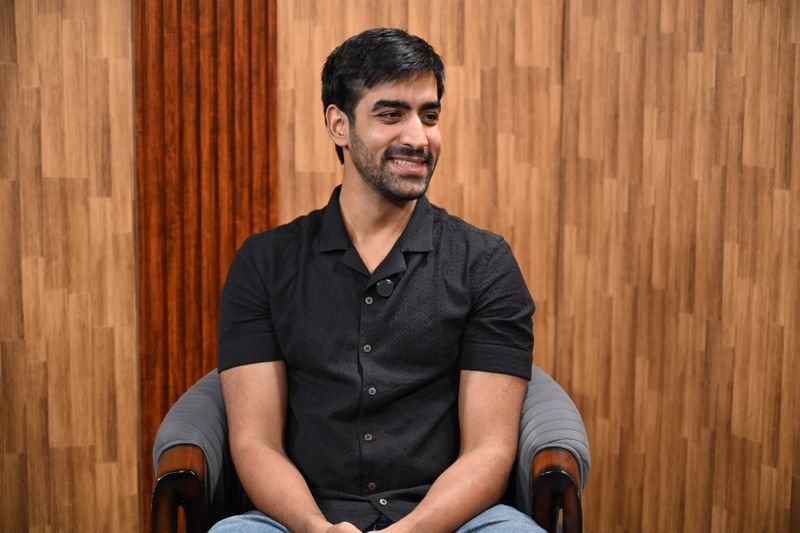

It took one week in Los Angeles to change the course of Manahar Kumar’s career. That week produced Beaten Down, a short film that premiered at the Samuel Goldwyn Theatre, where the Academy announces its Oscar nominations each year. “It wasn’t planned, but I feel really lucky, and the performances were very well received,” Kumar says.At its core is a dark comedy about desperation, about how far someone would go for legal status and family, played for laughs before the ache underneath surfaces.Asked why comedy for a subject this heavy, Kumar’s answer is simple, “Dark comedy is a sub-genre which is underutilised. If you tell a serious subject lightly, people start understanding the seriousness while laughing.”It’s a pattern in his work: an ordinary moment that stays with him until it becomes a film. The instinct goes back further than Los Angeles, to stage plays in Chandigarh, where Kumar first performed before he ever picked up the camera. That grounding shows in the run of recognition since: three Student Emmys so far, starting in 2018 with Kya Dekh Raha Hai?, a documentary marking his directorial debut, about children who make a living collecting and selling empty alcohol bottles. A thesis project at Savannah College of Art & Design later won him an Audience Award, and the most recent Student Emmy came not for directing but for acting, in Distant.Finding stories in the everydayHis short Race began with a single image, in a park in Panchkula. “I saw a boy with striking yellow studs, competing against a boy who was barefoot. That image just stayed in my head,” he recalls. It grew into a film about a white American boy and a Black American girl in a bike race, carrying a double meaning in its title, the race between them, and the deeper one shaping how they’re seen, set to an echo of Obama’s 2008 speech. It won Best Indie Film at the New York Film Awards and Best Short Film at the Georgia Film Festival.Such stories, Kumar says, come from paying attention. “Everyone has a story. Be that listener.” That same instinct led him to Badlaav Republic, born after he met a woman named Manju at a stitching station in Khuda Lahora, Chandigarh, and grew curious about her life. Manju is a member of Chhoti Si Asha, a women-led non-profit that teaches underprivileged women traditional crafts like stitching and tailoring — the very skill through which she broke a patriarchal barrier. The film sets her story beside Badlaav, an after-school educational programme that tutors children from local village communities, weaving together one woman’s quiet defiance and the “utopic” world she helps build for the next generation. The film has since won Best International Film at the Oregon Doc Film Festival, Best Documentary at the Georgia Documentary Film Festival, and earned a Student Emmy nomination, alongside selections at five international festivals.From actor to filmmakerKumar once dreamt of acting, but his grandfather steered him toward film school instead. “As an actor, the power of yes or no stays on the other side. As a filmmaker, you create your own opportunities,” he says. Life, to him, works the same way. “Everything is transient. Just be present. Speak only when you have something important to say. Silence is truly golden.”What’s nextHe’s writing two features, a family drama around an apple orchard, and a Partition-era story based on his great-grandmother’s journey. When it comes to acting, though, he’s ready to explore something lighter: “I’m hungry to act in a rom-com, something light, that makes people laugh.”For a filmmaker, who has spent years chasing weight and meaning, that’s its own kind of change.