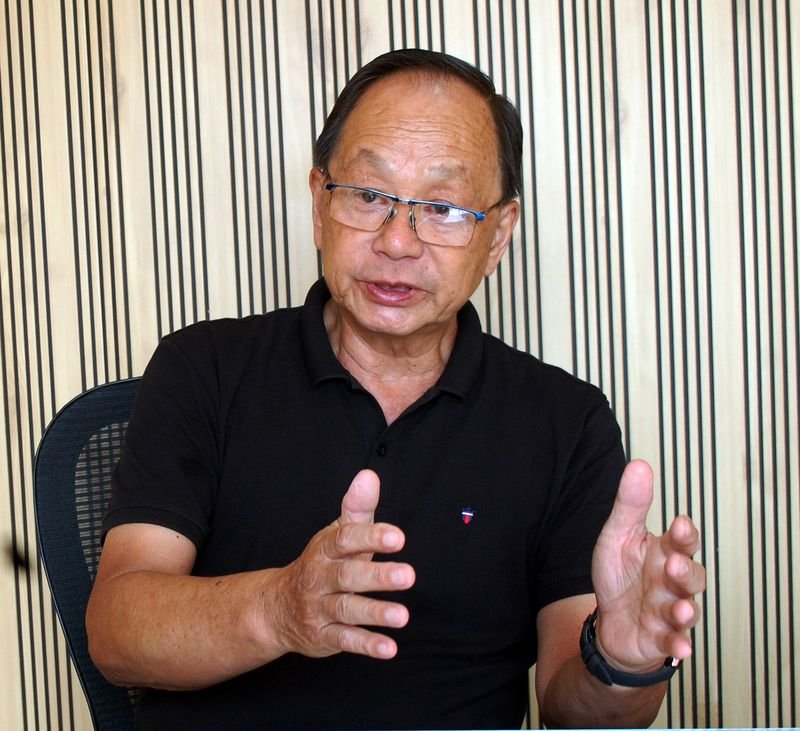

Amritsar is a city of food, memories and history, and within its quintessential Punjabi landscape lies the story of John Francis Lim’s family.John, 70, is believed to be the only Chinese Punjabi of the Hakka migrant community still living in Amritsar. A third-generation Hakka Chinese Punjabi, he spent most of his life teaching English literature in private schools. His wife, Molina, is also a teacher at Alexandria School, and they have three daughters.His grandfather migrated from China in the early 1940s as the communist regime took stronger hold. Like many Hakka Chinese migrant families, the family first landed in Calcutta, which became one of the most important centres of Chinese settlement, particularly for Hakka families.“My father was 14-15 when our family decided to move northwards and eventually settle in undivided Punjab,” John said.In Punjab, John’s father took up leathercraft and later established a successful handcrafted Chinese shoe business called Fan Ley and Company. The family had branches in Lahore, on Cooper Road in Amritsar and in Jalandhar.“They had a home in Amritsar, but things changed in 1947. When Partition happened, my grandfather and father had a choice — either close the shop in Lahore and move to Amritsar (India) or stay put there. He decided to settle in Amritsar.”Their ancestral residence was near Crystal Chowk. John’s six siblings now reside in different cities across India.Raised in Amritsar, the family integrated into the local culture. Members of the family are known for speaking fluent Punjabi, complete with a Majhail dialect, and blending Hakka culinary roots with local Punjabi flavours.“In our household, all my siblings and myself spoke fluent Punjabi while my father spoke Chinese. The food cooked was not authentic Chinese as we did not get the same ingredients. Our parents tried teaching us Chinese traditions, though we did not take much interest,” he said.Members of the Hakka Chinese community in India are credited with establishing and popularising the distinct Indo-Chinese Tangra cuisine, including many members of John’s family. His younger sister, Katherine Lim, is a chef of Tangra cuisine.John’s family history also reflects the experiences of Chinese migrants in Punjab during Partition and the repercussions of the 1962 India-China war.“Despite spending his entire life in Punjab, my father never got citizenship of India. After the 1962 India-China war, the Chinese migrants were always seen with suspicion. During Indira Gandhi’s first term as Prime Minister in 1966, my parents applied for citizenship but it was denied. Later, the government of India decided that children born to Chinese migrants after 1955 would be granted citizenship,” he said.John has never tried to trace his roots back to China.“My father never did. For me, Amritsar is the only home I have known,” he said.