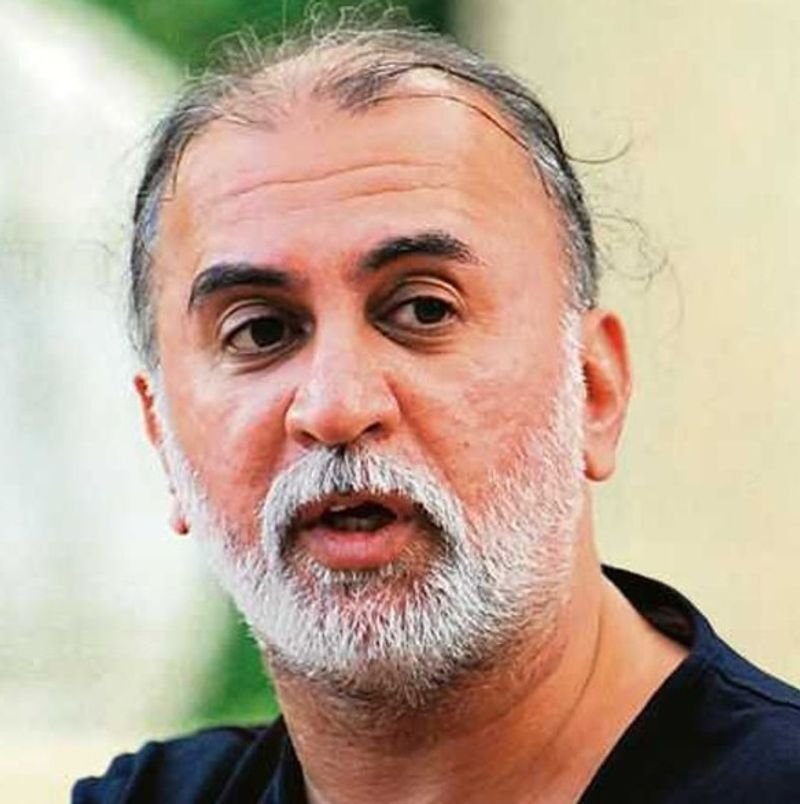

The Goa government has moved the Supreme Court seeking life imprisonment for journalist Tarun Tejpal in the 2013 sexual assault case, contending that the sentence of 10-year rigorous imprisonment imposed by the high court was “grossly disproportionate to the nature and gravity of the offences” committed by him.On August 6, the Goa Bench of the Bombay High Court convicted Tejpal of raping a junior colleague in 2013 and sentenced him to 10-year rigorous imprisonment as it reversed a Goa trial court’s 2021 verdict, terming it “untenable”, “perverse” and “directly contrary to the evidence on record”.A Bench of Justice Neela Gokhale and Justice Amit Jamsandekar had slammed the trial court for falling prey to the notion that a complainant (rape survivor) in such cases should be a “perfect victim” and behave in a certain way. The high court had also ordered him to shell out a fine of Rs 10.21 lakh, which would go to the victim.Tejpal has claimed to be a political victim.While challenging the high court’s verdict, the Goa government clarified that it did not want to reopen findings of conviction.”The challenge is confined to the quantum of sentence and the direction for concurrent operation of sentences. The state relies only upon the findings and circumstances already recorded by the High Court to demonstrate that the sentence imposed is manifestly inadequate,” the Goa government submitted.On November 18, 2013, the victim complained to Tehelka’s then Managing Editor about the November 7 and November 8, 2013 incidents and the very next day Tejpal sent a formal unconditional apology to the victim for the “shameful lapse of judgment”.Tejpal was arrested on November 30, 2013 in the case. In February 2014, the Goa Police Crime Branch filed a charge sheet against him. He, however, was granted bail by the Supreme Court in July 2014. The prosecution’s case was based on statements of the victim, her colleagues and electronic evidence such as CCTV footage, emails and WhatsApp messages.In May 2021, a Special Court at Mapusa in Goa acquitted Tejpal of the charges of sexual assault and rape, saying there was no material on record to corroborate the allegations levelled by the victim and that her deposition “shows improvement, material contradictions, omissions and change of versions, which does not inspire confidence”.However, the high court found fault with the trial court for doubting the victim’s testimony. “The testimony of the victim, in our view, is quite natural, inspires confidence and merits acceptance…There is nothing on record that creates any doubt/disbelief or a suspicion about the evidence of the victim,” the Bench said.“We find that the victim has made truthful statements, and the prosecution has established the case against the Respondent beyond every reasonable doubt. The trial court fell in error in acquitting the Respondent of the charges levelled against him,” the high court said.“The appreciation of evidence by the trial court is not only unreasonable but perverse. The conclusions arrived at by the trial court are untenable and, in the established facts and circumstances of the case, the view expressed by it is not a possible view,” the HC had said, allowing the state’s appeal against Tejpal’s acquittal.“A judge does not preside over a criminal trial merely to see that no innocent man is punished. A judge also presides to see that a guilty man does not escape,” the high court had said, adding, “We find it surprising that the (trial) court allowed the defence to use this time to harass and humiliate her.”