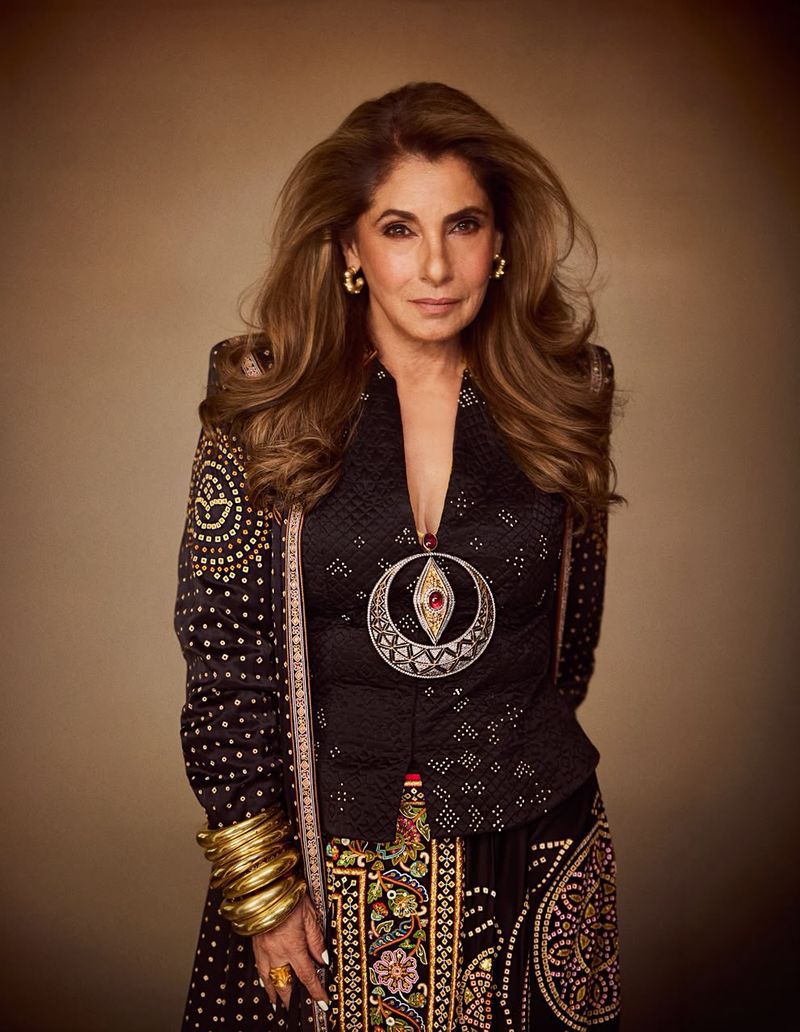

At the Mumbai premiere of Christopher Nolan’s The Odyssey last week, veteran actress Dimple Kapadia wore an oversized eye-shaped pendant inspired by Lord Shiva’s third eye, paired with amulet-style hoop earrings and matching bangles. The look was widely praised, with coverage calling it a standout moment rooted in Indian craftsmanship rather than borrowed symbolism.Not every star gets that reception. For a handful of global celebrities, the same instinct to wear a Hindu deity or sacred symbol as an accessory has led to police complaints, official statements and years of unrelenting criticism. Here are three cases that defined that pattern.Rihanna’s Ganesh pendant, 2021In February 2021, Rihanna posted a photograph of herself in Savage X Fenty boxers and a diamond-studded pendant of Ganesh. The image spread rapidly online, with many commenters accusing her of reducing a sacred figure to a prop in a lingerie campaign. The controversy escalated beyond social media, drawing public criticism in India and prompting an official response condemning what was called sensationalist celebrity commentary.Kim Kardashian’s Om earrings, 2021Kardashian wore large hoop earrings bearing the Om symbol, one of Hinduism’s central spiritual signs, chanted in prayers rather than worn as jewellery. The images drew sharp criticism from users who felt a sacred sound was being treated as a fashion motif. Not every response was hostile; some Hindu commenters defended her, saying she was drawing attention to the symbol rather than disrespecting it.Taapsee Pannu’s Lakshmi necklace, 2023Actress Taapsee Pannu faced a police complaint over a similar choice. As showstopper at Lakme Fashion Week, she wore a plunging-neckline gown with a gold necklace carrying a carved Lakshmi pendant. A religious organisation filed a complaint accusing her of hurting religious sentiments and the image of Sanatan Dharma, and police confirmed the case had been registered.Beyond jewellery: Bindis and Instagram postsThe backlash has never been limited to what a celebrity wears around the neck or ears. Selena Gomez drew similar criticism for a bindi, the forehead mark rooted in Hindu tradition, worn during MTV Movie Awards performances in 2013 and 2017; Hindu community leaders both times said the mark carried religious significance and was not meant to be used as a passing fashion statement. Katy Perry drew comparable heat for an Instagram post showing an image tied to the goddess Kali, casually captioned, which critics said reduced a revered figure to a throwaway caption.A recurring fault line, with one recent exceptionAcross pendants, earrings, bindis and captions, the objection has stayed remarkably consistent: sacred imagery loses its meaning the moment it is treated as merely decorative. Dimple Kapadia’s reception this week shows the calculus isn’t fixed. The line between reverence and appropriation was never really about the object itself. It was always about who wore it, why, and whether the story behind it was told with the same care as the craftsmanship. In an industry built on spectacle, that distinction remains the one thing money cannot style around.