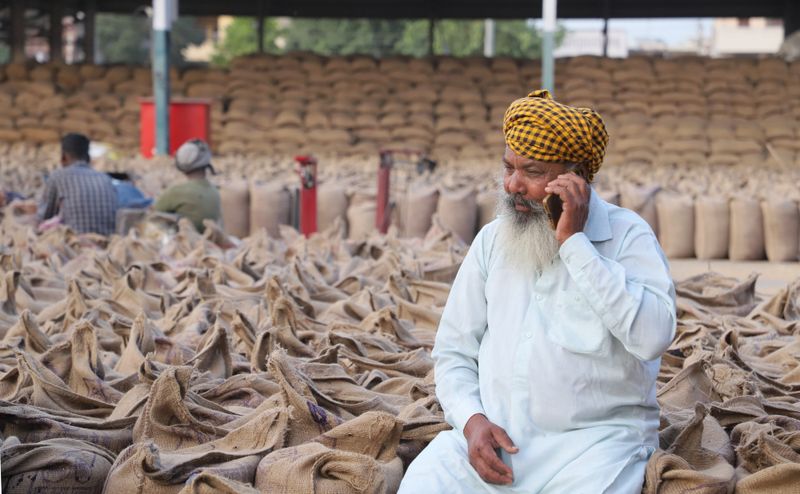

April in Punjab has long been synonymous with abundance—a season when golden wheat fields translate into cash in hand, with rural households planning weddings, purchasing more land or property etc. This year, that familiar rhythm has faltered. Instead of celebrations, anxiety grips the state’s farming community, as cracks emerge in the very foundations of its agrarian economy.Punjab’s agriculture sector, which contributes nearly Rs 80,000 crore annually to the state economy—Rs 35,000 crore from wheat and Rs 45,000 crore from paddy—is facing an unusual convergence of challenges. The three pillars that sustain this system—efficient wheat procurement, assured fertiliser supply and reliable power—are all under strain, threatening a cascading economic impact.The immediate concern stems from wheat procurement. Early delays, combined with a noticeable dip in yield, have slowed the flow of income to farmers. Adding to their woes, private traders have largely stayed away from Punjab mandis, preferring other states where wheat is cheaper. This has effectively curtailed chances for farmers to earn above the minimum support price (MSP).Kulwant Singh, a farmer from Kishangarh village in Mansa, said: “The wheat yield in my farm is down by four quintals because of unusually warm weather in February-end. For every 10 acres, there’ll be a loss of Rs 1 lakh. There is no compensation for yield loss. Sannu tan bhaana manana paya hai (We have had to accept it as fate).”Official figures offer little comfort. Of the 99.13 lakh metric tonne (LMT) wheat that arrived in mandis till Saturday, 95.25 LMT has been procured. Private traders accounted for only 0.59 per cent of the purchases. Meanwhile, mandis remain clogged with over 65 LMT of unlifted grain.Two bigger concernsFertiliser shortage and erratic power supply are set to be the two bigger concerns for farmers in the coming days. Punjab’s fertiliser-intensive agriculture now faces a potential crunch, particularly of urea. While 4.80 LMT is currently available, the requirement for the kharif season stands at 16 LMT. The gap is worrying.Gurbakshish Singh, a farmer from Bimbar village in Patiala, warns of deepening inequities: “When there is a shortage of urea, it is the small and marginal farmer who suffers the most. Big landlords can afford to pay a premium and corner supplies. A crisis is clearly emerging, but there seems to be no solution in sight.”Compounding the problem is an emerging power crisis—well before peak agricultural demand. Rural areas are already witnessing long, often unscheduled outages, officially attributed to maintenance work. This has triggered protests, with farmers laying siege to power stations in Moga and Mansa and clashing with officials at Dagru.Rajinder Singh Deepsinghwala, vice-president of the Kirti Kisan Union, voices a broader concern: “Paddy transplantation is still weeks away, but power cuts are already frequent. If electricity is not reliably available from June to August, paddy production will suffer badly. Farmers may then rely more on fertilisers—which will also be in short supply.”Uncertain road aheadThe convergence of these crises—reduced wheat earnings, looming fertiliser shortages, and unreliable power—paints a troubling picture. In a state where agriculture drives both livelihood and the wider economy, any disruption has far-reaching consequences.