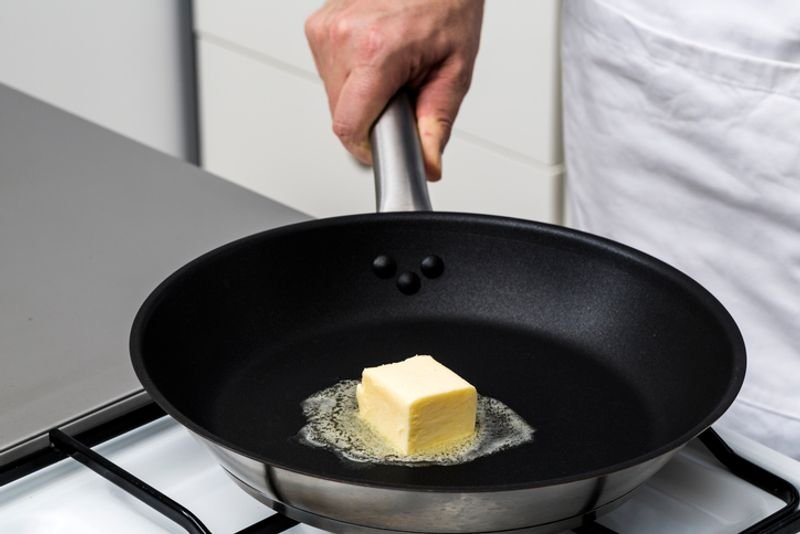

Haryana has banned the sale of margarine as “butter” or “makhan”, and of “analogue or non-dairy paneer”, for one year.Besides, sale of “Ghee for Pooja”, “Ghee for Diya”, “Vanaspati Ghee”, “Cooking Ghee”, “Table Ghee” and “Ghee for Havan” is prohibited unless such product conforms fully to the standard for ghee as prescribed in the Food Safety and Standards (Food Products Standards and Food Additives) Regulations, 2011. As per the orders issued by the Commissioner, Food Safety, Haryana, Dr Manoj Kumar, ghee does not include “any product prepared wholly or partly from vegetable oil, vegetable fat, vanaspati or any other non-milk-derived fat.”Ban on margarine sold as butter with paranthasThe Commissioner, Food Safety, observed that margarine or plant fat spread, being a product prepared from vegetable oils and fats and not derived from milk, is being manufactured, stored, distributed and sold unpacked or loose, without any label, mark or declaration disclosing its true nature, at retail outlets, sweet shops, dhabas and catering establishments. He added that it is being represented, offered, served and passed off to unsuspecting consumers as “butter” or “Makkhan”, particularly with paranthas.Margarine doesn’t conform to the compositional standard prescribed for butter and is gravely injurious to the health and economic interests of consumers and constitutes a fraud upon the public, said the order.Every Food Business Operator manufacturing, storing, distributing, serving or selling margarine or plant fat spread, whether packed or unpacked, has been directed to keep such product visibly and separately labelled or displayed as “Margarine” or “Vegetable Fat Spread — Not Butter/Not Makkhan”, as applicable, at the point of sale or service, so that the consumer is not misled as to its true nature, added the order.Ban on analogue paneerThe “analogue/non-dairy paneer” is defined as any product resembling paneer in which milk fat or milk solids are replaced wholly or partly by vegetable oil, vegetable fat or other non-milk-derived constituents.As per the official order, no hotel, restaurant, caterer, eatery, cloud kitchen or other food service establishment shall use, prepare, serve, store, stock, sell or keep “analogue/non-dairy paneer” in any dish, preparation or article of food whatsoever.The use or service of “analogue/non-dairy paneer”, including in the guise of genuine paneer, is misleading to consumers and constitutes an unfair trade practice within the meaning of Section 24 of the Food Safety and Standards Act, 2006, and a contravention of the responsibilities cast upon Food Business Operators under Section 26 of the Act, added the order.The Central Advisory Committee constituted under the Food Safety and Standards Act, 2006, in its 48th meeting held on October 14, 2025, recorded that no quality parameters stand defined for analogue in the dairy context. It added that, in the absence of such standards, analogue paneer is difficult to enforce at the field level and is essentially a sub-standard product of its dairy counterpart, thereby increasing deliberate adulteration; that even when packed, it is opened and sold in loose form, rendering enforcement infeasible. It pointed out that it provides no nutritional benefit, particularly for vegetarians who rely on paneer as a protein source.From April 1, 2025, to March 31, 2026, samples of paneer or dairy analogue drawn from across Haryana were sent for analysis. Out of 285 samples analysed to date, 200 were non-conforming: 171 were sub-standard, and 29 were unsafe. On analysis of the extracted fat, a significant proportion thereof showed a Butyrorefractometer (BR) reading and an Iodine Value outside the limits prescribed for milk fat, indicating the addition or substitution of vegetable fat, which was not naturally present in milk.GheeThe Commissioner, Food Safety, observed that Food Business Operators are preparing a substance from vegetable oils and plant fats, admixed with chemical agents, essences and granulating agents, to artificially replicate the granular appearance, aroma and organoleptic characteristics of genuine ghee.They are selling such substance under deceptive misnomers such as “Ghee for Diya” or “Ghee for Pooja”, while, in truth, storing and passing off the same, and selling the same to unsuspecting and gullible consumers, as genuine ghee, and using the same in the preparation of sweets is gravely injurious to the health and economic interests of consumers and constitutes a fraud upon the public, said the order.