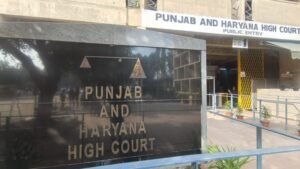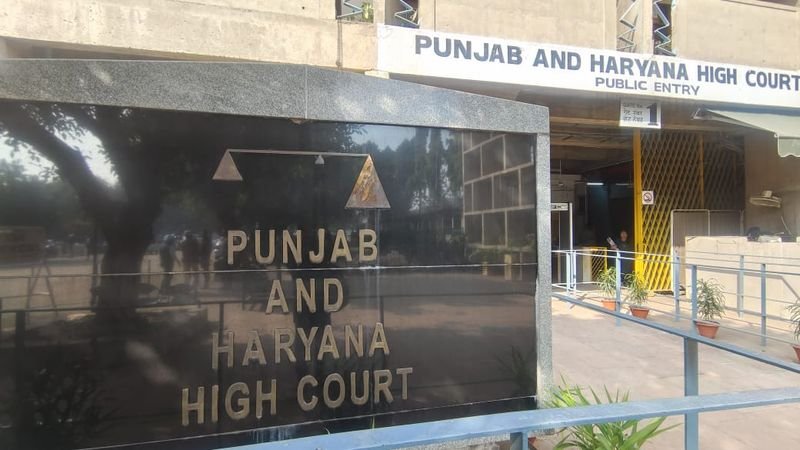

The Punjab and Haryana High Court has called for a detailed account of unpaid retirement benefits and General Provident Fund (GPF) contributions of employees of municipal bodies across Punjab. Justice Namit Kumar also asked the state government to quantify the outstanding liabilities, disclose the funds required to clear them and specify the timeline for releasing retirement dues where there was no legal impediment.The directions came during the hearing of two petitions filed against the State of Punjab and others respondents after Justice Kumar found that the compliance report filed by the State of Punjab did not provide answers to several material questions.Justice Kumar asserted a compliance report by way of an affidavit by Ghanshyam Thori, Punjab Secretary, Department of Local Government, along with the Standard Operating Procedure (SOP), had been filed in Court in terms of a previous order. However, the compliance report remained silent on several material aspects.“In particular, the report does not disclose the timeline within which the retirement dues of the retired employees are required to be released, particularly in cases where there is no legal impediment to such release; the total requirement of funds/budget for clearance of the outstanding retirement dues; and the amount of undeposited balances on account of non-deposit of Provident Fund (PF), ContributoryJustice Kumar added the Court was already seized of the issue relating to the failure of the Municipal Corporations, Municipal Councils, Nagar Panchayats and Improvement Trusts in Punjab to deposit the contributions deducted from the salaries of their respective employees towards General Provident Fund (GPF) into their respective GPF accounts.The requisite information, in terms of a previous order in another matter, was also required to be placed on record. “Such information shall, in particular, disclose the number of cases in which the General Provident Fund (GPF) contributions have not been deposited into the GPF accounts of their employees, along with the total requirement of funds/budget for clearance of such outstanding GPF dues,” Justice Kumar added.Taking exception to the recurring delay in release of retirement dues to employees of Municipal Corporations, Councils, Nagar Panchayats and Improvement Trusts, Justice Kumar on the previous date of hearing had directed Secretary, Department of Local Government, Government, to file his own affidavit. He was asked to explain the extent and reasons for the delay and set out a mechanism to ensure timely payment in future.The affidavit was also ordered to disclose cases where PF/CPF contributions remained unpaid or had not been deposited. Justice Kumar’s Bench had then observed that it had, on several occasions, noticed that retirement dues of employees superannuating from service under Municipal Corporations, Municipal Councils, Nagar Panchayats and Improvement Trusts were not being released on retirement or within a reasonable period thereafter. Particularly disturbing was that such delays appeared to be recurrent, especially in cases of Class-III and Class-IV employees.“Such employees, after rendering their entire service and upon attaining the age of superannuation, are made to wait for their legitimate retirement benefits,” the Court observed, adding that this compelled them to approach the Court for securing dues which had otherwise accrued to them by virtue of their service or retirement.Justice Kumar had further noticed that the retirement dues of Class-I and Class-II employees in several cases were released with “considerably greater promptitude”, whereas Class-III and Class-IV employees were made to wait for months and, in some cases, considerably longer periods. “Such a situation, if found to be correct, cannot be countenanced in a welfare State governed by the rule of law,” the Bench had said.Pointing at the importance of retirement benefits, Justice Kumar had asserted: “A retired employee, particularly one belonging to the lower strata of the service, ordinarily depends upon his retirement benefits for meeting his day-to-day necessities, medical expenses and family obligations.”